
Abstract:
Microsoft’s upcoming Surface Laptop Ultra has once again exposed more hardware information. This high-end Surface notebook will be equipped with the NVIDIA RTX Spark platform. It is also Microsoft's first attempt to integrate NVIDIA's Arm-based Grace CPU and Blackwell GPU into a Surface notebook. Previously leaked engineering machines have been used for actual testing, and the latest news further reveals the specific differences between different configurations.
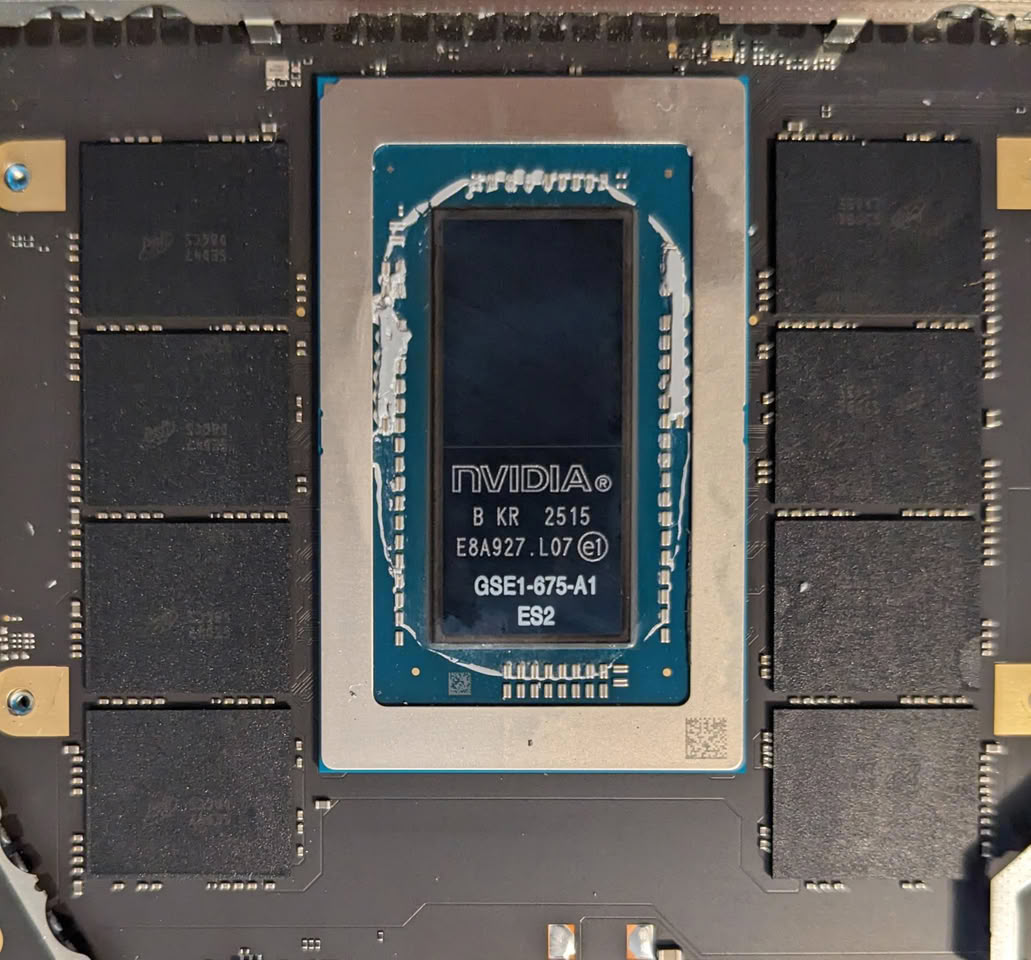
RTX Spark is essentially a super chip for local AI and high-performance computing, integrating NVIDIA Grace CPU and Blackwell architecture GPU on the same platform. The highest specification has 20 Arm CPU cores and 6144 CUDA cores, and connects the CPU and GPU through high-speed on-chip interconnects. Information previously released by NVIDIA shows that the platform can provide up to about 1 PFLOPS of AI computing power and can locally run AI models with parameter scales of 120 billion or more.
The Surface Laptop Ultra exposed this time is expected to provide two RTX Spark configurations. The basic version uses an 18-core CPU and 5120 CUDA cores, while the high-end version uses a 20-core CPU and 6144 CUDA cores. The core configuration difference between the two versions is not just the number of CPUs. The high-end version also has more GPU computing resources, so it is more suitable for high-load tasks such as AI development, 3D rendering, and video processing.
In terms of memory, this device uses a unified memory design closely related to the RTX Spark platform. The 18-core version is expected to offer 24GB or 32GB of memory, while the 20-core version will offer 32GB, 48GB, 64GB, and up to 128GB memory options. Since the CPU and GPU share unified memory, the GPU can directly utilize most of the memory in the system. This is also an important feature that distinguishes RTX Spark from traditional independent graphics card notebooks.
This design is particularly attractive for local AI development. Traditional consumer-grade graphics cards are often limited by independent video memory capacity. For example, high-end GPUs usually only have tens of GB or less of video memory, while RTX Spark's maximum 128GB of unified memory means that large language models can be directly loaded into system memory for running. NVIDIA has previously demonstrated RTX Spark's ability to run very large-scale local AI models and positioned it as a new PC platform for AI agents, generative AI, and local reasoning.
Surface Laptop Ultra itself uses a 15-inch PixelSense Ultra display. The screen uses Mini-LED technology, with a maximum HDR brightness of 2,000 nits, a pixel density of 262 PPI, and supports Dolby Vision. Microsoft hopes to use this high-specification screen to attract professional creators, developers, and users who require high-quality display effects.
The thickness of the fuselage is expected to be controlled within 18 mm, and the weight is less than 4.5 pounds, which is about 2.04 kilograms. For a 15-inch notebook with up to 128GB of unified memory and a high-performance Blackwell GPU, this size control is quite radical. Microsoft's goal is obviously not to simply create a gaming laptop in the traditional sense, but to compress workstation-level computing power into a relatively thin and light body.
Surface Laptop Ultra is also equipped with a touchpad that is significantly larger than the ordinary Surface Laptop and uses tactile feedback technology. Microsoft hopes to provide professional users with an experience similar to the high-end MacBook trackpad through a larger touch area and native tactile feedback of the Windows system.
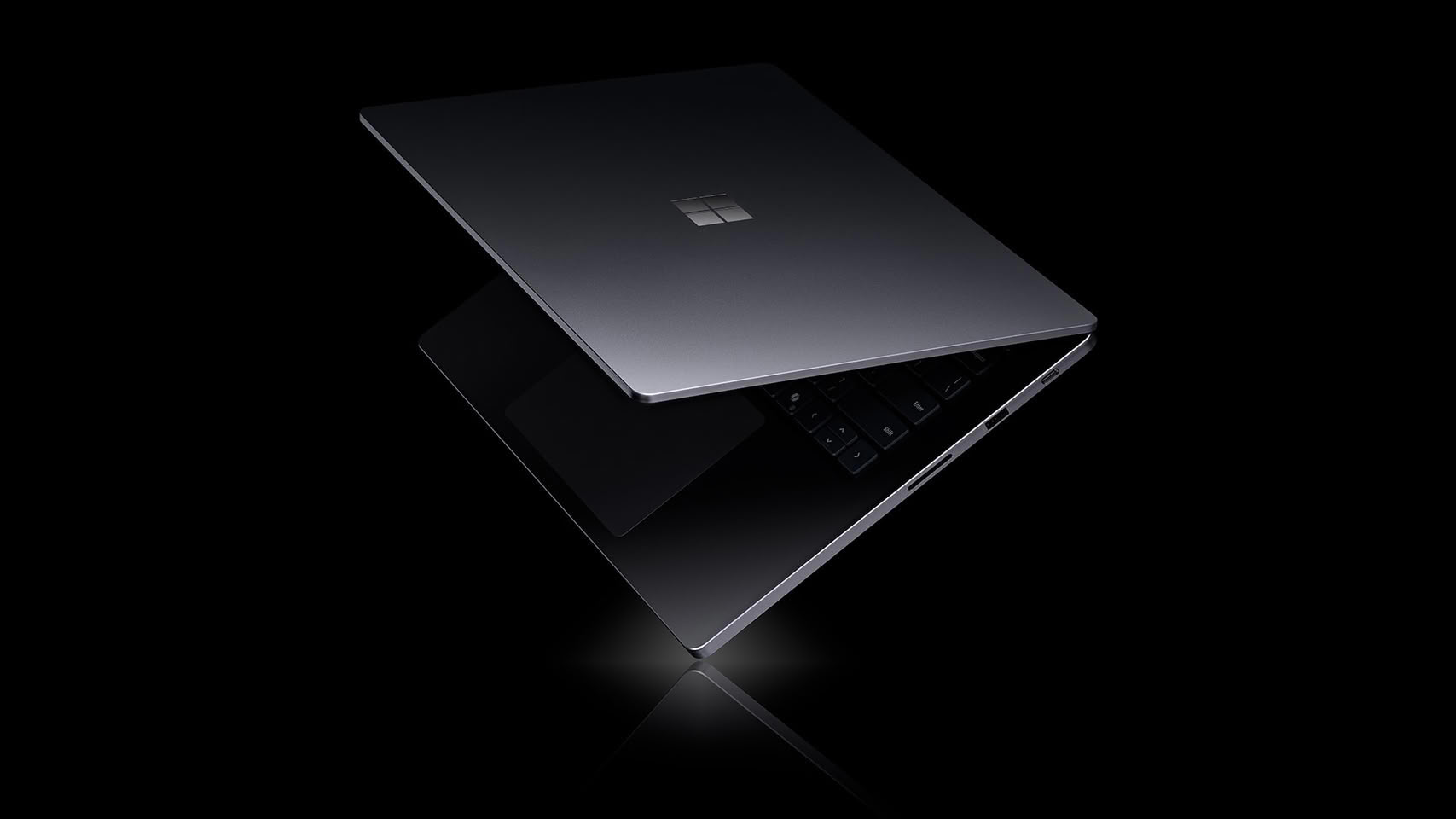
In terms of interfaces, the machine is expected to provide HDMI, 3 USB-C, 1 USB-A, full-size SD card slot and 3.5mm headphone jack. Especially convenient for video production and photography users, the full-size SD card slot can read camera memory cards directly without the need for an additional card reader.
Another important feature of the RTX Spark platform is the balance between power consumption and performance. Surface Laptop Ultra is not a high-power gaming notebook in the traditional sense, but attempts to maintain high performance even when powered by battery. When Microsoft previously demonstrated this device, it emphasized its ability to maintain near-plugged-in performance without being connected to a power source.
Early engineering machine testing showed that this goal is not easy to achieve. A previous Surface Laptop Ultra engineering prototype was tested for about a month. Testers found that the performance of RTX Spark was significantly affected by driver and software optimization, and the CPU temperature approached 100 degrees Celsius under high load. Since the test equipment is an early engineering version, these problems may not necessarily appear on the final retail product, but it also shows that Microsoft and Nvidia still need to further optimize power consumption, heat dissipation, and drivers.
One of the biggest technical selling points of RTX Spark is the CUDA ecosystem. Unlike the current large number of Windows AI notebooks based on Arm platforms such as Qualcomm, RTX Spark directly has a complete software and hardware ecosystem such as NVIDIA CUDA, Tensor Core, RTX and TensorRT. For AI developers, this means that many software originally developed for Nvidia GPUs can be more directly migrated to such devices.
However, the Arm version of Windows still has some compatibility issues. Some traditional Windows applications need to run through Microsoft's x86 to Arm code conversion mechanism, and some games that use kernel-level anti-cheating technology have previously struggled to work properly on Arm Windows devices. Microsoft and Nvidia are working with game developers to solve these problems, so although RTX Spark has powerful GPU hardware, its actual performance in the gaming field still depends on the maturity of the software ecosystem.
From the perspective of hardware positioning, RTX Spark is not simply plugging a notebook GPU into the Surface Laptop Ultra. It is closer to an AI workstation compressed into a notebook body. Nvidia's previously announced RTX Spark has the highest specifications, with 20-core Grace CPU, 6144 Blackwell CUDA cores and up to 128GB of unified memory, and positions it as a new Windows PC platform capable of handling local AI agents, large language models, professional creation and high-end graphics tasks.
Surface Laptop Ultra is therefore also regarded as Microsoft's high-end competitive product for MacBook Pro. It does not adopt the thin and light office positioning of the traditional Surface Laptop, but directly enters the professional workstation market. For users who need to run large AI models locally, perform video editing, 3D creation or software development, the biggest attraction of RTX Spark is not pure CPU or GPU performance, but the CUDA ecosystem and large-capacity unified memory.
Currently Microsoft has not announced final prices for all specific retail configurations. According to previous news, the price of the entry-level version of Surface Laptop Ultra is expected to exceed US$2,000, and the price of the high-end 128GB version may further rise significantly. For reference, Microsoft has clearly positioned this device above the ordinary Surface Laptop. The target users are mainly AI developers, professional creators, and advanced users who require high-performance computing capabilities.
If the final specifications are consistent with the information currently exposed, Surface Laptop Ultra will become a very special product in the Windows Arm camp. Its greatest significance may not be to replace traditional gaming notebooks, but to prove that the Windows Arm platform can also enter the field of high-performance AI workstations. In particular, the combination of up to 128GB of unified memory and 6144 CUDA cores gives it the ability to locally run large AI models that traditional thin and light notebooks cannot provide.
However, the ultimate success of this product still depends on three key factors: actual performance, cooling performance and price. If Microsoft can solve the driver and temperature issues exposed during the engineering stage and allow RTX Spark to maintain high performance under battery power, then Surface Laptop Ultra may become an important attempt at high-end Windows mobile workstations. On the other hand, if the price is too high and Arm software compatibility is still insufficient, then even if it has powerful hardware specifications, it may still be just a device for a small number of users
Comments