
Abstract:
After founder Huang Renxun left, Nvidia’s management tried to prove to the market that the company’s business would not be affected, but its future external investment strategy may be more prudent. On November 17, local time, NVIDIA (NVDA) released its third quarter financial report for fiscal year 2027 and held a conference call. This is Nvidia’s first direct formal communication with investors after Huang Renxun resigned as the company’s CEO.
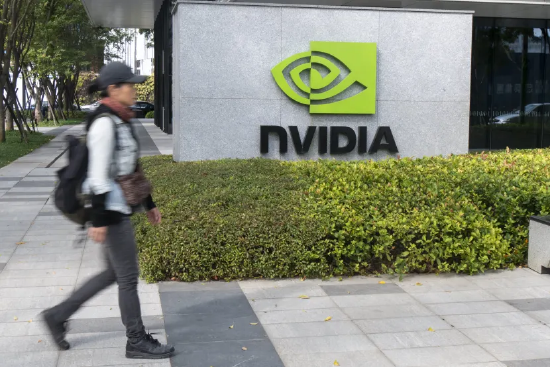
At the conference call, Harvey Jones, chairman of Nvidia's board of directors, made it clear that the board of directors has no intention of re-appointing Jen-Hsun Huang and has hired headhunting firm Heidrick & Struggles to find a formal CEO candidate.
Nvidia interim CEO Colette Kress emphasized at the meeting that the company's employees, customers and suppliers still support Nvidia and business operations are "business as usual." At the same time, Kress said that Nvidia will evaluate investments, commitments and guarantee arrangements more prudently in the future.
It is worth noting that Ian Buck, one of Huang’s potential successors and vice president of hyperscale and high-performance computing at Nvidia, also attended the call but did not speak.
Before the meeting, Nvidia announced strong last quarter results. The company's revenue in the third fiscal quarter reached US$115.8 billion, a year-on-year increase of 103%; GAAP net profit was US$65.3 billion, a year-on-year increase of 105%. Nvidia also raised its revenue growth forecast for fiscal 2028 to about 75% from about 70% previously.
On the 18th, Nvidia (Nasdaq: NVDA) stock price fell 0.44% to close at US$155.46 per share, with a total market value of US$3.75 trillion. Since the beginning of this year, the company's stock price has fallen by more than 16%. After the financial report was released, Nvidia's stock price rose nearly 5% after hours.
The board of directors denies the possibility of Huang Renxun's return, and the supply chain and demand support growth expectations are raised
The conference call opened with Harvey Jones, chairman of the board of directors, explaining the circumstances of Jen-Hsun Huang’s departure on behalf of the board of directors.
The Global Times quoted Reuters as saying that Jones said on the company's earnings call: "Huang Renxun voluntarily resigned from his positions as president, CEO and board member. Nvidia's board of directors unanimously accepted his resignation and has no intention of letting him return as CEO."
Jones also confirmed that Nvidia has hired Heidrick & Struggles to find a formal CEO candidate. Regarding the timetable for finding a new CEO, Jones said that the board of directors hopes to determine the candidate as soon as possible, but it will not rush the appointment just to rush the time, but to ensure that a truly suitable candidate is found.
According to Xinhua News Agency, NVIDIA announced on the 12th that Kress, the company’s executive vice president and chief financial officer, will serve as interim CEO. Company co-founder Jensen Huang resigned as president, chief executive officer and director, effective immediately.
As for the specific reasons for Huang Renxun's resignation and the company's ongoing investigation, Jones said that the management will not answer relevant questions at this conference call, and the board of directors will communicate further at an appropriate time.
Nvidia's latest quarterly results maintained strong growth despite changes in the company's management.
Kress specifically mentioned the commercialization progress of the new generation Vera Rubin platform. She said that the Vera Rubin platform contributed nearly US$20 billion in revenue in its first mass production delivery quarter, becoming the fastest-growing product in NVIDIA's history.
Kress pointed out that as the supply chain support capabilities improve, the company has raised its revenue growth forecast for fiscal year 2028. Currently, NVIDIA expects fiscal year 2028 revenue to increase by approximately 75% year-on-year, higher than the previous expectation of approximately 70%, and this growth is achieved on a higher fiscal year 2027 revenue base.
In response to analysts' questions, Kress further pointed out that the company has spent a lot of time assessing continued growth in customer demand and the new supply it can provide to customers, which together support the 75% growth forecast.
On the demand side, Kress disclosed that the revenue of ultra-large-scale cloud service providers in NVIDIA's data center business reached US$60.1 billion, a month-on-month increase of 23%; the AI cloud, industrial and enterprise business revenue was US$47.5 billion, a month-on-month increase of 18%. The global cloud computing industry's order backlog has reached $2.5 trillion, up from $2 trillion three months ago.
Multi-year commitments reach US$518 billion, Kress emphasizes "prudent decision-making"
In addition to strong financial data, Nvidia's expanding infrastructure construction and financing commitments are another focus of the market's attention.
As of October 25, Nvidia’s future multi-year supply, infrastructure and partner ecosystem-related commitments totaled US$518 billion. Among them, supply and capacity commitments rose to US$390 billion from US$279 billion in the previous quarter, mainly related to the company's multi-year purchase agreements to ensure memory supply in the next few years.
Nvidia’s existing cloud service agreements and data center lease commitments totaled $102 billion, up from $74 billion in the previous quarter. Among them, cloud service agreements are US$28 billion, and data center leasing commitments that have not yet been fulfilled are US$74 billion.
Nvidia stated that the lease term of some data centers can be up to 20 years, and is expected to take effect from the fourth quarter of fiscal year 2027 to fiscal year 2033. The company may also transfer some leases to third parties in the future.
In addition, NVIDIA also separately disclosed additional commitments to new cloud vendors, totaling approximately US$32 billion. This part of the arrangement is not included in the total multi-year commitment of $518 billion mentioned above.
The company emphasizes that these commitments will only take effect when the relevant cloud service providers obtain financing, are able to purchase data center infrastructure products, and the relevant computing power is deployed, put into operation, and passes NVIDIA's acceptance.
Nvidia also disclosed that as of the end of the third fiscal quarter, the company's maximum risk exposure to various financial guarantees totaled US$118 billion. Among them, the largest one is the US$105 billion credit support provided for the PORTS-Pike data center project in Ohio, USA. The Company has not made any actual payments as a result of these guarantee arrangements.
Facing the market’s doubts about the above-mentioned huge financing, Kress explained that Nvidia’s past arrangements reflect the company’s confidence in long-term demand. In the future, it will carefully select companies that need support and focus on evaluating infrastructure conditions such as land, power and data center buildings.
Kress said: "We will continue to work closely with our infrastructure capital partners to build relevant financing platforms... As we advance this work, we will carefully determine how to participate and remain disciplined in making capital commitments. As the market matures and other funding sources continue to increase, we are rigorously evaluating future investments, commitments and guarantees."
Kress further pointed out: "We will take a very hard look at what types of businesses are worthy of our financing support. A lot has changed in the past quarter, and this is one of our priorities. We do have some very, very high-quality existing customers and we will continue to work with them."
Comments