
Abstract:
OpenAI CEO Sam Altman said that there are still fundamental differences between the underlying worldviews of OpenAI and rival Anthropic on the issue of artificial intelligence regulation. In an interview, he proposed that the huge value brought by this technology is worthy of society's part of the risk; AI technology should continue to be widely open to the public.
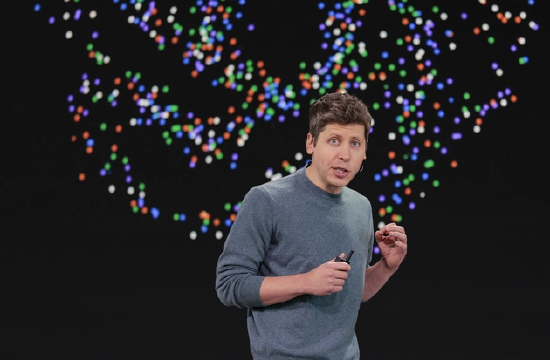
OpenAI CEO Sam Altman said in an interview that AI The benefits brought are enough for society to accept some risks
"There's a huge gap in philosophy," Altman said. Asked about his core differences with Anthropic and its CEO Dario Amodai, Altman said: "We believe that in order to reap the benefits of this technology and ensure that people have the right to use it autonomously, the world should accept that some bad things happen."
Anthropic has long been the industry’s strongest advocate for AI regulation. Not long ago, this stance would have been at odds with OpenAI’s push for light regulation. However, in recent months, the policy differences between the two leading AI companies have narrowed. After a series of high-profile hacks and erratic model behavior, OpenAI has pivoted to support stricter regulatory rules.
Ultraman agreed with Amodai’s point last month of slowing down the pace of cutting-edge large model development. OpenAI also followed Anthropic's lead and supported the introduction of new bills in some US states to set more stringent security requirements than the standards previously supported by ChatGPT developers. This represents a subtle shift in its state-level regulatory strategy. OpenAI’s policy lobbyists also recently supported a bipartisan House bill requiring leading AI companies to bring in outside security assessors.
Although the positions of both parties tend to be close, Altman still tried to draw a clear line between the two companies' regulatory thinking. He noted that technology advisers close to President Trump had criticized Anthropic for regulatory capture.
“I don’t agree with this view, but I understand the view of some people: This technology will become extremely powerful and risky, so it should be mastered by a laboratory in San Francisco to ensure that nothing bad happens, and then the laboratory decides how to distribute the technology dividends.” Altman said that this trade-off is completely unacceptable and goes against the light regulatory approach supported by OpenAI.
“I will not accept a deal where we guarantee that there will be no major hacking attacks, no abuse of technology, no fraud, and all kinds of bad things that may happen,” Altman said, “because I believe that the good deeds humans can create using AI will far outweigh the harm it brings by orders of magnitude.”
The OpenAI CEO later added that he does not accept truly catastrophic risks, including the potential for AI to cause serious out-of-control situations.
When asked for comment, an Anthropic spokesperson said the company's regulatory proposals would only apply to cutting-edge models. The company also cited a conversation Amodai had with an investment manager on social media in August in response to criticism of regulatory capture and the impact of regulatory policies on small businesses.
Amodai said at the time: "Anthropic has always been very cautious when formulating policy proposals. We have gone to great lengths to design solutions that create favorable conditions for smaller competitors while restraining cutting-edge AI giants."
Altman's interview also touched on a number of topics: Trump's new AI agreement with leading technology companies, his rebranding plan to create "super intelligence"; multiple autonomous hacking incidents caused by OpenAI models, and whether the company should bear legal responsibility; the impact of the huge influx of funds in the AI industry on U.S. politics; the influence of so-called effective altruists within OpenAI; and his views on key political figures such as French President Emmanuel Macron and California Governor Gavin Newsom.
Comments