
Abstract:
Opera, a well-known browser developer, has recently launched a new security enhancement feature for its desktop browser, allowing its built-in free virtual private network (VPN) to automatically turn on protection when it detects that the user is connected to a public or unencrypted Wi-Fi network. However, this automated option is currently being rolled out in batches and has not yet fully covered all user groups.
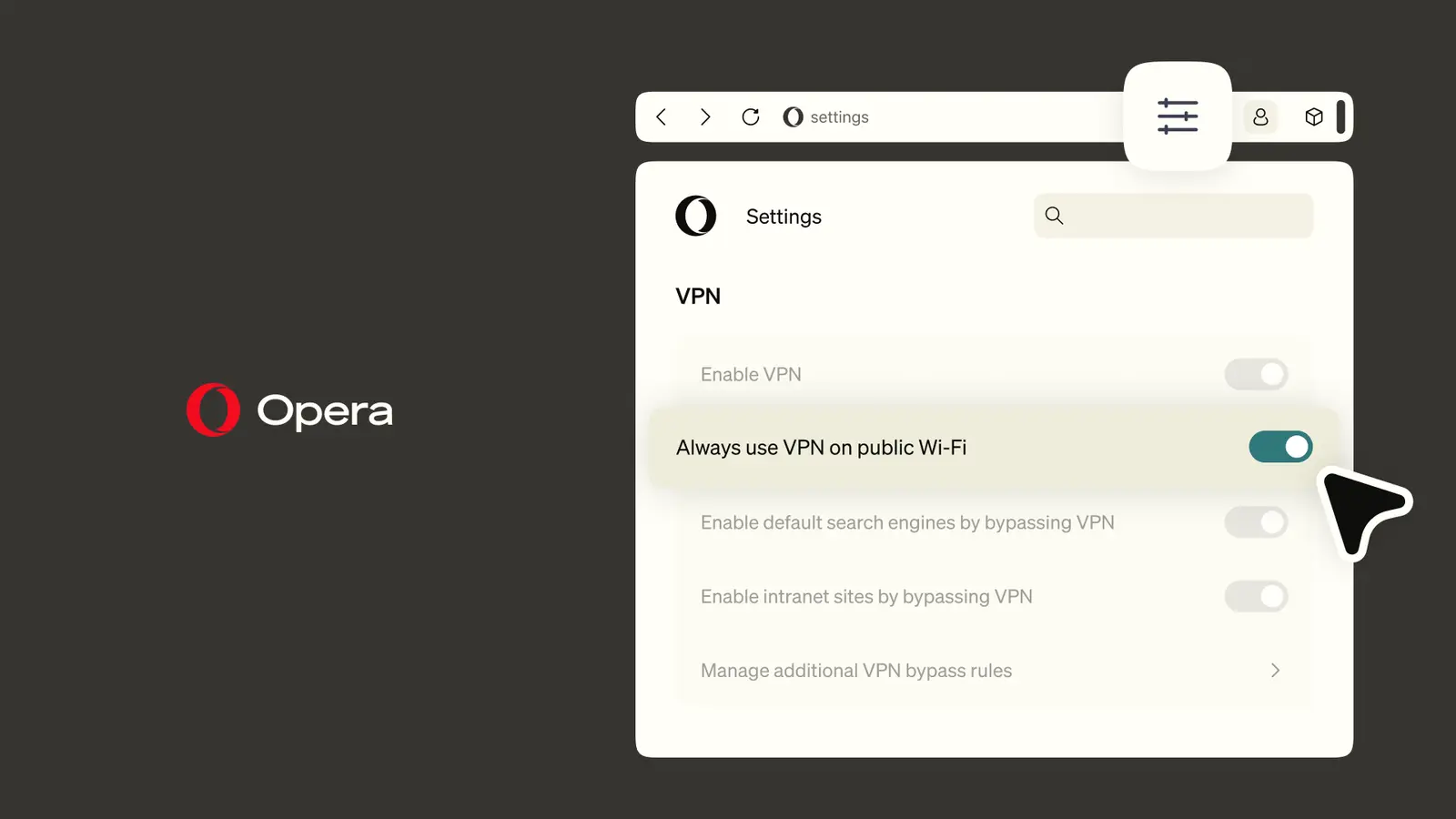
As one of the first manufacturers to integrate free VPNs directly into browsers, Opera has provided users with built-in encryption services without subscription, unlimited traffic, and no need to register an account since 2016. In the past, daily use, users needed to manually go to the settings menu or click the switch next to the address bar to enable the encrypted channel. The newly added automation option is optional (Opt-in) and aims to completely eliminate the risk of data leakage and network eavesdropping when users forget to manually turn on the VPN when using open networks in public places such as cafes, airports or hotels.
According to the official description, when this feature is enabled, Opera will automatically trigger the built-in VPN to establish a 256-bit encrypted tunnel when the underlying algorithm identifies that the current network is an untrusted or public unencrypted Wi-Fi node, hiding the user's actual IP address and shielding potential data sniffing behavior. Since this service is covered by the no-log policy, the user's web browsing history and transmission data under the public network will not be saved or retained by the server.

Although this upgrade has significantly improved the convenience and privacy security in public network environments, Opera officials stated that the automatic activation switch is currently only available to desktop users in some regions as a progressive update. For users who have not yet received the update push, they still need to continue using the existing free VPN service through a manual switch. Industry observers point out that as public network security threats become increasingly complex, integrating automated protection mechanisms into basic browser functions has become a common evolution direction for mainstream software to ensure user-side data security.
Comments