
Abstract:
Who would have thought that tapes would usher in a second spring in the AI era. On October 29, Japan's Fujifilm announced that it will invest approximately 10 billion yen (approximately RMB 422 million) and plans to expand its Odawara factory in Kanagawa Prefecture from fiscal year 2026 to 2028 to increase the production capacity of data storage tapes to five times that of fiscal year 2025, focusing on the production of the latest generation LTO Ultrium 10 tapes.

According to Fujifilm, this is the largest investment in dedicated LTO tape facilities in the past 20 years.
The main reason for promoting the expansion is the massive data archiving demand brought about by generative AI.
AI uses the most advanced chips, why does it need tapes?
There is a classic joke circulating in the computer industry.
Computer scientist Andrew Tannenbaum once said,
Never underestimate the bandwidth of a car loaded with tapes speeding down the highway
. It sounds absurd, but when the data that needs to be transferred reaches the level of petabytes or even exabytes, loading storage devices on trucks may indeed be more efficient than transferring it through the network.
In 2016, Amazon AWS launched the Snowmobile service, which directly uses heavy-duty trucks to transport large storage devices, and can move up to 100PB of data at a time.
While Snowmobile is not shipping tapes, and the service was discontinued in 2024, it illustrates a long-standing problem. When the data scale reaches a certain level, how to save and move the data at a reasonable cost is an engineering challenge in itself.
The explosion of generative AI has made this problem more and more prominent.
Training large models requires GPU, HBM, and high-speed SSD. However, after training, enterprises will also leave behind the original corpus, cleaned data sets, training logs, model checkpoints, and historical versions generated by continuous iterations.
Among them, the data being calculated requires high-speed storage devices, and large-scale data sets that are frequently accessed can be placed on mechanical hard drives.
And those data that will not be used for months or even years, but cannot be deleted casually, are suitable for long-term archiving systems.
The industry usually refers to data that is accessed very rarely as cold data.
For example, after an AI company has trained a new model, the old data set may no longer be useful in the short term, but it may still need to be reused when repeating experiments, retraining, or conducting compliance audits in the future.
Problems arise. When data accumulates more and more, do we have to keep all hard drives powered on and spend money maintaining files that may not be accessed every few years?
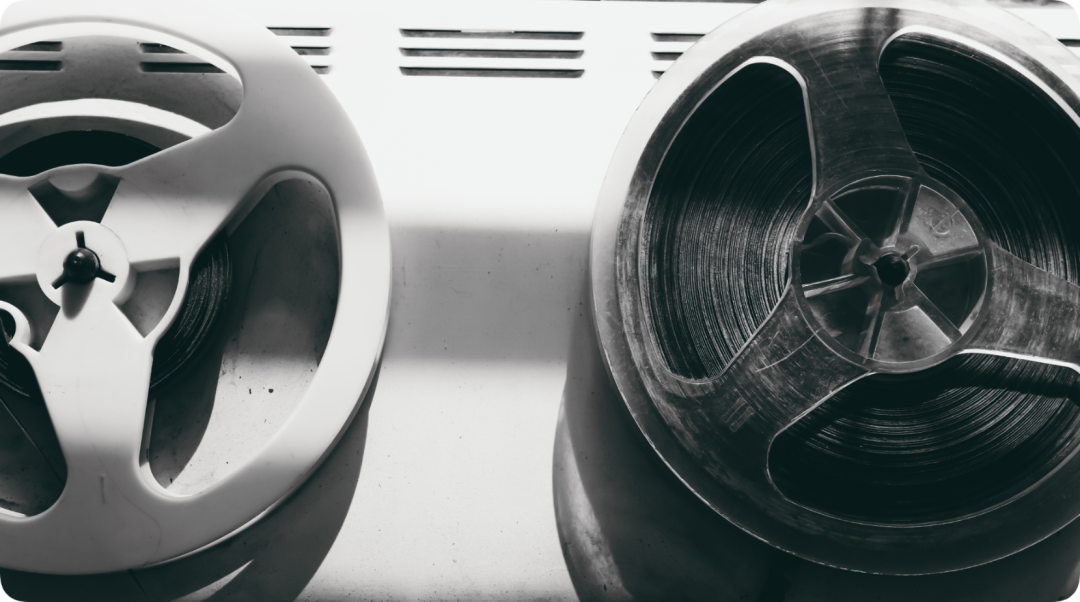
Tape is just good at doing this.
First of all, it is cheap and energy-saving. Tapes can be stored offline for long periods of time and do not require continuous power supply when idle, nor do they need to maintain equipment operation and cooling like online hard disk arrays.
Fujifilm has calculated that under specific conditions of saving 100PB of data and a cycle of ten years, an automated tape system can reduce the total cost of ownership by approximately 86% and reduce carbon emissions by approximately 95% compared to an all-mechanical hard disk solution.
Second is safety. Tapes can be removed from the system and saved offline, so even if the server is attacked by ransomware, the physically isolated tapes still have the opportunity to retain an independent backup.
Moreover, modern tapes are not as slow as imagined. LTO-10 has raw sequential transfer rates of up to 1200MB/s, and the automated tape library can also utilize robotic loading and reading.
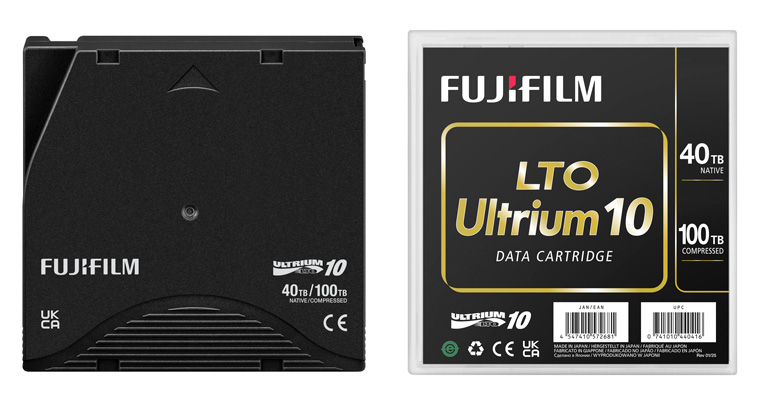
However, tapes need to search for data sequentially, and randomly reading a file may take a long time, so they are not suitable for frequent access and real-time calculations. If the SSD in the AI data center is responsible for making data available at any time, then the tape is more like a low-cost, large-capacity digital warehouse.
In fact, the scientific community has long been using this approach.
In December 2025, CERN, the European Organization for Nuclear Research, announced that the cumulative experimental data stored by the Large Hadron Collider reached 1EB, equivalent to 1 million TB, with most of the data stored on approximately 60,000 tapes.
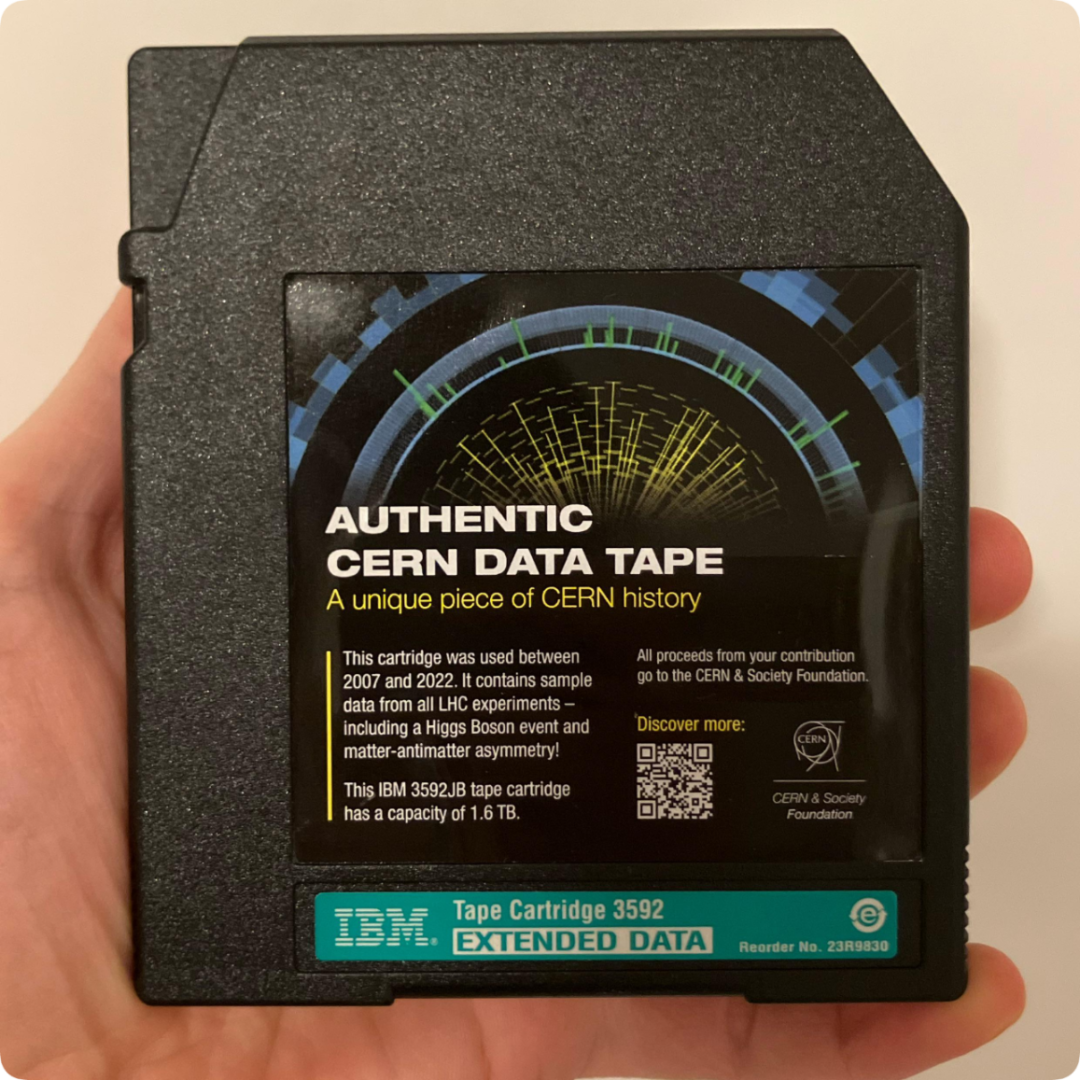
Experimental data collected decades ago may regain research value due to the emergence of new theories. CERN predicts that the scale of data that needs to be saved and processed in the next ten years will reach about ten times the previous cumulative storage capacity.
Similar logic also applies to historical corpus, training records and model backups saved by AI companies.
The growth of the tape market is already supported by actual data.
According to data released by the LTO Alliance in September 2026, global LTO tape shipment capacity reached a record high of 176.5EB in 2024, a year-on-year increase of 15.4%. Although it has declined somewhat, it will still reach 160.3EB in 2025.
Entering the first quarter of 2026, with the launch of LTO-10 and increasing demand for archiving, global tape shipment capacity has increased by 57% year-on-year. The statistics here are the storage capacity provided by tapes, not the sales volume of tape cartridges.
Enterprise tape has always had a stable market, and the demand for massive data archiving from generative AI has given this old technology new growth opportunities.
A tape can store 100TB, and the capacity has increased 400 times in 26 years
There is another reason why tapes can regain attention in the AI era that are easily overlooked.
While ordinary consumers thought tape technology had stagnated, engineers had been improving its storage density.
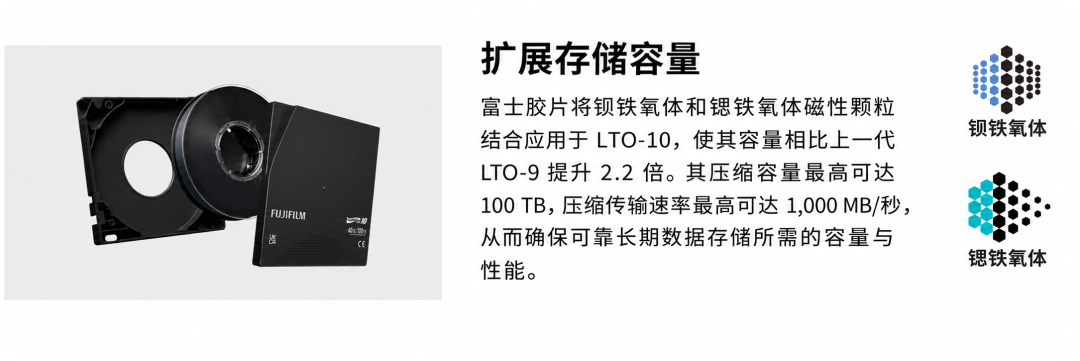
In June 2025, Fujifilm launched the LTO-10 30TB data tape, and in December of the same year released a 40TB version, which will be available in 2026. The original capacity of a single box of the latest product reaches 40TB. If calculated according to the compression ratio of 2.5:1 under ideal conditions, the theoretical capacity can reach up to 100TB.
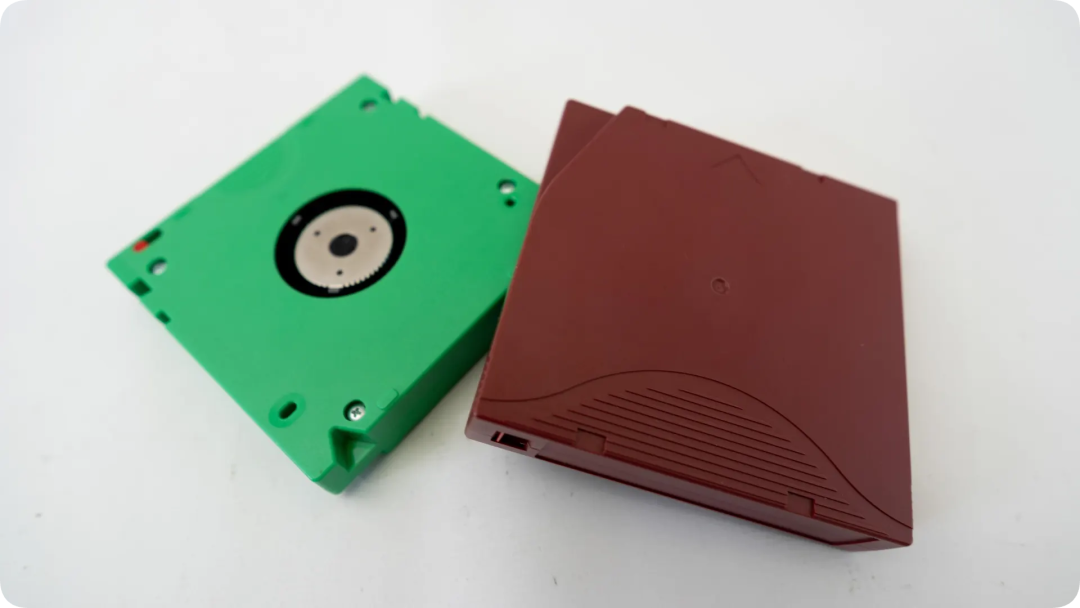
Picture|LTO-10 30TB
For comparison, the first generation of LTO tapes launched in 2000 had a raw capacity of only 100GB. In just 26 years, the capacity of a single box has increased by 400 times. However, 100TB is a theoretical compression capacity. For already compressed videos, images, and model weights, the actual capacity usually cannot reach this number.
What’s more interesting is that the LTO-10 tape cassette is only about 10 centimeters square and 2.15 centimeters thick, but there is a 1337-meter-long tape rolled inside, which is equivalent to three laps of a standard track and field track.
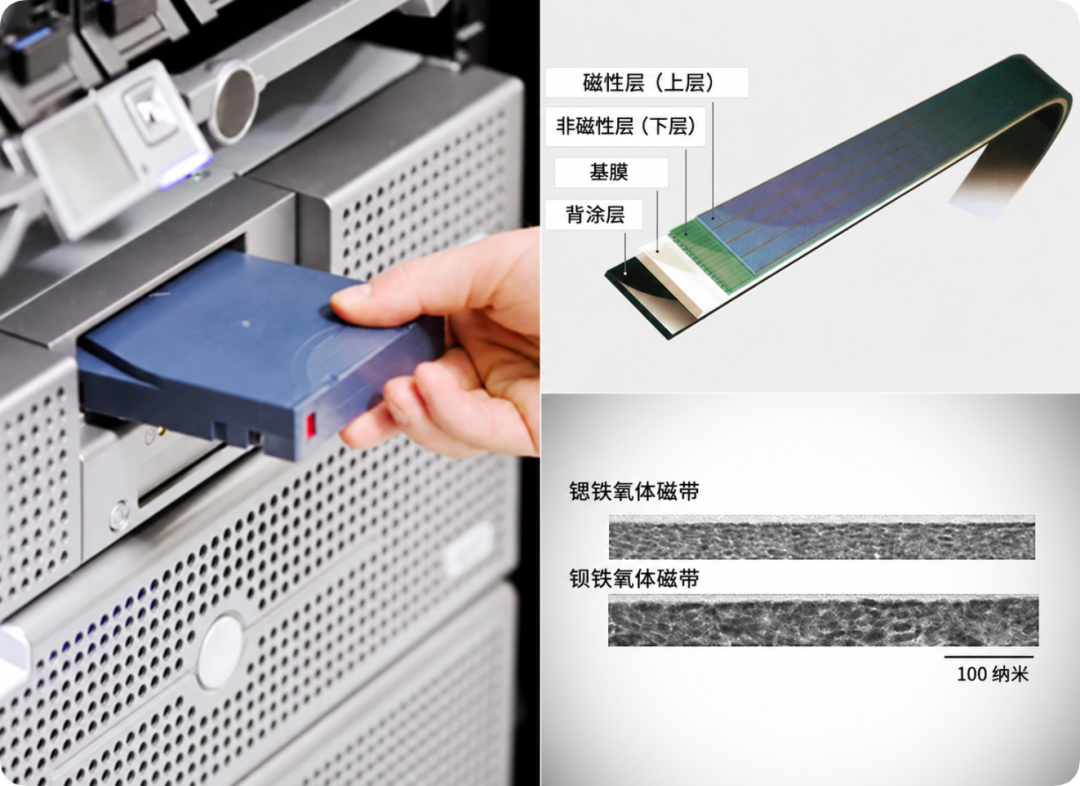
In order to fit a 1,337-meter-long tape into a cassette that is only about 10 centimeters square, Fujifilm introduced aramid film and new thin-layer manufacturing technology to reduce the overall thickness of the tape to only 4 microns. It also used ultra-fine magnetic particles that combine barium ferrite and strontium ferrite technology to increase the amount of data that can be recorded per unit area.
As for the storage principle, it is actually the same as the audio tapes from decades ago.
The surface of the magnetic tape is covered with tiny magnetic particles. When writing data, the magnetic head records digital information by changing the local magnetization state; when reading, it detects changes in the magnetic field and restores the data through decoding and error correction.
Modern LTO tapes record in a linear serpentine format, think of it like a highway with tens of thousands of lanes. The magnetic head writes from beginning to end along a set of tracks, then adjusts its position to write back in the opposite direction.
The latest LTO-10 has 15104 data tracks, and the drive can read and write 32 tracks at the same time, relying on more sophisticated materials and servo control technology to continuously increase capacity.
Moreover, tape capacity growth is far from over.
In 2020, IBM and Fujifilm achieved a magnetic recording density of 317Gb per square inch in the laboratory, demonstrating the technical potential of a single tape cartridge reaching 580TB in the future, which is equivalent to 14.5 times the current 40TB commercial product.
Of course, 580TB is still in the laboratory demonstration stage and is still a long way from commercialization.
There is another long-term cost of tape that is often overlooked and that is compatibility.
Tape media can be stored for many years, but that doesn’t mean that new drives decades from now will still be able to read it. The latest LTO-10 drives can only read and write to LTO-10 tapes, leaving businesses with the need to retain older equipment or periodically migrate historical data to new media.
For data centers that manage tens of thousands of tapes, data migration, verification, and equipment maintenance are also a considerable expense.
Even so, in large-scale cold data archiving scenarios, tapes still have strong cost and energy consumption competitiveness. The precision coating, thin film materials and magnetic particle technologies that Fujifilm has accumulated over the past few decades have thus regained commercial value in the AI era.
The story of tapes also plays out in the mechanical hard disk industry.
In January this year, Western Digital revealed that the company's hard drive production capacity for the 2026 calendar year was basically sold out, and long-term purchase agreements with some large customers have been extended to 2028.
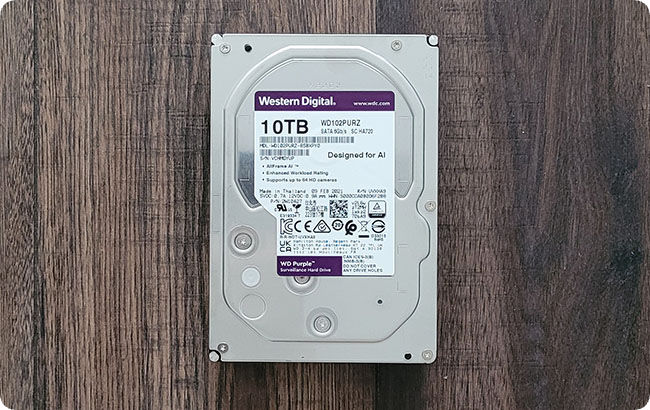
Seagate's situation is even more exaggerated. According to an earnings call in late October, the vast majority of the company's near-line mechanical hard drive shipment capacity has been allocated through long-term agreements until 2028, and some cloud service providers' purchase agreements even cover until 2030.
What is more noteworthy is that not only are mechanical hard drives sold more, but their prices are also rising.
The reason is not complicated. The random read and write performance of SSD far exceeds that of mechanical hard drives, but for cloud service providers who need to store massive amounts of data online for a long time, mechanical hard drives still have a cost advantage per TB.
In particular, the AI industry continues to expand, and training data, model files, and various types of generated content continue to accumulate. Data centers need not only faster SSDs, but also mechanical hard drives that can provide tens or hundreds of PB capacities at reasonable prices.
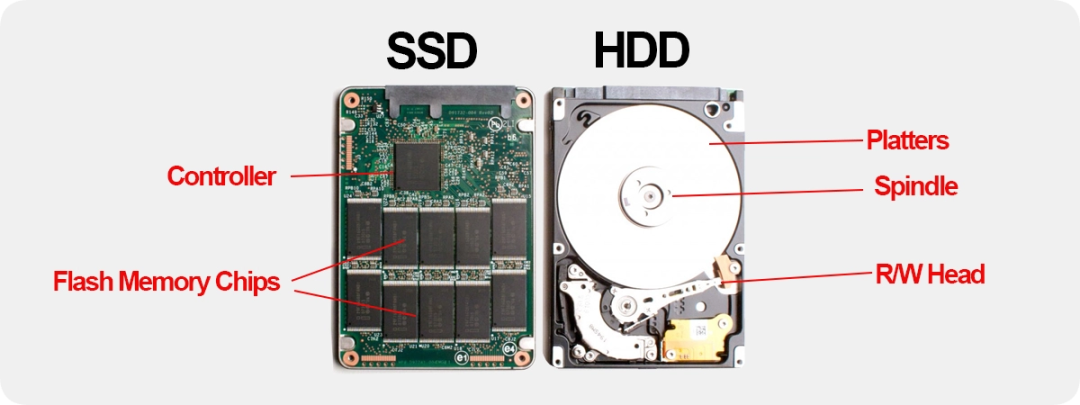
Of course, HDDs also have performance and maintenance costs. As the capacity of a single disk continues to increase, the random access capability will not improve year-on-year, and the data reconstruction time after a failure may also be lengthened.
But for cloud service providers, as long as storage cost, capacity density and access performance can meet business needs, mechanical hard drives still have value.
From Fujifilm's announcement of a five-fold expansion of production, to Western Digital's annual production capacity being basically sold out, to Seagate's signing of a long-term agreement with cloud service providers extending to 2030,
A number of traditional technologies that have gradually lost their presence in the consumer electronics market are finding new growth space in AI data centers.
However, tape may also usher in new competitors in the future.
In February 2026, Microsoft Research published the latest results of Project Silica in Nature. Researchers used femtosecond lasers to write data inside the glass, achieving a storage capacity of 4.8TB in a glass about 12 centimeters square and 2 millimeters thick.
Based on accelerated aging tests, researchers estimate that the data is expected to be preserved for more than 10,000 years. Although it is still far from large-scale commercial application, it shows another possibility for long-term archiving.
To some extent, data storage in the AI era is presenting a rather wonderful picture.
On the one hand, Fujifilm is still improving the magnetic powder coating process that has lasted for decades, allowing a small box of tapes to hold dozens of terabytes of data; on the other hand, Microsoft has begun to try to use lasers to write information into glass like ancient humans carved words on stone.
While the world is chasing more powerful GPUs and smarter large models, the old technologies responsible for saving data have ushered in their own golden age.
The trend has never only belonged to new things, but also to the old crafts that have found their place in the new trend.
Comments