
Abstract:
From November 5 to 10, 2026, the 9th China International Import Expo (hereinafter referred to as the CIIE) was held in Shanghai.
During the exhibition, Sony (China) Co., Ltd. (hereinafter referred to as: Sony China) launched the world's first privacy-friendly wireless sensing fall detection system for home care.
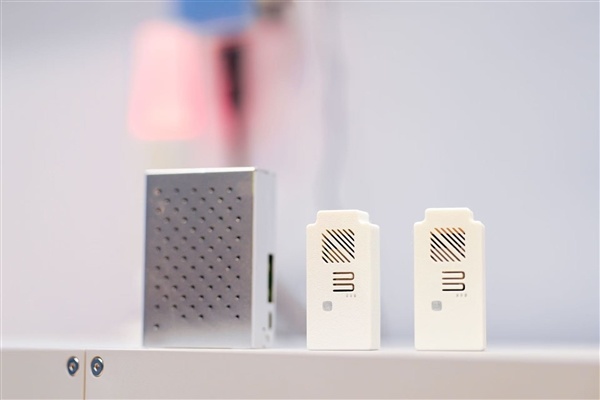
The system senses human body activity through Wi-Fi signals without the need to wear additional equipment or collect images. It is designed for home environments such as bedrooms and bathrooms, as well as elderly care institutions and community elderly care service scenarios, to help caregivers detect falls in a timely manner.
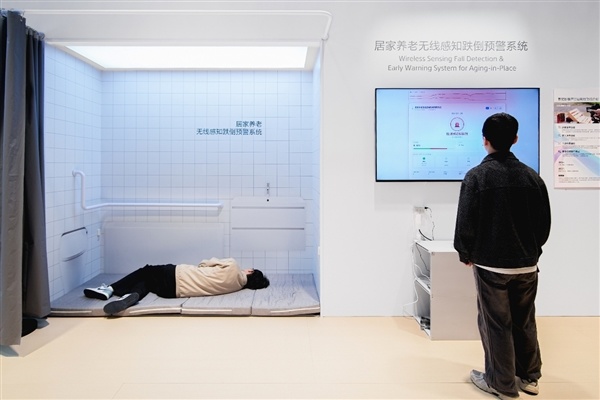
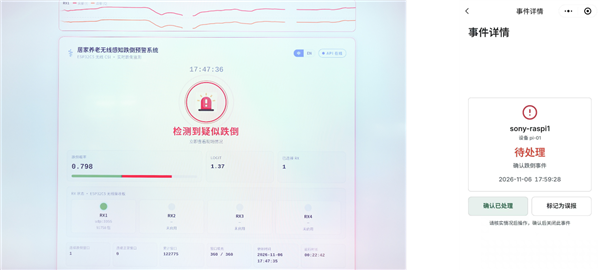
The system uses Wi-Fi signals to sense human activity. Human body activities will change the propagation characteristics of wireless signals. The system collects channel state information (CSI) based on this, combines human movement characteristics and deep learning algorithms to identify fall events, detects and triggers on-site sound and light prompts in real time, or provides alarms through APPs and mini-programs.
The system only requires a Wi-Fi signal transmitter, receiver and data processor. It does not require cameras and does not collect images. It can fundamentally eliminate image privacy risks and support single-person detection of common fall types such as slow falls and slips.
For the elderly, there is no need to wear additional equipment and their daily lives are not disturbed; for families and care institutions, the system does not involve camera image collection, and is especially suitable for privacy-sensitive scenes such as bedrooms and bathrooms. Caregivers can obtain fall alarm information without additional screen monitoring to assist in timely response.
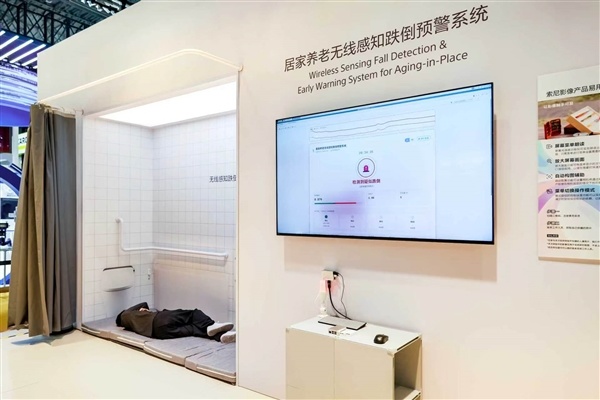
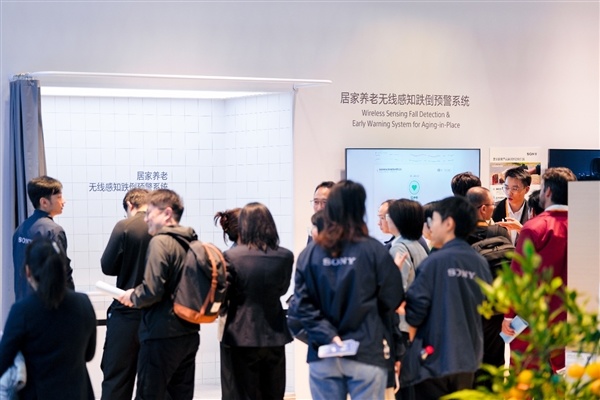
At this CIIE, Sony’s booth set up a demonstration space that simulated daily bathrooms.
The staff demonstrates a simulated fall on site, and the system triggers an alarm and synchronizes it to the wall TV screen in real time; the audience can also walk into the space under the guidance of the staff, experience the simulated fall process, and intuitively feel how the system issues an alarm without being able to see the picture.
The system is easy to deploy and can automatically enter the monitoring state after powering on. It does not require complicated debugging and can be quickly activated in home and institutional environments.
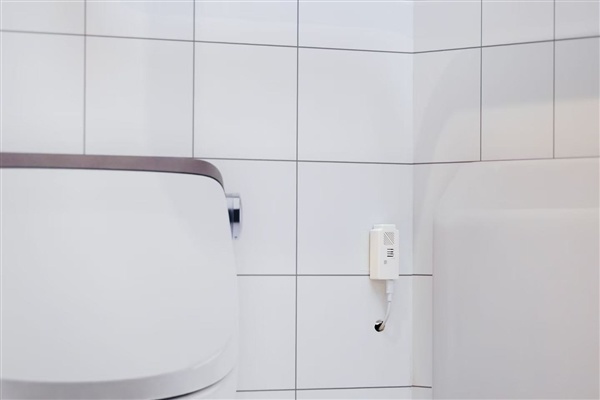
Faced with real care scenarios, this system can be applied to fall detection for the elderly in home care, public health service centers, nursing homes, health care institutions and medical institutions. It can be integrated into multiple care scenarios from home to community, from institutions to medical care, providing round-the-clock protection for the safety of the elderly.
At present, the system has been implemented on a pilot basis in Shanghai, and the system stability and detection accuracy are being further verified through actual operation.
It is understood that the system was independently developed by Sony China Research Institute. During the development process, Sony also cooperated with the University of Science and Technology Beijing.
Comments