
Abstract:
Nvidia founder Huang Jensen resigned, causing new changes in Nvidia’s shareholder camp. NVIDIA shareholder plaintiffs have extended the litigation period of the federal securities class action lawsuit, while some major shareholders hope that Huang Renxun will retain the possibility of returning. On November 12, local time, Nvidia disclosed that its board of directors has accepted Huang Jenxun’s application to resign as president, CEO (CEO) and director. Financial Director Colette Kress will serve as interim CEO, and Harvey Jones will become the company’s first chairman.
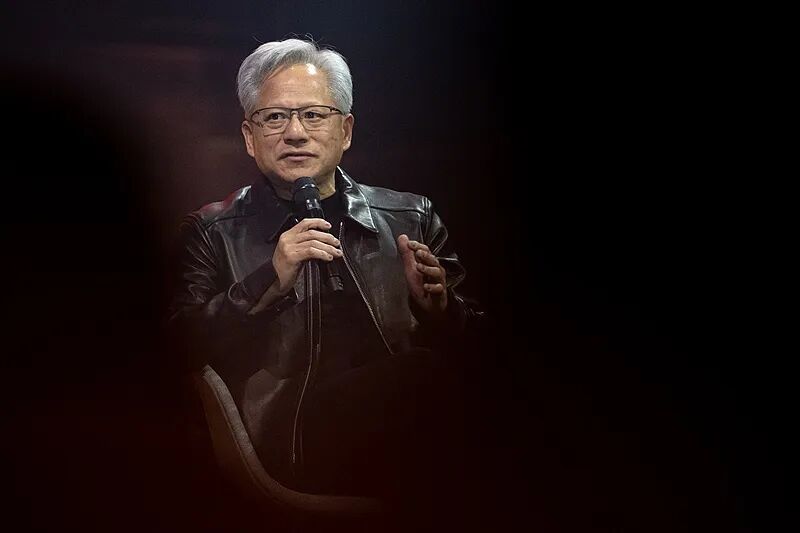
After Huang Renxun resigned, the attorneys who had previously sued Nvidia and Huang Renxun believed that this increased the intensity of their accusations; on the other hand, many Nvidia employees, some major shareholders and Silicon Valley colleagues are calling for Huang Renxun's return
Affected by the Jen-Hsun Huang incident and high-level personnel changes, Nvidia’s stock price fell by more than 13% in a single week last week, and its market value evaporated by more than $550 billion. Nvidia’s latest market value is US$3.92 trillion.
After Jen-Hsun Huang admitted his extramarital affair on November 8, Rosen Law Firm immediately filed a securities class action lawsuit in the California federal court to recover economic losses caused by "misleading statements" by Jen-Hsun Huang and Nvidia on behalf of the class shareholders. According to the complaint, the so-called misleading statements include the whereabouts of the chips of Nvidia's Singaporean customer Megaspeed, and the relationship between Huang Jenxun and Alice Huang (Huang Le), a former executive of Megaspeed.
Huang Renxun's resignation strengthens the plaintiff's accusations. Laurence Rosen, the attorney representing this securities class action case, explained to Caijing that Huang Renxun's resignation and previous related reports are regarded as another "corrective disclosure." In U.S. securities fraud lawsuits, this means that the plaintiff claims that the truth that was previously concealed was exposed, and the resulting decline in stock prices should also be included in the losses of investors.
On the other hand, the petition on the Internet requires the board of directors to reinstate Huang Renxun to his position, ensure independent investigation and fair hearing, and provide timely public explanation. Currently, more than 170,000 people have signed the website, including employees and shareholders, as well as leaders of Silicon Valley technology companies.
Zeng Zhi (pseudonym) is an Nvidia employee who also signed his name on this petition. He told Caijing, "From a moral perspective, Lao Huang (Huang Renxun) must have made a mistake, but we do not think he should resign because of this matter."
The night he learned that Huang Renxun resigned, Zeng Zhi almost didn't sleep all night. When he went to work at the company the next day, he felt that the atmosphere was depressing. "No one was working seriously." he said. Zeng Zhi found that he and his colleagues did not want Huang Renxun to leave because the company needed a CEO who understood technology and was good at "diplomacy." As for the CEO who is temporarily taking over, he said he is completely unfamiliar with it.
Shareholder Litigation Update
In this securities class action case, the main plaintiff is an individual investor in NVIDIA. According to the complaint, one of the investors, Mark Kistenmacher, made seven purchases between February and November this year, totaling approximately $20,500. The lawsuit said the stock price drop could affect hundreds or thousands of shareholders.
Rosen told Caijing that the plaintiff has expanded the class action period from December 19, 2024 to November 12, 2026. Investors who bought Nvidia securities during this period may be included in the scope of claims, and the decline in stock prices after Huang Renxun's resignation is also covered. Before Huang Renxun's resignation, the class action period was from October 9, 2025 to November 8, 2026.
On November 12, according to media reports, Huang Jenxun had an extramarital affair with Kimberly Powell, the company’s vice president of healthcare. On the same day, Huang Renxun resigned from Nvidia.
Nvidia’s announcement did not specify the reason for the resignation. Rosen believes that "the reason for resignation is obvious."
A commercial company legal consultant familiar with the United States told Caijing that under the legal and governance framework of the U.S. stock market, undisclosed intimate relationships or interest relationships between CEOs and direct subordinates are not only regarded as "personal moral flaws", but may "first be characterized as a potential entry point for governance failure and disclosure fraud."
Rosen confirmed to Caijing that they are amending the complaint to include content regarding Huang’s inappropriate relationship with an Nvidia executive who reported to him.
Nvidia’s board of directors is in an awkward position during this controversy. Ann Lipton, a law professor at the University of Colorado, explained to Finance News that the current problem facing Nvidia’s board of directors is that shareholders claim that Huang Renxun and the company’s statements are false. “If the board of directors launches an investigation and discovers more misconduct, it will only strengthen the shareholders’ accusations.”
Silicon Valley is discussing the return of Jen-Hsun Huang
As the resignation of Huang Renxun fermented, another wave of shareholder voices grew rapidly. Some institutional investors and shareholders have recently spoken out on social platforms, expressing sympathy for Huang Renxun's experience and hoping that Nvidia's board of directors will carefully consider the pace of CEO selection.
On November 14, Altimeter Fund, founded by Brad Gerstner, and Atreides Management, led by Gavin Baker, jointly and publicly wrote a letter to Nvidia’s board of directors, arguing that the board should avoid hastily replacing Huang Jen-Hsun, requiring a “slow, prudent, and thoughtful” process for the selection of future CEOs and retaining the possibility of all options, including the potential return of Huang Jen-Hsun.
According to documents submitted by the two institutions to the U.S. Securities and Exchange Commission, as of June 30, Altimeter held approximately 9.4 million shares of Nvidia stock, equivalent to approximately US$1.9 billion based on that day's price, which was its largest single stock position; Atreides held approximately 1.25 million shares, equivalent to approximately US$250 million.
A person close to Nvidia told Caijing that there is currently an internal voice asking Jen-Hsun Huang to continue to maintain his original job and "resign without resigning."
Musk, the founder of Tesla and SpaceX, made his platform public. He said on social media that there is a petition pushing for Huang's reinstatement that he "will also sign" and that it is hosted on the volunteer-run "Stand with Jensen" website. The next day, Musk also said that many transactions were reached through Huang Renxun's personal "handshake" rather than written contracts. Without him, Nvidia would have lost at least a few key transactions.
On November 16, according to media reports, Silicon Valley allies are putting pressure on Nvidia's board of directors to reinstate his position, and Huang Renxun himself is also considering returning to Nvidia as CEO. According to multiple people familiar with the matter, Huang has discussed the possibility of returning to the company with his cronies, although Nvidia's board of directors is conducting an independent investigation. On November 17, Nvidia will release its first financial report since Huang Renxun’s departure.
Regarding whether Huang Renxun will eventually return, Zeng Zhi said that most employees hope that he will come back, but "our power is limited." Although he actually feels that it is unlikely that he will come back, he still hopes that there is a few percent chance of a comeback.
Comments