
Abstract:
Affected by man-made climate change and the gradually strengthening El Niño phenomenon, the global ocean is under unprecedented warming pressure. Statistics from the European Copernicus Climate Change Service show that last Saturday, the average surface water temperature of the global oceans except the polar regions rose to 21.1 degrees Celsius, setting a new historical record.
This value is slightly higher than the record of 21.09 degrees Celsius set in March 2024, and is also significantly higher than the normal level for the same period. Scientists pointed out that although the gap between the old and new records is small and there is some uncertainty in global temperature estimates, the timing of this record-breaking occurrence is particularly worthy of vigilance.
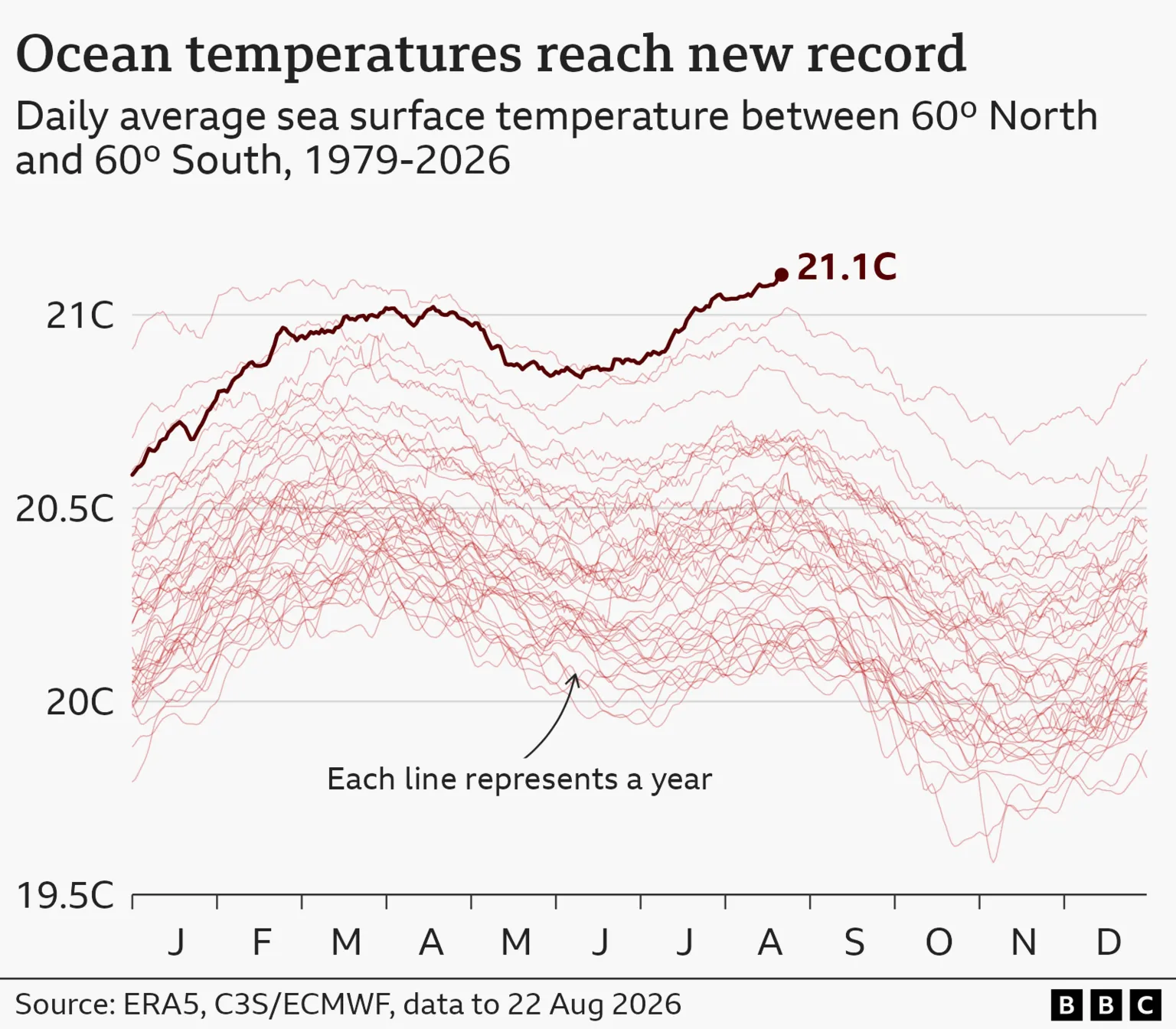
The global average ocean water temperature usually reaches its peak in March or April each year, as the southern hemisphere summer is coming to an end. Because the Southern Hemisphere has more ocean area than the Northern Hemisphere, it has a greater impact on global average sea temperatures. As a result, sea temperatures climbed to record levels in August, indicating an unusually high level of ocean heat accumulation.
Dr. Samantha Burgess, deputy director of the Copernicus Climate Change Service, said this record once again shows that the pressure on the ocean is increasing. She noted that El Niño is adding heat to the climate system, but that effect is layered on top of decades of continued warming caused by human activities.
This data is based on water temperature observations about 10 meters below the sea surface, integrating information from multiple sources such as buoys, ships and satellites to estimate global ocean temperature conditions.
Scientists are particularly worried that El Niño has not yet reached its expected peak, but the global ocean has already experienced record high temperatures. El Niño causes abnormal warming of large areas of ocean water in the eastern tropical and central Pacific Ocean, which generally increases average global temperatures. This El Niño is expected to continue to strengthen until around Christmas, with researchers warning it could become the strongest El Niño event in hundreds of years.
Dr. Jeremy Grist, a senior researcher at the National Oceanographic Center in Southampton, UK, said that the current record-breaking sea temperature is an early signal of the increasing intensity of El Niño. If other conditions are similar, the global ocean temperature record may be set again in March or April 2027.
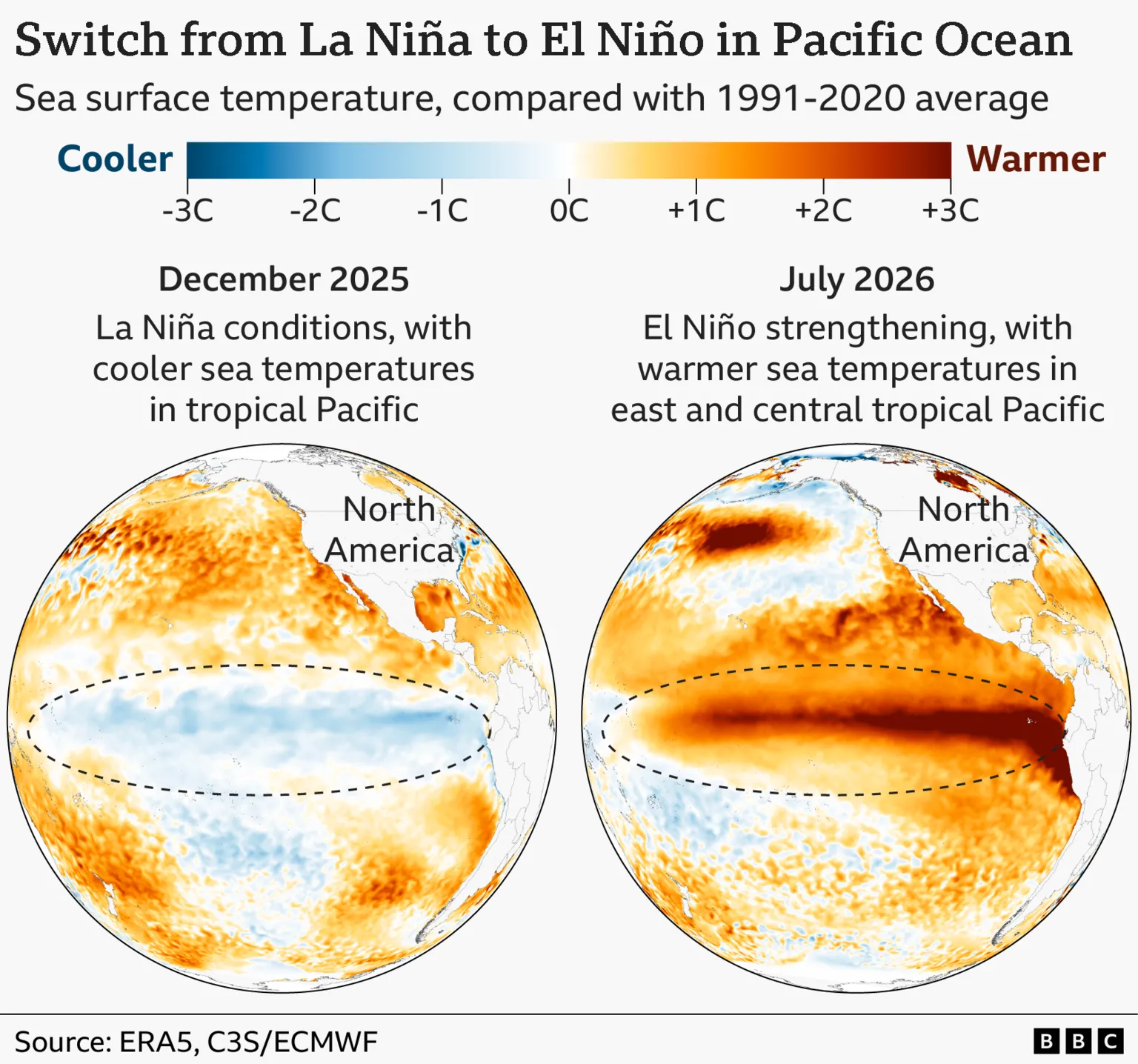
Abnormally high temperatures are not limited to the core region of El Niño in the Pacific. Water temperatures in the seas around the UK and Europe are also significantly warmer. Professor Tim Smith, scientific director of the Plymouth Marine Laboratory, said the western English Channel has been in an almost constant state of marine heat waves for more than three consecutive years, reaching a peak of 7 degrees Celsius above normal in July. He described the situation as "unprecedented".
The scientific community believes that the simultaneous occurrence of abnormally warm water in many sea areas around the world is a clear sign of the deepening impact of man-made climate change on the ocean. Greenhouse gases emitted by humans, such as burning fossil fuels, trap heat in the atmospheric system, and the ocean absorbs more than 90% of this excess heat.
Ocean warming could have a wide range of consequences. Higher sea temperatures can provide more water vapor and energy for storms, increasing the intensity of extreme weather; in some coastal areas, rising sea water temperatures will also weaken the cooling effect of sea breezes, thereby exacerbating land heat waves.
At the same time, the greater volume of warm water may drive sea level rise and increase coastal flooding risks. Sustained or intense marine heat waves can also wreak havoc on fragile marine ecosystems such as coral reefs. Burgess said that more frequent marine heat waves are putting increasing pressure on marine ecosystems and the communities that rely on these ecosystems.
Comments