
Abstract:
The legal battle between Apple and OpenAI over trade secrets and intellectual property disputes continues. Apple recently once again asked the court to speed up the evidence discovery process, saying that while OpenAI is trying to delay the progress of the case, it may continue to use sensitive information obtained from Apple and promote the development and release of its own hardware products.
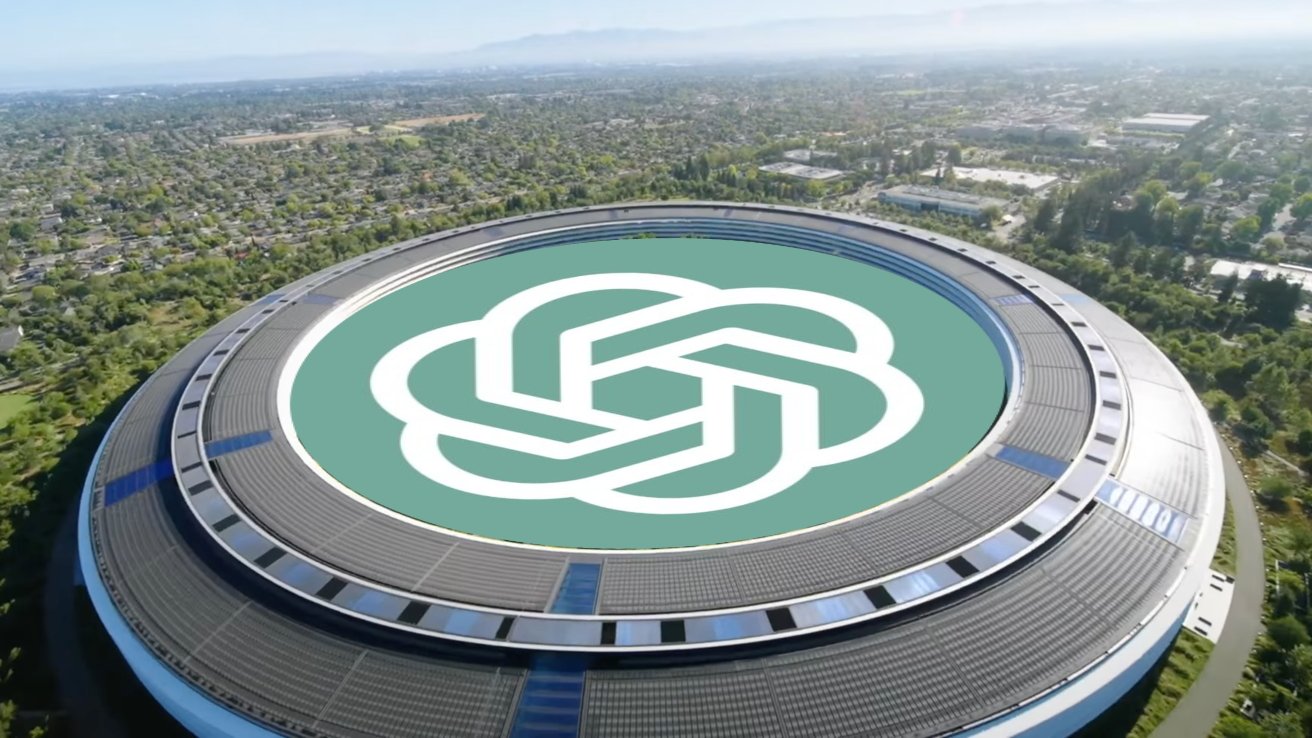
Apple sued OpenAI in July 2026, accusing the latter of large-scale theft of intellectual property. Since then, Apple has been seeking to start the evidence collection process in the lawsuit as soon as possible; while OpenAI countered that Apple initiated the lawsuit because it was at a disadvantage in relevant competition.
In response to Apple’s request for accelerated evidence discovery, OpenAI stated that there was no need to advance the case in advance and that relevant information should have been submitted during the normal trial process of the case. OpenAI also believes that some of the investigative work required by Apple to be completed early will in fact overlap with steps in the regular case timeline, so there is no need for additional acceleration.
Apple emphasized in its latest filing that even if the two types of procedures overlap, if the court approves "emergency discovery", it can still force OpenAI to respond early and avoid months of delays through templated objections, vague responses, etc. Apple hopes to interrogate key witnesses as soon as possible and requires OpenAI to submit relevant documents to determine what Apple information the ChatGPT developer obtained.
Apple pointed out that although OpenAI has agreed to take key witness testimony, it proposed to schedule it at the end of the fact-finding phase. Apple believes this means it may have to wait months or even years before it can question relevant witnesses on core issues in the case.
In Apple’s view, delay will bring continued risks. The company said that while the case is slow to progress, OpenAI may continue to use Apple's hardware trade secrets while accelerating the design and launch of its own hardware devices. Apple has also previously expressed concerns that relevant evidence may be destroyed.
Apple also criticized OpenAI for shifting the focus at the level of public opinion. OpenAI previously highlighted an incident in which Apple mistakenly sent an email to the wrong recipient, in an attempt to question Apple's communications and claims. Apple called this approach "misleading" in its latest filing, saying that OpenAI had actually received the relevant communication content it should have received, and that it deliberately amplified the incident of mistakenly sending emails in order to avoid the substantive concerns raised by Apple.
Apple has refuted OpenAI’s claim that Apple has not proven that the relevant materials constitute trade secrets. Apple believes that OpenAI's logic is equivalent to: as long as a document contains any public information, the entire document should be considered public information. Apple said, for example, that this is like a document showing confidential components of a device. Just because an iPhone appears on the cover, the entire content is deemed to be public knowledge.
However, Apple also stated that even if the expression "trade secrets" is not used, the disputed materials can also be referred to as "Apple-sourced information", that is, information generated by Apple but should not be held or used by OpenAI.
In addition, OpenAI also questioned Apple for not clarifying the specific time frame involved in evidence discovery. Apple lawyers responded that OpenAI should not have held any Apple confidential information, but still agreed to further limit the time period. Apple is currently asking OpenAI to provide all relevant documents and communication records from August 1, 2023, which is approximately six months before key witness and former Apple Vice President of Product Design Don Tan left Apple and joined OpenAI.
The court has currently scheduled a hearing on Apple’s request for accelerated discovery on October 1, 2026.
Comments