
Abstract:
According to the latest actual measurement by Cheese Wallace, the UP owner of Station B, domestic Changxin memory chips can run stably at the DDR5-8000 frequency, and in some productivity and game tests, their performance is highly close to the overseas mainstream Hynix's new flagship M-Die solution.
The test hardware platform uses Intel Core Ultra 7 270K Plus processor, paired with MSI Z890M GAMING PLUS WIFI motherboard, and the graphics card is Colorful GeForce RTX 5080 Ultra WOC, driven by a 1200W high-power power supply.
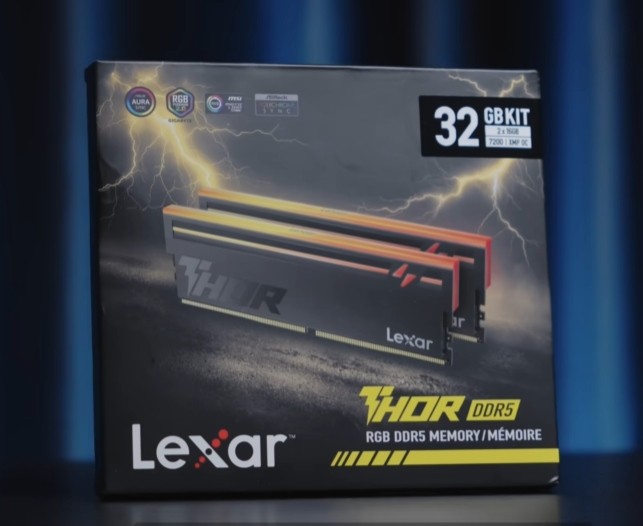
The memories participating in the comparison are Lexar THOR RGB using Changxin particles (original specification 7200MT/s CL38) and Guangwei Shenwu using Hynix particles (original specification 6800MT/s CL34). Both memories are overclocked to 8000MT/s for comparison.
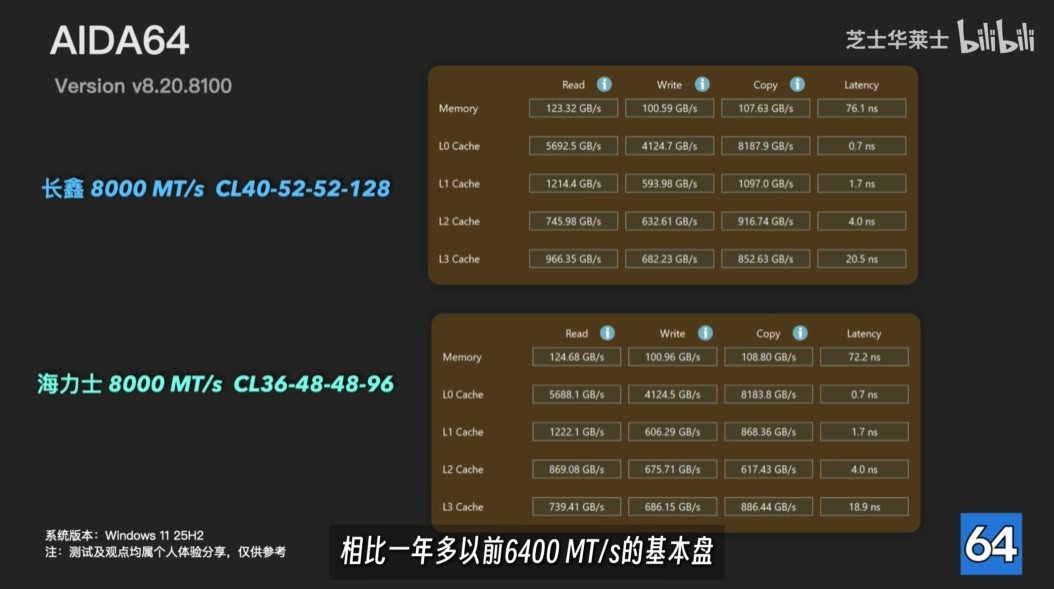
After the frequency was increased to 8000MT/s, the timing of the Changxin solution reached CL40-52-52-128, while the Hynix solution used the tighter CL36-48-48-96.
Benchmark tests show that the memory read bandwidth of Changxin particles at 8000MT/s is approximately 123.32GB/s and the latency is 76.1ns. The read bandwidth of the Hynix solution is approximately 124.68GB/s and the latency is 72.2ns.
The bandwidth performance of the two is basically at the same level. Hynix takes the lead in memory latency with its tighter timing.
On Geekbench In the 6 test, Changxin's 8000MT/s solution scored 24,576 points. Compared with Hynix's 24,790 points for the same frequency solution, the gap was only about 0.86%.
In terms of game performance, in the 1080P resolution test, in "Rainbow Six: Siege In "Assassin's Creed: Black Flag Remastered", the frame rate performance of the two is basically at the same level.
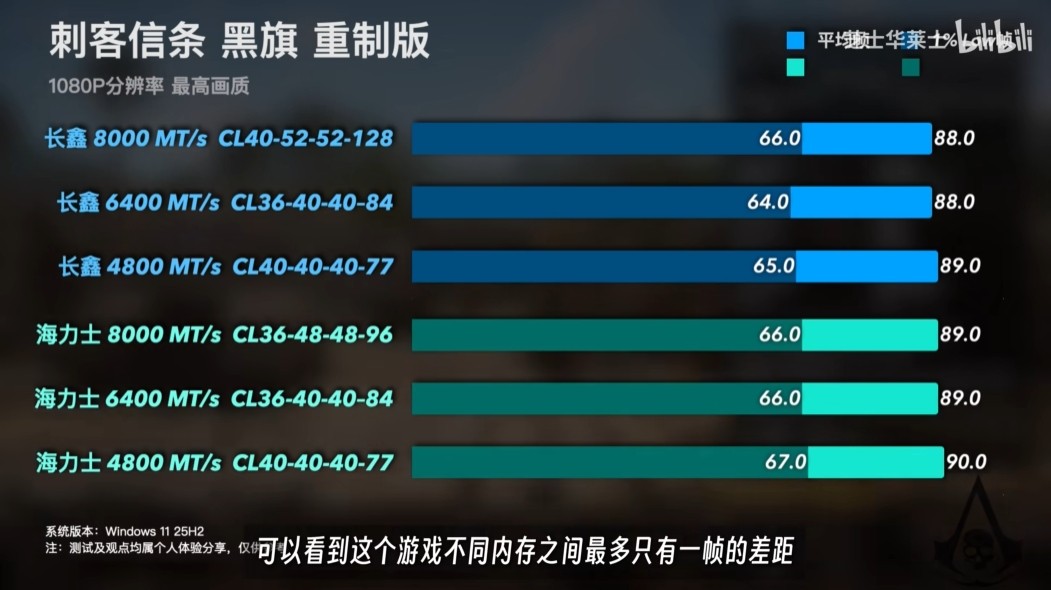
In addition, in masterpieces such as "Call of Duty 21" and "Forza Horizon 5", the frame number performance of the two high-frequency solutions is almost exactly the same, with a difference of less than 1FPS.
Comments