
Abstract:
Apple is accelerating its entry into the smart home market. A long-rumored smart home control device is about to be revealed. Its name is said to be HomeView, and it is expected to become the new control center of Apple's home ecosystem. According to the latest news from Bloomberg reporter Mark Gurman, this device will be equipped with an A18 chip, equipped with a touch screen, and use the Siri voice assistant as the main interaction method. It is expected to be officially unveiled on October 13, 2026, and will begin shipping in mid-November.
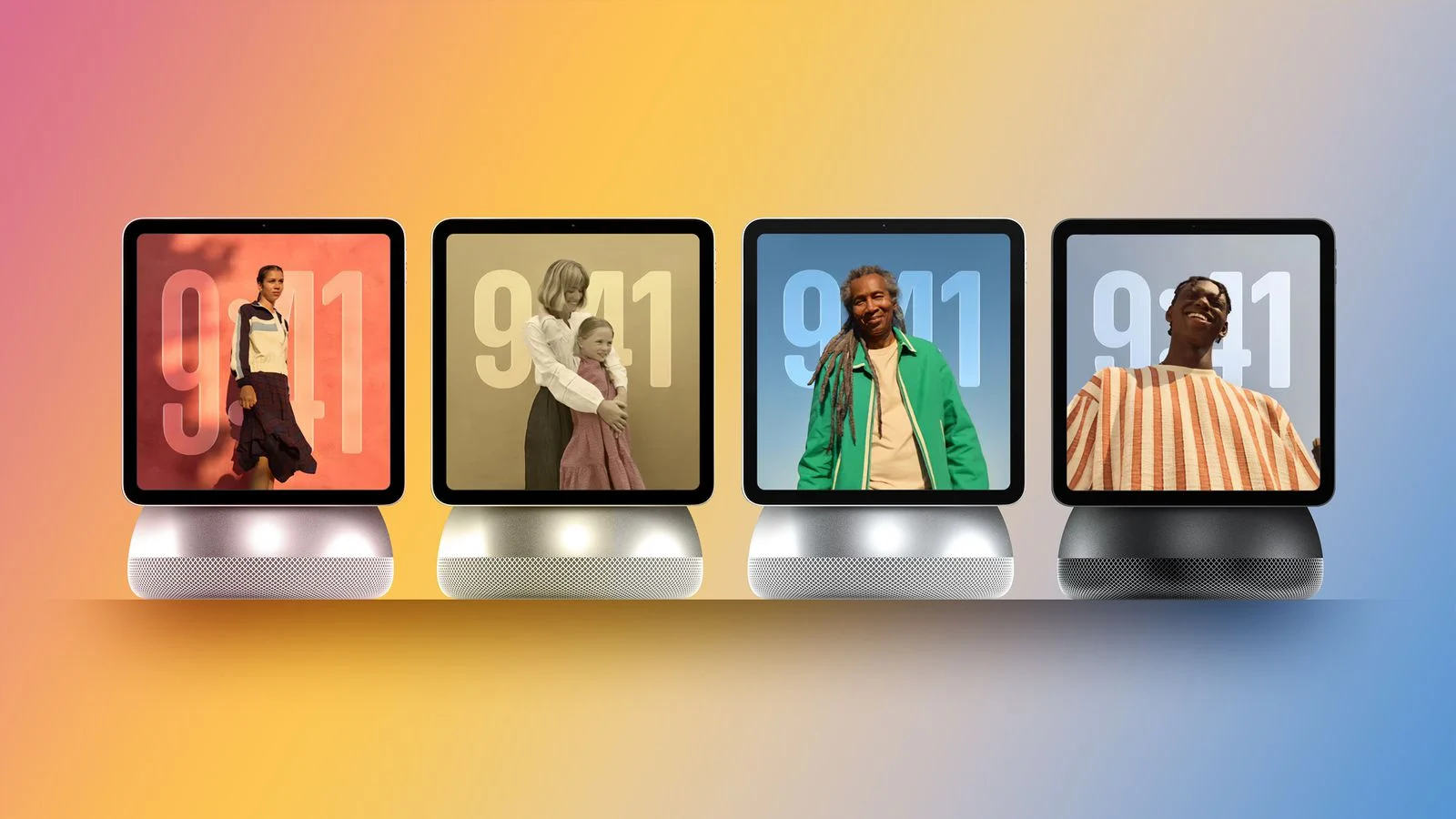
Apple plans to hold an offline experience event called "Welcome Home" on October 13, focusing on showcasing new products for home scenarios. HomeView is expected to be one of the core products of the event. Although Apple has not officially announced the specific specifications and price of the device, as the release date approaches, relevant information has gradually surfaced.
HomeView is not positioned as a tablet in the traditional sense, nor is it a simple smart speaker, but a fixed control terminal specially used to manage Apple Intelligence home devices. It integrates display, voice interaction and home control functions, allowing users to manage smart devices in the home through a centralized interface without having to pick up the iPhone and open the Home app to operate every time.
It is reported that HomeView will be equipped with Apple’s A18 chip. This means it has considerable processing power to support the operation of the device interface and some of Apple's future artificial intelligence features. However, Apple has not officially confirmed the complete hardware configuration of the device, nor announced other key specifications such as memory capacity.
From the perspective of interaction methods, HomeView will be mainly voice controlled, with the touch screen as an auxiliary operation method. Apple hopes that users can use Siri to complete most daily tasks, such as controlling lights, adjusting the thermostat, checking the status of home devices, and executing preset smart home scenes.
Unlike general-purpose devices such as the iPad, HomeView is not intended to offer a complete app ecosystem. Gurman revealed that the device will only support a limited number of Apple-owned applications, will not be equipped with an App Store, and users will not be able to install third-party software as freely as they can on an iPhone or iPad.
This means that HomeView will adopt a more closed and focused product design. Its primary mission is to become a stationary control center in the home, not to replace an existing tablet or smartphone. Apple hopes to simplify the operating interface by limiting the number of applications so that users can complete home control tasks more directly.
In terms of product form, HomeView is expected to provide two versions.
The first is the desktop version, which comes with a metal speaker base and can be placed on a kitchen countertop, living room tabletop or other flat surface. This version is said to be available in four colors: space gray, silver, starlight and pink. The design integrates the display and speakers, allowing the device to serve as both a home control panel and certain audio playback functions.
The second is the wall-mounted version, which uses a flatter square base and is suitable for installation on the wall. Compared with the desktop version, the wall-mounted version has a simpler base structure and relatively limited color options. It is said that only two versions are available: deep space gray and silver.
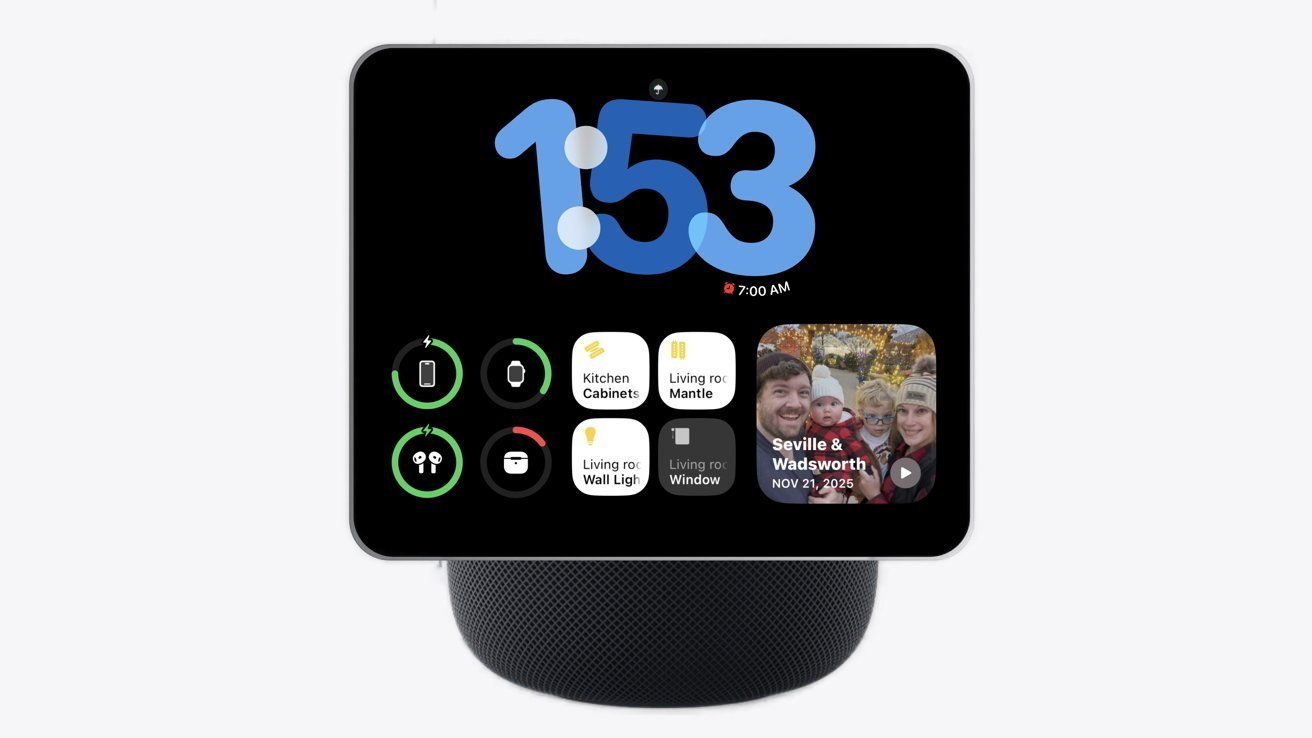
These two designs correspond to different home use scenarios. The desktop version can be placed in the kitchen, bedroom or living room to facilitate family members to interact with the device at any time; the wall-mounted version is more suitable for installation in corridors, entrances or other locations where centralized control of smart home devices is required.
From the perspective of product positioning, HomeView has certain similarities with Amazon Echo Show and Google's smart display devices. Such products usually combine screens, speakers and voice assistants, allowing users to complete tasks such as home control, viewing information and playing media through voice commands or touch operations.
However, Apple's strategy may focus more on integration with the existing ecosystem. For families who already use iPhone, HomePod, Apple TV, and HomeKit-compatible devices, HomeView is expected to become a centralized control portal between these devices. Instead of relying on separate control interfaces from different brands, users can accomplish more through Apple's home ecosystem.
Siri will play a central role in it. Users are expected to be able to control lights, smart door locks, climate control devices, and other compatible smart home products through voice commands. However, the specific devices supported, whether it has advanced natural language understanding capabilities, and the form in which the new generation of Siri functions will be deployed are still to be officially announced by Apple.
The A18 chip has also attracted attention from the outside world about the artificial intelligence capabilities of the device. Apple has continued to promote Apple Intelligence in recent years, hoping to integrate more intelligent functions into its own hardware and software ecosystem. If HomeView uses the A18 chip, it theoretically has the hardware foundation to run some end-side AI tasks, but this does not mean that all Apple Intelligence functions will be provided on the device. The final scope of support still depends on Apple's software design and product positioning.
In addition, HomeView's closed software strategy may also become an important factor affecting user experience. Since the device does not have an App Store, users cannot freely install third-party applications, and its function expansion will mainly rely on Apple's pre-installed software and subsequent system updates.
This design helps keep the interface simple and reduces the complexity of device management, but it may also limit its flexibility. For users who want to deeply integrate their smart home systems with various third-party services, whether HomeView can meet their needs will depend on the interface provided by Apple, the range of compatible devices, and future software update strategies.
In terms of availability, HomeView is expected to be unveiled at an event on October 13, but will not ship immediately that month. Gurman said Apple plans to start delivering products to consumers in mid-November. This means that there will likely be a gap of about a month between the official launch and actual availability.
At present, information such as the price of the device, the specific hardware differences between different versions, and the first sales area have not yet been confirmed. Apple has not officially announced the complete product specifications of HomeView, so the above information should still be regarded as media reports and supply chain news, rather than the final parameters that have been officially confirmed.
If the relevant news is accurate, HomeView will mark an important step in Apple’s Intelligence home strategy. Apple has long relied primarily on HomePod, Apple TV, and the Home app on iPhone and iPad to manage smart home devices. Although these products already have certain home control capabilities, Apple has been lacking a specially designed smart display terminal that can be placed at home for a long time and centrally manage various devices.
HomeView is expected to fill this gap. It transforms home control from an app on your phone to a standalone device that is always visible and ready to interact with. This kind of centralized control could be of real value to homes increasingly populated by smart lights, door locks, thermostats and other connected devices.
However, whether HomeView can ultimately gain market acceptance still depends on the price, functional completeness, and the actual performance of Siri. Smart home control devices must not only be able to execute simple commands, but also reliably understand user intentions and maintain stable collaboration capabilities between different devices and scenarios. If the voice recognition and automation experience are not mature enough, even if the hardware design is exquisite, it may not become a commonly used device in the home.
Apple is expected to reveal further relevant information at the “Welcome Home” event on October 13. Before its official release, HomeView is still a rumored product that has not been officially confirmed by Apple. However, judging from the design, chip and launch time currently disclosed, Apple is trying to build a more complete smart home product system, and HomeView may be an important part of connecting this system.
Comments