
Abstract:
SpaceX is advancing Starlink Mobile from a direct satellite connection service that relies on cooperation with ground operators to a mobile network that can compete with AT&T, Verizon and T-Mobile in the United States. The company announced two developments on October 8: it reached an agreement to acquire nationwide 800MHz low-frequency spectrum and obtained approval from the U.S. Federal Communications Commission (FCC) for the next-generation Starlink Mobile satellite constellation. SpaceX said that these resources will allow it to combine satellite and ground networks to provide users with indoor, outdoor and connection services in areas with weak coverage of traditional cellular networks.
The spectrum deal involves up to 14MHz of paired 800MHz spectrum. SpaceX did not announce the transaction price; Reuters quoted the Wall Street Journal as reporting that SpaceX will pay approximately US$8 billion to the seller Grain Management, but the transaction amount has not yet been confirmed by both parties. Grain purchased related spectrum from T-Mobile earlier this year. The acquisition still requires final approval from the FCC, so it is not yet a completed spectrum transfer.
SpaceX stated that the existing 2GHz mid-frequency spectrum will bear higher bandwidth capacity, and the newly purchased 800MHz low-frequency spectrum can enhance signal propagation distance and wall penetration capabilities, and improve indoor coverage. The company said that most existing mobile phones already support the 800MHz band, so users may not need to replace dedicated satellite phones. However, whether a specific device can use the network eventually deployed by Starlink Mobile also depends on the frequency band combination, mobile phone support and regulatory permissions. It cannot be concluded that all mobile phones can access it simply by supporting 800MHz.
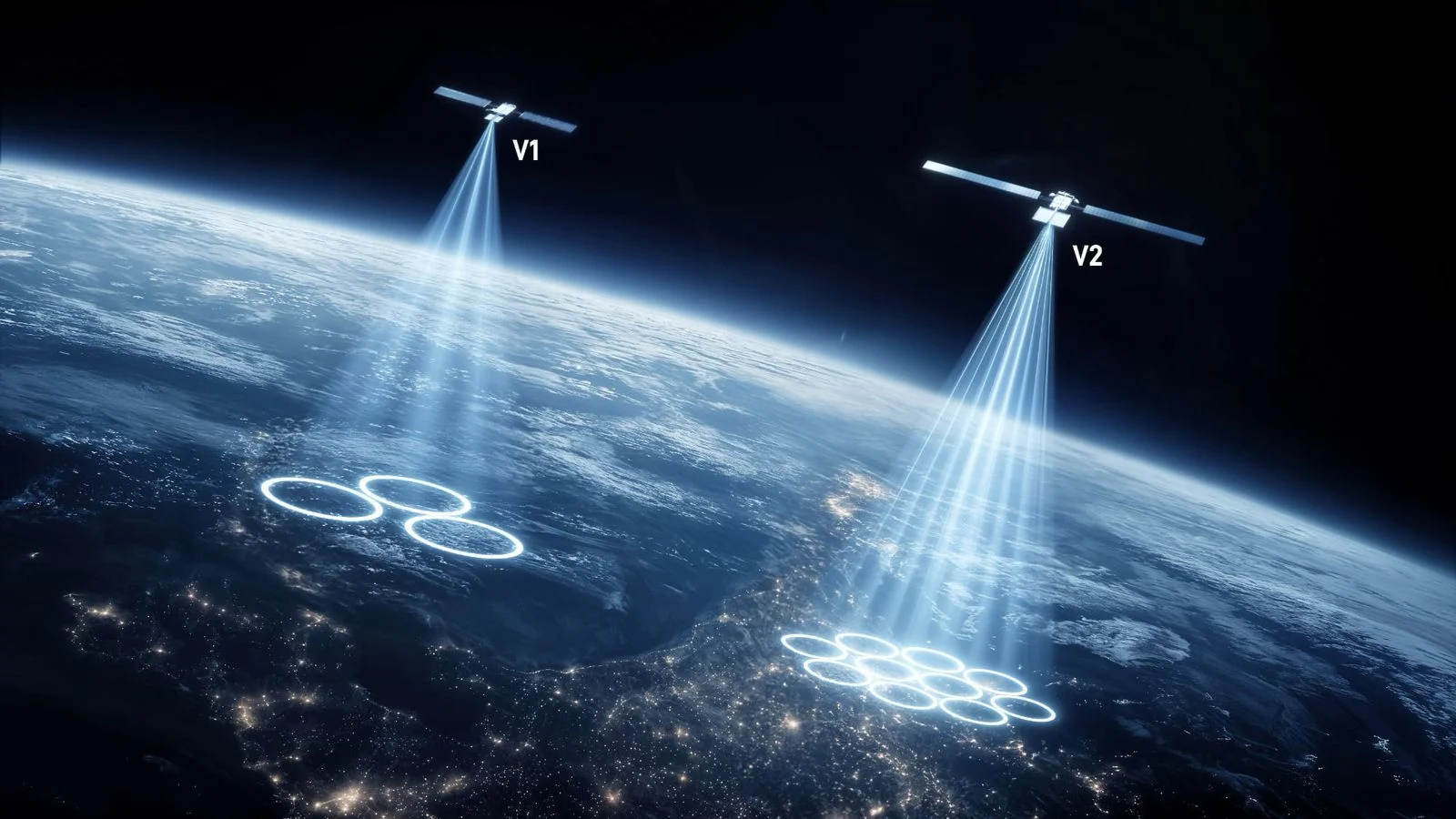
The FCC approved SpaceX’s next-generation non-geosynchronous orbit mobile satellite system on October 6, authorizing the deployment of up to 15,000 satellites and using relevant frequency bands including 2GHz to provide satellite mobile communications and direct-connect equipment services. SpaceX claims that the V2 satellite will bring 100 times the bandwidth capacity of the current generation and plans to connect directly to unmodified mobile phones. FCC documents show that the authorization is "part approval, part extension" and comes with conditions; this permission means that SpaceX can promote constellation deployment within the approved scope, and does not mean that 15,000 satellites have been launched or put into operation.
The FCC also approved specific exemptions for some of the terrestrial spectrum held by SpaceX, so that it does not need to sign a spectrum lease agreement with another terrestrial operator when providing supplementary satellite coverage in the corresponding frequency band. The exemption is based on the fact that SpaceX will hold both the relevant terrestrial spectrum license and the satellite operation license. It is not a blanket exemption for all frequency bands, all regions or all cooperation requirements. SpaceX has also recently obtained additional satellite communication spectrum resources through an agreement with EchoStar; its mobile network planning has therefore gradually shifted from purely satellite blind filling to integrating satellite and ground spectrum.
Starlink Mobile currently provides satellite direct connection services through T-Mobile and operator partners in other countries and regions, mainly for areas not covered by traditional networks. The new model proposed by SpaceX hopes to establish a network that uses both satellite and ground spectrum, and claims to be the first network operator to deploy these two types of spectrum. To achieve this goal, in addition to satellite constellations, the company also needs to build or implement ground network facilities; it has not announced the specific construction scale, tariffs, comprehensive commercial timetable, nor how consumers will open accounts or migrate numbers. After the news was announced, the stock prices of the three major US operators all fell by about 6% in after-hours trading, indicating that the market has regarded Starlink Mobile as a potential competitor, but whether it can form a national mobile operator still depends on regulatory approvals, ground network construction and actual service performance.
Comments