
Abstract:
The U.S. Federal Aviation Administration (FAA) announced that it plans to prepare an environmental impact report for a SpaceX plan. The plan plans to carry out up to 456 launches and 912 recovery landings per year from the star base in Boca Chica, Texas; SpaceX's current approved quota is only 25 launches and 50 landings per year.
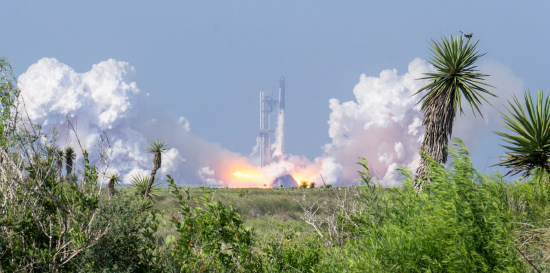
The FAA stated that this assessment document covers the two-phase expansion plan. The first phase allows up to 100 launches and 200 landings per year, and the operation hours are any day of the week and all day long. The second phase is expected to be launched within a few years, with the upper limit of launches increased to 456 and 912 landings per year; launches in this phase can be carried out at any time throughout the day, but only on working days.
The FAA pointed out that 912 annual landings is the upper limit for this Texas base, and this number applies to all Starship missions, regardless of where the mission takes off. The Starship spacecraft and super-heavy booster can be recovered in situ at the launch site, or they can be arranged to land in the U.S. Gulf or open water.
This environmental assessment will examine the potential impacts of the project on air quality, wildlife, coastal resources, water resources, noise, aviation, etc. A draft will be released for public comment later. The deadline for the FAA to receive written comments is November 30; it plans to hold four offline public research meetings in Brownsville and Porter Isabel, Texas on November 17th and 19th, and hold an online meeting on November 18th.
According to reports, SpaceX CEO Elon Musk has said that the company plans to increase the frequency of starship launches as much as possible, with the goal of achieving more than one launch per hour in less than ten years.
The design concept of the two-stage starship super-heavy booster system is rapid turnover. The rocket body components only need a small amount or even no maintenance and refurbishment before they can fly repeatedly. SpaceX has completed three Starship launches in 2026. The 14th test flight at the end of September successfully entered orbit for the first time and released 26 third-generation Starlink satellites. Bloomberg data shows that the number of launches from the satellite base has never exceeded five times in the past year.
The FAA stated that if SpaceX plans to further increase the frequency of launches and landings beyond this application plan in the future, it will need to conduct a separate independent environmental assessment.
Comments