
Abstract:
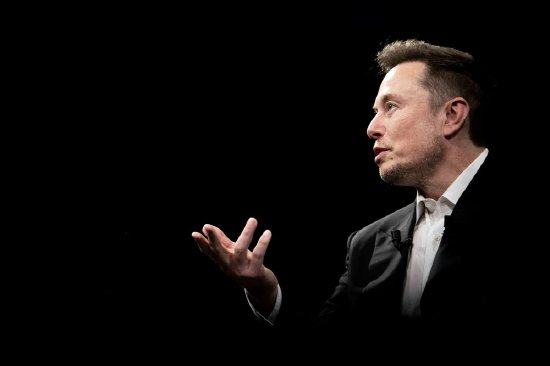
SpaceX CEO Elon Musk publicly accused some Indian telecom industry oligarchs on October 7 of blocking its satellite Internet service Starlink from entering the Indian market in order to maintain its monopoly on the local telecom business. Although Musk did not name specific companies or individuals, his remarks were believed to be directed at Reliance Jio, a subsidiary of Reliance Industries, and Bharti Airtel, India's two major telecom giants.
The Ministry of Communications of India subsequently issued a statement on October 8, denying that there was any discriminatory approval of Starlink, emphasizing that the three companies that have obtained satellite communications licenses are currently at basically the same regulatory stage.
Musk accuses telecom oligarchs of obstruction, with India’s two major operators controlling more than 80% of the market
Musk posted on the social platform X on October 7 that Starlink is being obstructed by certain oligarchs in order to maintain its monopoly control over the Indian people. He also said that outsiders can guess the identities of these people themselves.
Although Musk did not name them directly, the Indian telecom market is currently dominated by Reliance Jio, controlled by billionaire Mukesh Ambani, and Bharti Airtel, owned by Sunil Bharti Mittal.
According to the latest data from the Indian government, the two operators Reliance Jio and Bharti Airtel have a total of approximately 910 million broadband users, accounting for more than 80% of the Indian broadband market.
SpaceX has always hoped to enter the Indian satellite broadband market through Starlink, using low-Earth orbit satellite networks to provide Internet connection services, especially covering remote areas that are difficult to reach by traditional ground communication infrastructure.
The commercial operation of Starlink may enable it to compete with India's existing telecom giants, especially in the fields of broadband access and satellite communication services in remote areas.
The Indian government denies discriminatory approval, Starlink still needs to complete safety review
In response to Musk’s accusations, India’s Ministry of Communications issued a statement on October 8, emphasizing that the country’s regulatory framework for satellite communication services is fair and does not contain discriminatory treatment.
The Indian government stated that three satellite communication operators have obtained relevant telecommunications licenses, namely Eutelsat OneWeb supported by Bharti Airtel, Jio Satellite Communications owned by Reliance, and Starlink owned by SpaceX.
Starlink obtained the relevant license in June this year and was the latest among the three companies to obtain the license.
However, obtaining a telecommunications license does not mean that commercial services can be launched immediately. The three operators still need to meet the security requirements of the Indian government, complete relevant reviews, and obtain satellite communications spectrum allocation and final operating licenses.
The Ministry of Communications of India emphasized that the three companies are currently basically at the same regulatory stage, and all licensed operators must comply with the same security review requirements.
The Indian government had previously delayed Starlink’s commercial approval due to national security issues. In June this year, it was revealed that the security agency under the Ministry of Home Affairs of India had not yet approved the official operation of Starlink low-orbit satellite communication services, which continued to hinder its market access process.
Starlink has obtained a basic license, but it still faces the final obstacle to market access in India
For Starlink, the biggest obstacle currently has shifted from obtaining a basic telecommunications license to completing final regulatory approval.
Although the company obtained the license in June this year, Starlink is still unable to officially provide commercial satellite broadband services in India because the security review and spectrum allocation have not been completed.
The Indian government insists that uniform approval standards apply to all satellite operators, and Starlink’s regulatory progress is basically consistent with local competing companies.
This controversy highlights the two challenges SpaceX faces when entering the Indian telecom market: On the one hand, Reliance Jio and Bharti Airtel already occupy the vast majority of India’s broadband user market; on the other hand, satellite communication services involve spectrum resource allocation and national security review, and market access ultimately still depends on regulatory approval from the Indian government.
Competitive disputes in the Indian satellite Internet market have become further public as Musk publicly attributed the delay in Starlink's launch to the obstruction of existing telecom giants.
Comments