
Abstract:
The U.S. government is planning to expand tariffs on semiconductor imports, which may add another burden to the data center industry, which is already facing pressure on power, equipment and construction costs. Industry insiders are worried that if this policy is implemented, it will not only push up the procurement cost of servers and other equipment, but may also weaken the speed of investment in artificial intelligence infrastructure in the United States.
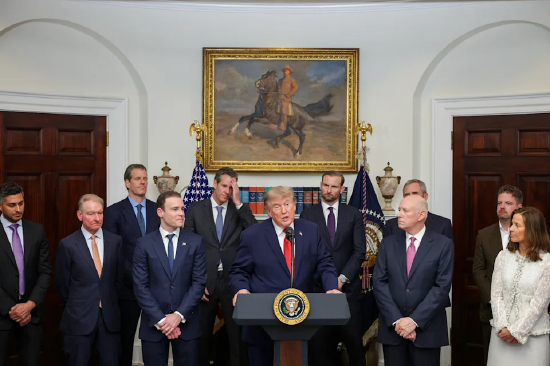
According to people familiar with the matter, U.S. Department of Commerce officials have recently become increasingly inclined to expand tariff coverage in private communications to encourage chip manufacturers to increase production capacity in the United States. One mechanism favored by U.S. Commerce Secretary Howard Lutnick would allow a certain amount of chips to enter the U.S. duty-free, with the amount tied to the size of a company's commitment to manufacturing chips in the United States.
But this arrangement may also widen the gap between the number of chips required by U.S. companies and the supply of chips that can be imported duty-free. Relevant sources said that the Ministry of Commerce has not yet finalized the tariff rate and other key implementation details; one of the plans being discussed is to formulate tax rates and quotas for different countries and set corresponding guidelines for major semiconductor manufacturers in each country.
Tech industry lobby groups and economists warn that the impact of the new tariffs will go beyond disrupting data center investment. The cost for U.S. companies to import chips and reuse them to produce servers, computers, televisions and other electronic products will rise, which may in turn be passed on to the entire technology supply chain.
U.S. chip design companies may also bear the impact. Although companies such as NVIDIA and AMD are headquartered in the United States, their chip production is highly dependent on overseas foundries; increasing taxes on imports will increase their costs and operational uncertainty.
Terminal equipment manufacturers such as Apple also face competitive pressure: when they import chips from the United States, they need to bear additional tariffs, while overseas competitors can purchase similar chips without paying U.S. tariffs, and the competitiveness of U.S. companies in the international market may be affected. At the same time, U.S. allied chip suppliers may also shift more of their business focus to the Chinese market.
Comments