
Abstract:
On September 4,
According to the latest global smartphone price trend tracking released by Counterpoint Research, since 2026, the retail price of smartphones on sale globally has increased by an average of 15%, and the price of some models has nearly doubled.
This is the result of the continued rise in memory chip prices directly pushing up the BOM cost of mobile phones, and OEM manufacturers are passing on the higher costs to consumers.
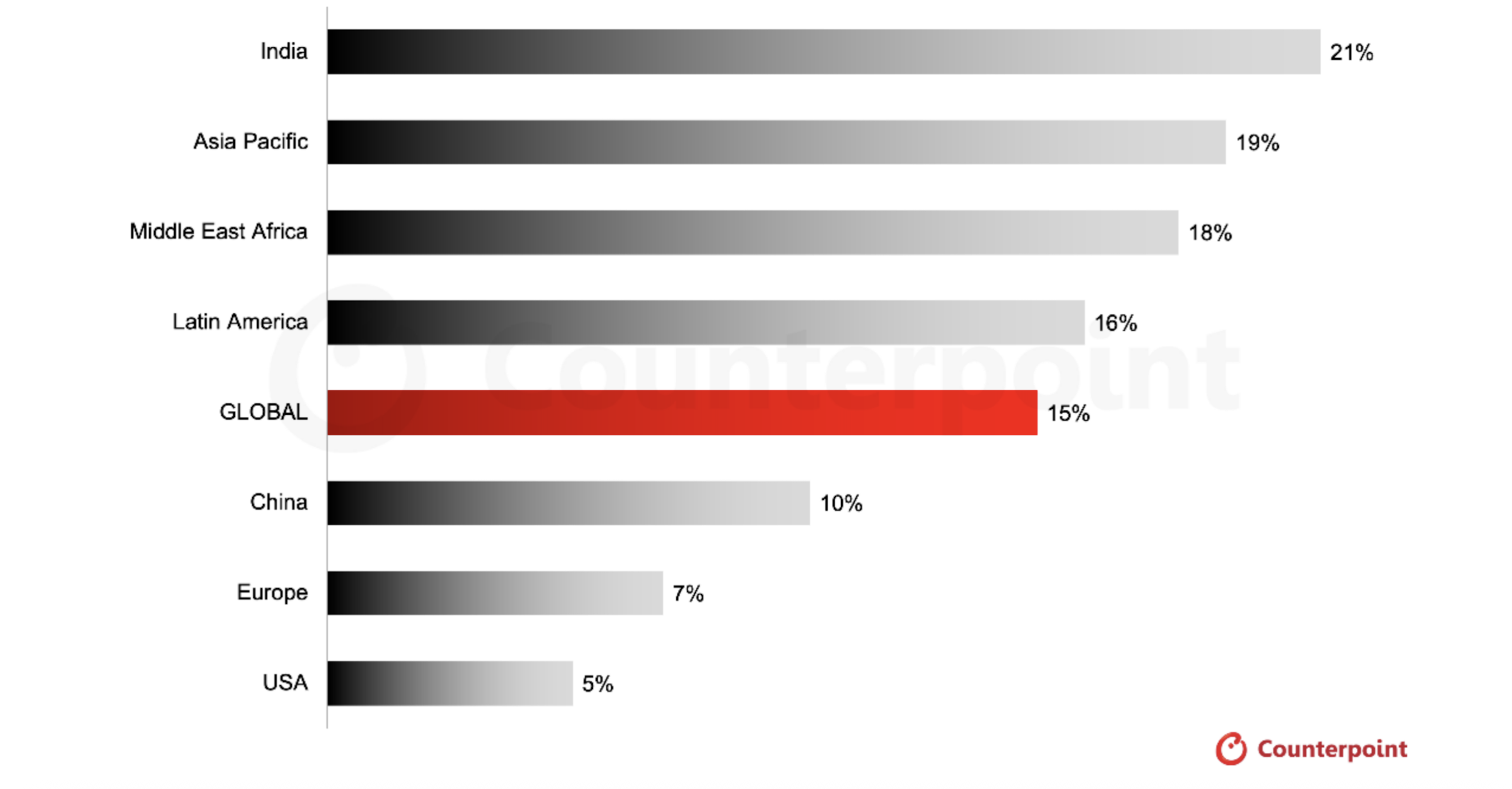
The growth rates of each market varied significantly.
Price-sensitive markets were the most severely affected, with the Indian market rising by up to 21%, the Asia-Pacific region by 19%, and the Middle East and Africa by 18%. Markets with a high proportion of high-end models saw relatively modest growth, with the Chinese market rising by 10%, Europe by 7%, and the United States by 5%. The growth was mainly concentrated in newly launched models.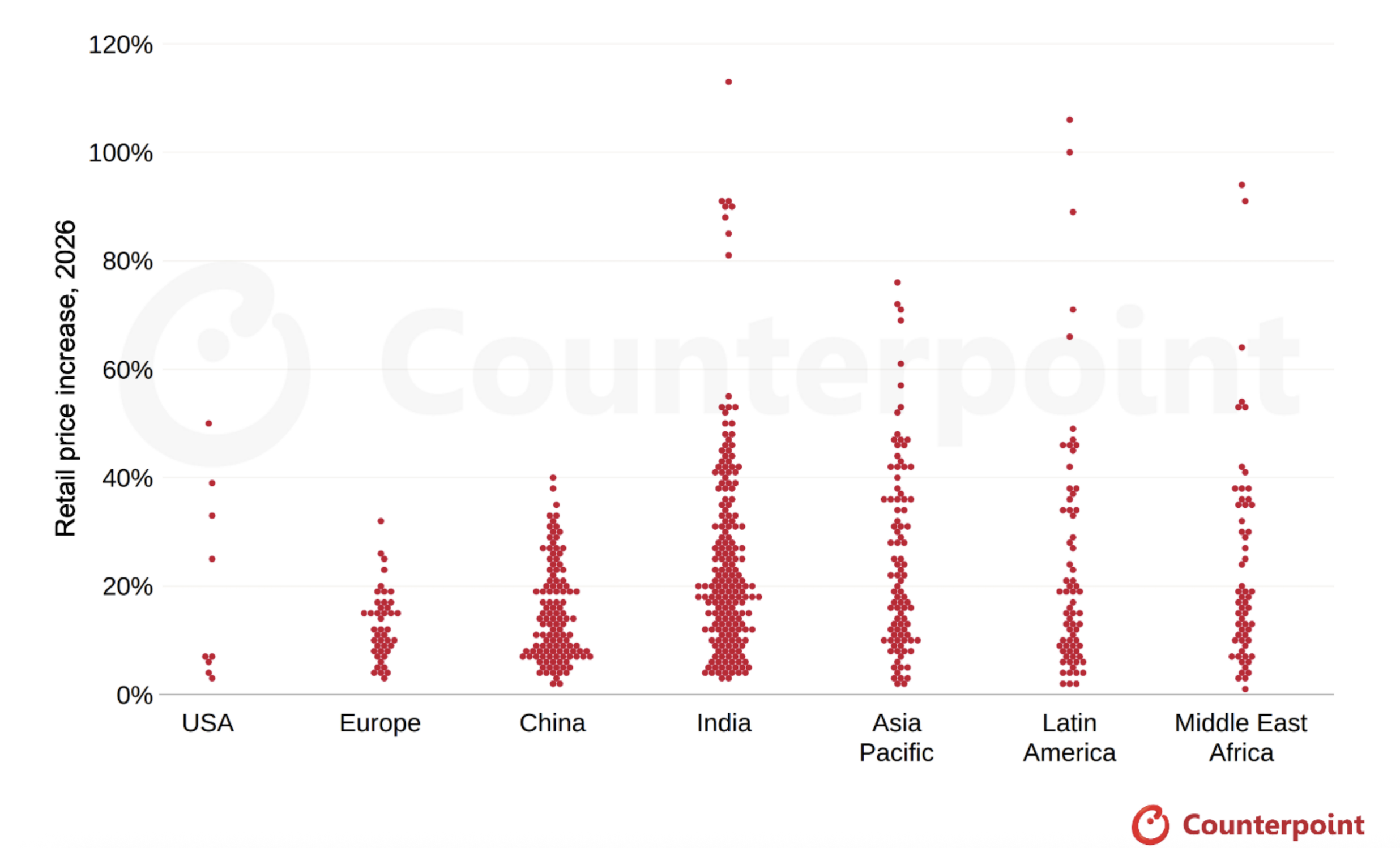
Consumer behavior is changing.
Faced with rising prices, consumers are extending their replacement cycles, choosing low-storage capacity models, and turning to the refurbished market. Tarun Pathak, research director of Counterpoint Research, said that storage is becoming a key factor driving the increase in BOM costs of mobile phones, leaving OEM manufacturers with increasingly limited space to absorb costs.In response to cost pressure, OEM manufacturers control costs by reducing storage capacity, reducing camera configurations, and launching more 4G models in specific market segments. Counterpoint expects that the prices of new smartphones will continue to rise in the next few quarters, and that tight storage supply and high component costs will continue in the short term.
Comments