
Abstract:
In recent years, the global game industry has set off a wave of large-scale mergers and acquisitions. Major game publishers have invested in acquiring development teams, hoping to expand their product lineup and technical strength. However, the latest research data shows that many acquired studios did not usher in more stable development in the end, but were closed within a few years after the transaction was completed.
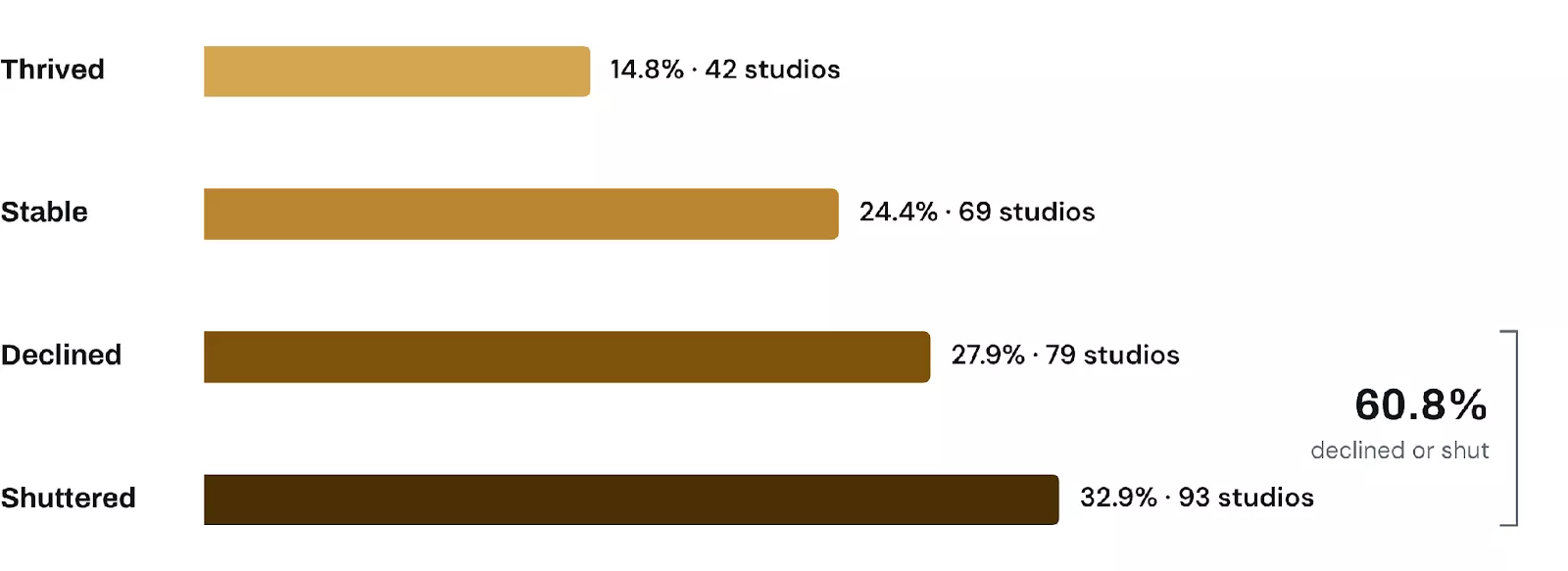
According to the latest analysis report released by the game industry research organization, approximately one-third of the game development studios that have completed acquisitions since 2020 have ceased operations. This means that a large number of development teams that originally operated independently failed to survive for a long time after being merged into large enterprises.
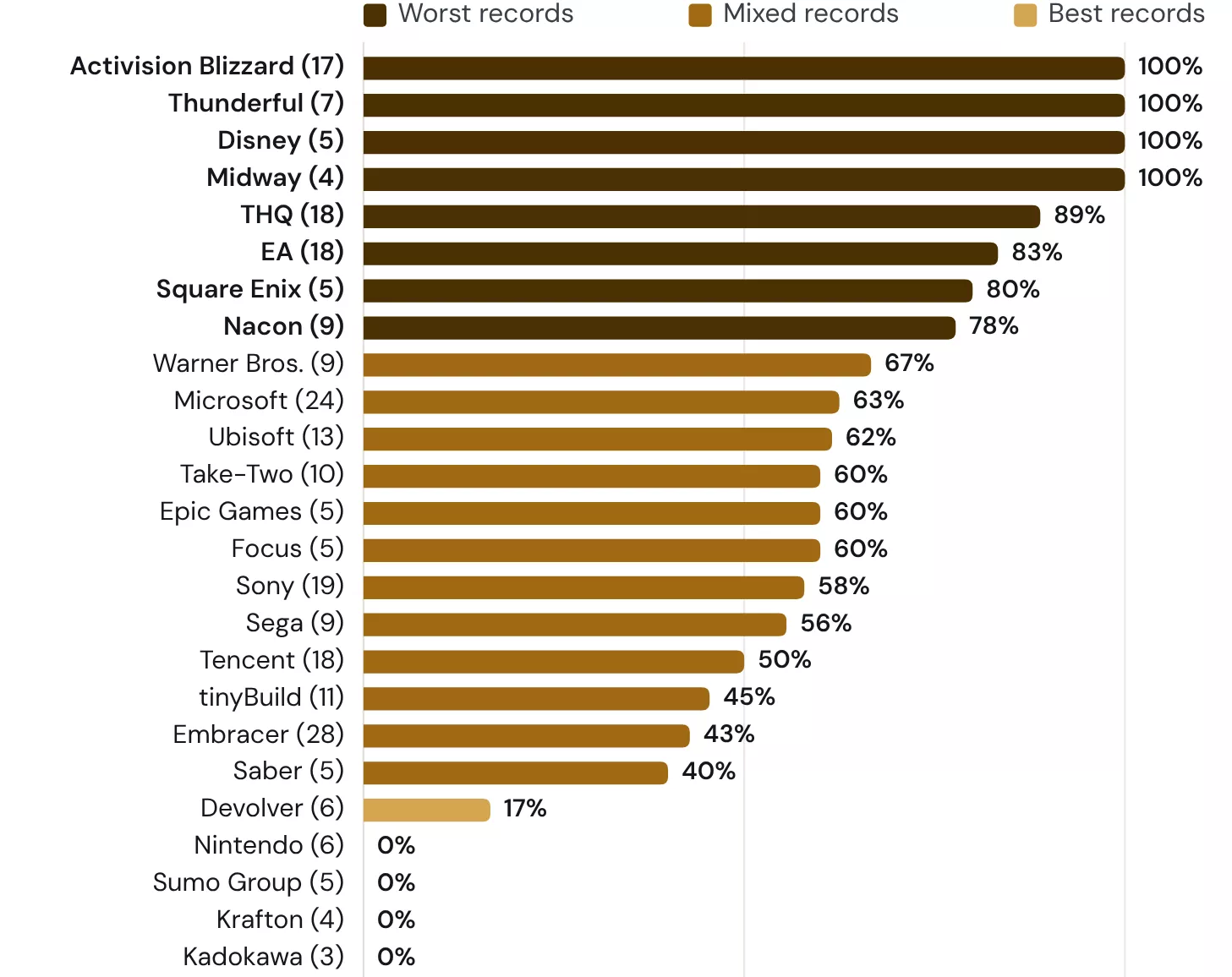
The report counts the most representative acquisition cases in the game industry in recent years, including mergers and acquisitions initiated by Microsoft, Sony, Tencent, Embracer Group, Take-Two, EA and other large companies. The study found that although companies usually emphasize expanding creative resources, improving development capabilities, and long-term investment commitments when making acquisitions, the actual results are often significantly different from the initial assumptions.
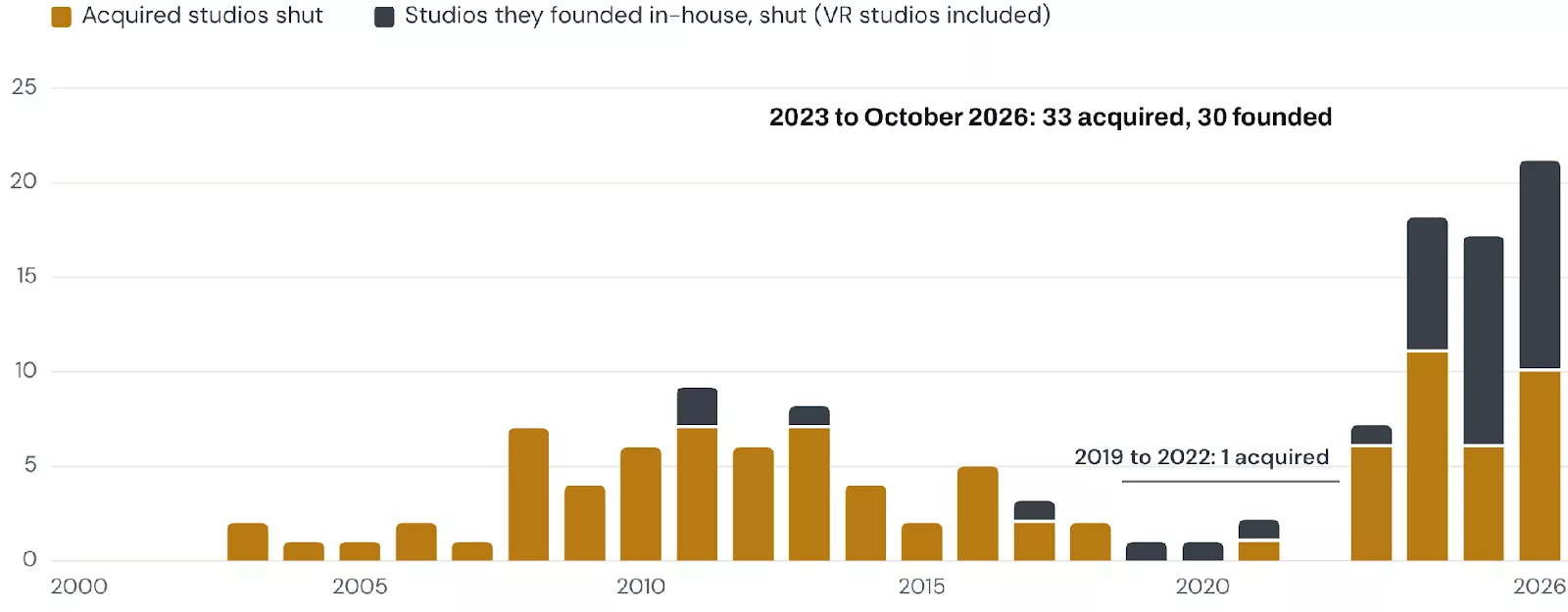
Among them, Swedish gaming group Embracer Group has become one of the most watched cases. The company has acquired dozens of game developers in a short period of time and quickly built a huge distribution network. However, as financing plans were frustrated and cost pressures increased, Embracer subsequently embarked on a large-scale restructuring. Many of its studios were abolished or closed, and a large number of development projects were cancelled.
Microsoft has also completed a number of heavyweight mergers and acquisitions in recent years, including the acquisitions of ZeniMax Media and Activision Blizzard. Although Microsoft continues to invest in its gaming business, some of its teams have not been able to avoid layoffs and organizational adjustments. Industry insiders believe that the integration of resources after acquisitions by large companies often changes the development direction of the original studio, causing some teams to lose their original independence and flexibility.
The analysis pointed out that failed mergers and acquisitions do not necessarily mean that the project quality is insufficient. Many studios still had experienced developers and mature technical capabilities before being closed, but due to factors such as company strategic adjustments, budget reallocation, changes in the market environment, or management changes, they still could not escape the fate of closure.
In the past few years, the gaming industry has experienced rapid expansion during the epidemic. At that time, the number of players was growing, investment was active, and a large number of companies increased their valuations and launched aggressive acquisitions. However, as the market returns to normal, financing conditions tighten, and development costs continue to rise, many companies are beginning to re-examine investment returns and cut expenditures to improve profitability.
Researchers believe that the frequent layoffs, project cancellations and studio closures in recent years indicate that the game industry is undergoing a deep adjustment. For the acquired team, although joining a large group can obtain more financial and technical support, it also means that they need to face more complex business goals and stricter financial assessments.
The report also points out that not all acquisitions will ultimately lead to the disappearance of studios. Some development teams have achieved continued expansion and successfully launched new works after receiving support from their parent companies. However, overall data shows that being acquired does not equate to long-term security, and the final results of many transactions are far from the originally promoted vision.
Against the backdrop of continued industry consolidation, more and more developers are beginning to rethink the balance between operating independently and joining large companies. For investors, mergers and acquisitions are still an important means to rapidly expand business scale; and for development teams, how to find the best position between capital support and creative autonomy is becoming an important issue in industry development.
Comments