
Abstract:
The first delivery of Tesla’s self-driving vehicle Cybercab is approaching. The latest aerial photos show that the roofs of mass-produced cars to be shipped are all equipped with square panels, and the panel position is consistent with the officially announced Starlink integration position. Tesla has publicly stated many times since July that Cybercab will integrate Starlink services.
According to recent media reports, aerial photos taken by drone photographer Joe Tegtmeyer at Tesla's Texas Gigafactory that day showed rows of Cybercabs parked in the factory area, with a square panel installed on the back of the roof, and some of the vehicles had been parked next to transport trailers waiting for shipment.
Cybercab is a two-seater model specially built by Tesla for self-driving taxis. It has no steering wheel and pedals.
The position of this panel in the photo is consistent with the antenna integration position of the low-orbit satellite Internet service Starlink previously announced by Tesla officials. Compared with the vehicles shipped in September, the panel color has changed from light to dark. Neither Tesla nor Starlink has explained this.
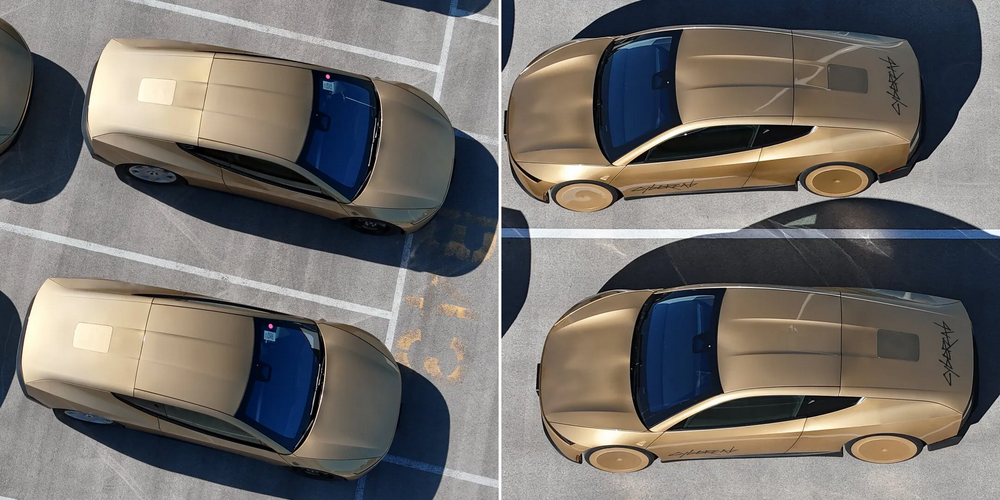
Note: The left is taken in September this year, the right is the latest shot this week, source: Joe Tegtmeyer/X
Media reports pointed out that long before the official confirmation, a Cybercab prototype vehicle tested on public roads was photographed with a Starlink antenna attached to the rear of the vehicle.
On July 20 this year, Tesla posted on social platform
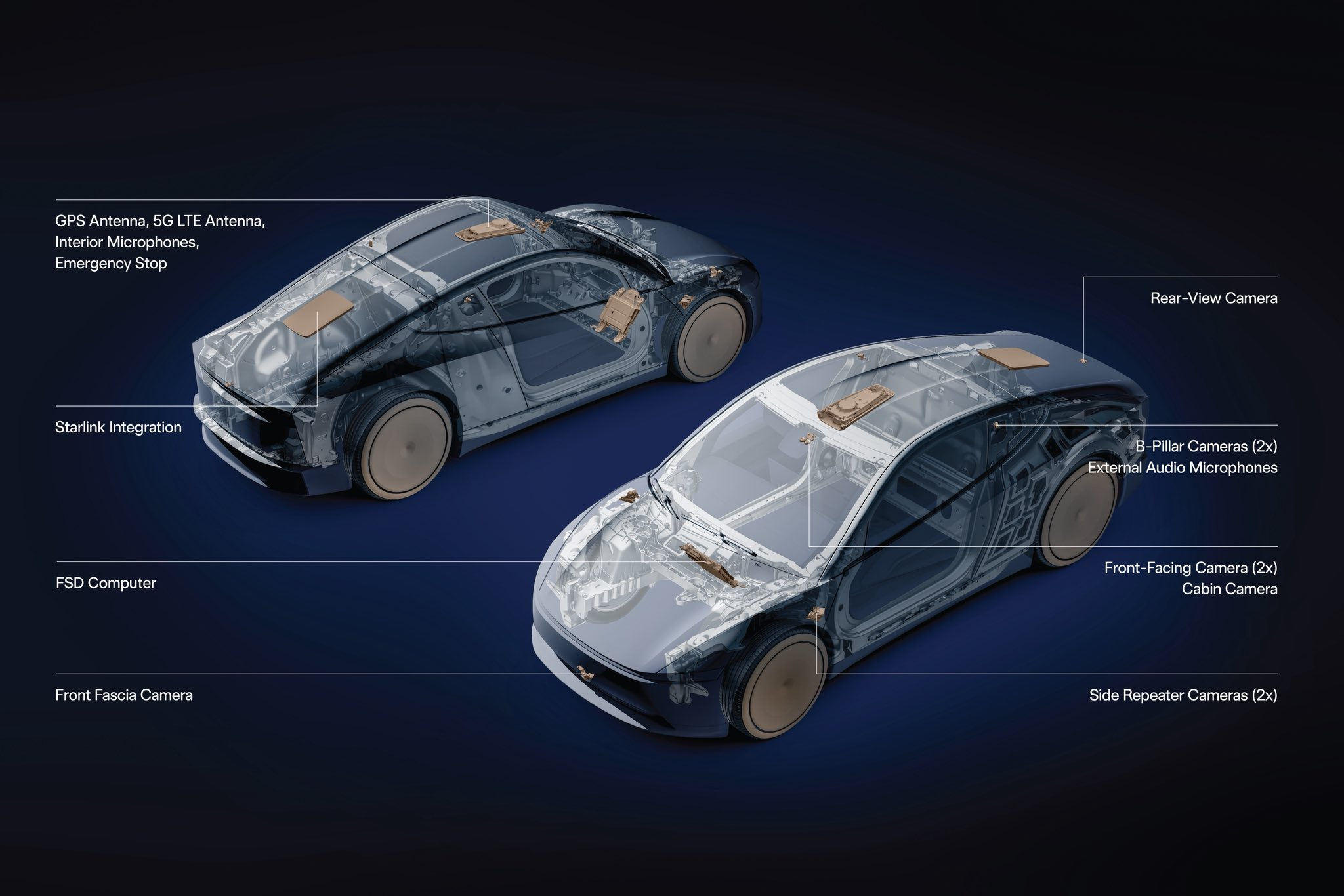
Note: The panel above the rear of the vehicle on the left is marked "Starlink Integration", source: Tesla/X
On August 10, the official account of Tesla’s Robotaxi released photos of the first Cybercab car integrated with Starlink, with a square panel embedded in the rear of the roof.
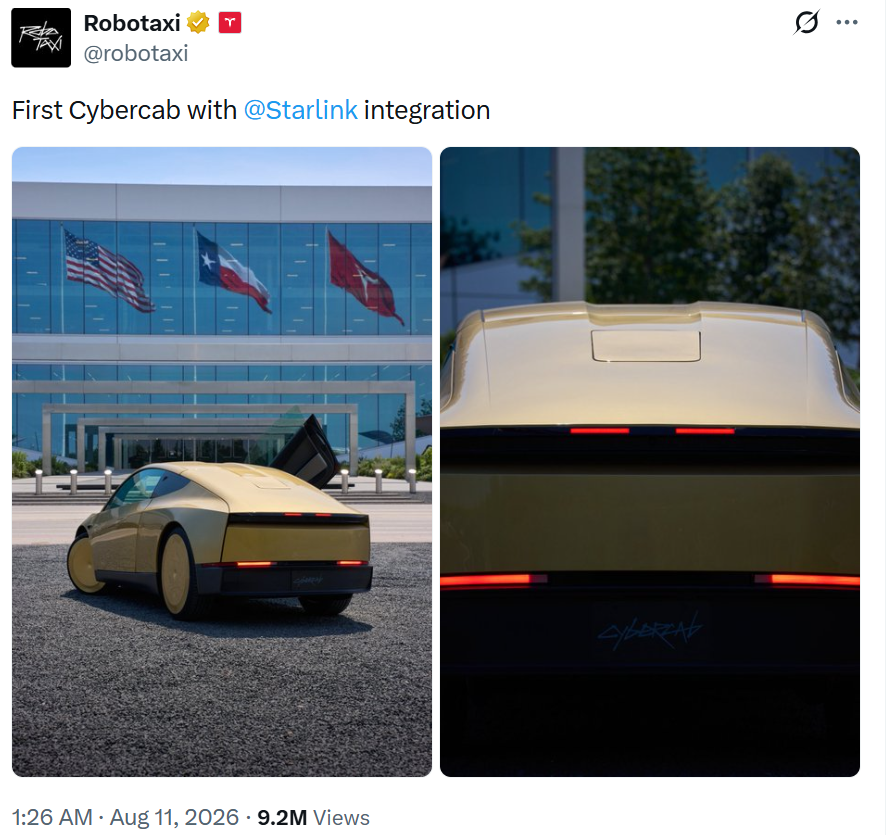
Note: Tesla Robotaxi official account released photos of the first Cybercab integrated with Starlink, source: X
On September 4, Starlink’s official account stated that Starlink V5 will soon be directly integrated into Cybercab. Musk forwarded it and said that passengers will be able to watch 4K live videos in the car.
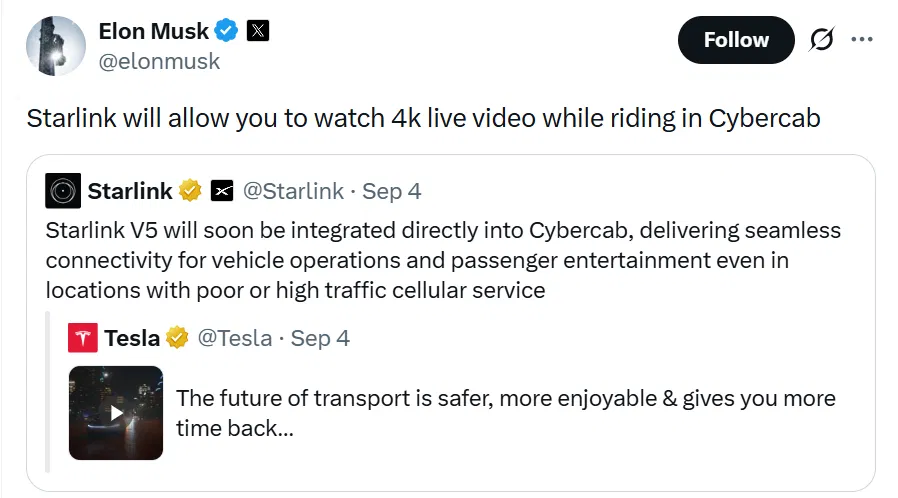
Note: Musk forwarded Starlink’s official post on social platforms, source: X
According to official statements, Tesla has confirmed that Cybercab will integrate Starlink and stated that it will soon be equipped with Starlink V5, but it has not yet stated whether all mass-produced vehicles have been assembled and enabled with Starlink.
According to media reports, when Cybercab started carrying passengers in early September, a passenger who participated in the launch event said that there was no Starlink connection available during the ride.
Regarding why Cybercab needs satellite networking, Tesla Vice President of AI Software Ashok Elluswamy stated on social platforms on the day of the official announcement on July 20 that networking is mainly used for navigation, customer service and fleet management, and is not a necessary condition for safe vehicle operation.
Musk said at the second-quarter earnings call in July that Cybercab and even the entire Tesla fleet will integrate Starlink. He explained that Robotaxi requires network coverage everywhere, and cellular network signals are unreliable in some areas.
According to reports, the order page shows that Cybercab is priced at US$29,990 before tax, and car owners need to pay a monthly "autonomous driving subscription fee" of US$299 to use it. The first batch of deliveries is expected to start in Austin, Texas, in December this year.
Musk recently stated on social platforms that Cybercab will be launched across the United States after receiving regulatory approval. However, he also said that the monthly subscription fee of US$299 is "too high" and should be comparable to the cost of FSD and Internet services for other Tesla models, which is about US$115 per month, but no price reduction was announced.
In addition to Cybercab, Starlink is also accelerating its deployment in mobile scenarios such as aviation and shipping. Data released by Starlink’s parent company SpaceX shows that as of the end of September, Starlink’s global consumer users have reached 13.6 million.
Comments