
Abstract:
It is also a public opinion storm related to private life, but the final direction is completely different. Many people are curious about why Musk has remained firmly at the helm, but Huang Renxun directly chose to resign as CEO of Nvidia. Musk and his company executive Shivon Zillis have four children, with a total of 14 children under their names. There have been many controversial news about it. He still firmly controls the highest decision-making power of several core companies. On the other hand, Huang Renxun directly announced his resignation after the personal turmoil was exposed, and even the core management positions of Nvidia, which he has been in charge of for 33 years, were completely handed over.
This strong contrast is never an accident. The core root cause lies in the completely different governance structures of the two companies.
With the specially designed Class B shares, Musk controls about 83.7% of SpaceX’s voting rights, while Huang Jenxun’s voting rights in Nvidia only account for 3.6%. The gap in voice is huge.
In February 2025, Shivon Zillis, an executive of Neuralink, a brain-computer interface company co-founded by Musk, publicly announced that she and Musk welcomed their fourth child.
Musk later directly admitted that Zilis was his partner in a public interview. According to statistics from People magazine, Musk had a total of 14 children with four women. Such a complicated private life situation has never shaken his actual control over various companies from beginning to end.
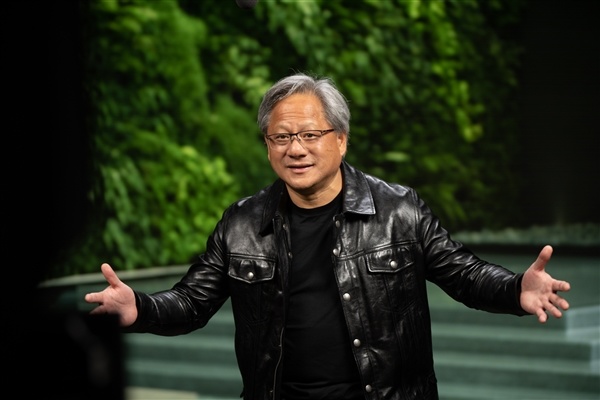
As the founder who single-handedly built the company, why did Huang Jen-Hsun’s voting rights only remain at 3.6% in the end? Before Nvidia was officially listed in 1999, Huang Jenxun and the other two co-founders each held only 12.8% of the shares, and more than 60% of the remaining shares were held by other executives, directors, and external early investors such as Sequoia Capital.
After Nvidia went public, it issued new shares many times for financing and employee incentives. Huang Jenxun’s shareholding ratio was continuously diluted. In addition, he himself had publicly sold and donated his shares many times before. By the time of statistics in March 2026, his final shareholding ratio had dropped to 3.6%.
Although Huang Renxun announced that he was voluntarily resigning this time, according to Nvidia's governance rules, even if he himself did not actively submit his resignation, the board of directors has the right to directly remove him. According to Nvidia's current company bylaws, the removal of senior executives only requires the approval of more than half of the current directors, and only 6 votes among the 11 directors are needed to take effect.
What is the core role of shareholder voting rights in the hands of founders? It essentially determines who can join the board of directors and become directors, and these directors who hold seats happen to have the highest authority to directly decide whether the CEO should stay or leave.
Take Meta as an example. Zuckerberg directly controls 60.6% of shareholder voting rights by virtue of a special Class B share design with ten votes per share.
Meta officials have previously publicly disclosed that Zuckerberg can completely determine the final election results of all directors with just the voting rights in his hands, which is equivalent to indirectly locking his CEO position completely, with almost no possibility of being removed by the board of directors.
SpaceX, owned by Musk, has an additional special clause in the company's articles of association that is equivalent to a death-free gold medal. Even if all board members agree to remove Musk from the CEO position, as long as Class B shares are still in normal issuance and circulation, the removal resolution must be approved by more than half of the voting rights of Class B shares to take effect.
Since Musk controls the vast majority of the voting rights of Class B shares, he can directly block all removal resolutions against him at the shareholder vote.
In other words, according to SpaceX’s system design, the only person in the entire company who can fire Musk is himself.
Of course, voting rights are never omnipotent. If the founder or the company faces major compliance challenges or regulatory reviews, no matter how strong the equity control is, it must eventually give way to the public legal bottom line. No one can rely on equity design to override the rules.
It seems that the difference in founders’ control over the company is caused by their ability and reputation. In essence, it has been doomed from the moment the company’s equity structure was designed in the early stages of its establishment. Many founders who have great reputation in the eyes of outsiders have actually unknowingly handed over the decision-making power of their fate to the board of directors after multiple rounds of financing and equity dilution.
Comments