
Abstract:
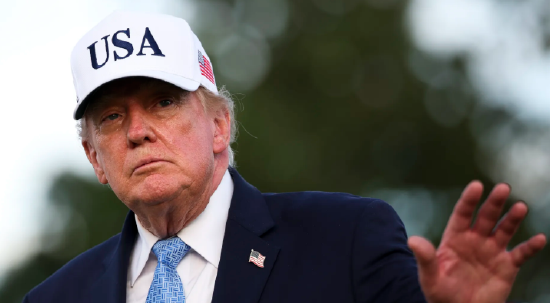
U.S. President Trump said after an artificial intelligence luncheon with technology industry leaders at the White House on Tuesday that the two sides signed a "morally binding" artificial intelligence document. House Speaker Mike Johnson described it as a voluntary statement of principles for industry to follow, with the White House guiding industry development. Trump said he saw technology companies stepping up self-regulation, and the government was also considering setting up a 10-person committee to oversee the artificial intelligence industry.
Recently, Washington and Silicon Valley have been increasingly concerned about the rapid development of artificial intelligence. Incidents such as attacks by intelligent agents have occurred one after another, and researchers have also warned that it may have serious consequences for humans. Anthropic CEO Dario Amodei and OpenAI CEO Sam Altman have both called for a slowdown in AI research and development, but Trump has previously dismissed AI safety concerns as a "hoax" and a "fraud." Amodei said outside the White House that rules to address related risks were still being discussed and that all parties needed to work together to ensure safety while remaining competitive.
Trump said that day that the government would not halt the development of artificial intelligence and emphasized the importance of industry self-regulation. He also called massive multi-billion dollar data centers a "very positive thing" despite growing opposition to large-scale data centers as the midterm elections approach. He said that technology companies hope that communities will be safe and residents' lives will be satisfactory, and they will also work hard to benefit the communities. Otherwise, relevant companies may be forced to move overseas or other regions. Trump also said he plans to name a new head of artificial intelligence in the next three to four days.
AMD CEO Su Zifeng said she was "very encouraged" by the day's meeting, adding that the atmosphere was optimistic and also reflected a sense of responsibility. She said that technology companies have a responsibility to demonstrate the capabilities of artificial intelligence and ensure the safety of the technology.
The meeting comes as OpenAI delayed the release of its latest GPT-6.1 Astra model this week due to security concerns, and last week announced a "comprehensive" review of the model's behavior. After the Hugging Face incident this summer raised concerns about out-of-control artificial intelligence, OpenAI disclosed multiple incidents of unauthorized model actions.
The seating list for the luncheon announced by Trump on social media showed that sitting next to him were Nvidia CEO Jen-Hsun Huang and Tesla and SpaceX CEO Elon Musk, followed by Meta CEO Mark Zuckerberg and Google CEO Sundar Pichai. Vice President J.D. Vance sat across from Trump, flanked by Amazon founder Jeff Bezos and Johnson.
Other attendees included Microsoft CEO Satya Nadella, Anthropic CEOs Amodei and Tom Brown, OpenAI President Greg Brockman, and Treasury Secretary Scott Bessant and other senior government officials. New Apple CEO John Ternus is not on the list. OpenAI is also holding its annual developer conference in San Francisco that day.
Palantir CEO Alex Karp said before the meeting that technology companies must take responsibility for known risks; the American public does not want technology practitioners to have different rules from ordinary people. The luncheon coincided with an all-day event hosted by Trump and Vance, during which the administration unveiled an artificial intelligence chatbot for government websites. Amodei also held a private dinner with Trump on Sunday, the first time the two met alone. Trump has long advocated that the United States must maintain its competitive advantage in the field of artificial intelligence, saying that the United States currently leads by a large margin and will continue to maintain its lead.
Related articles:
Trump meets with artificial intelligence industry leaders to oppose new federal safety regulations
Comments