
Abstract:
US President Donald Trump’s attempt to rename Artificial Intelligence (AI) to “Super Intelligence” (SI) is gaining response from some technology giants in Silicon Valley. From Elon Musk promising to change the names of his companies, to Nvidia CEO Jen-Hsun Huang publicly endorsing "superintelligence research," to Microsoft CEO Satya Nadella starting to adopt the new terminology in public statements, more and more important figures in the technology industry are adapting to the change in language promoted by the White House.
However, the name change also triggered discussions about the definition of technology, corporate stance and political influence. Artificial intelligence is a technical term that has been used for decades, and "superintelligence" in academia usually refers to advanced intelligent systems that far exceed human cognitive abilities. Confusing the two may not only cause conceptual confusion, but may also weaken the distinction between different development stages by technology companies when promoting future technological breakthroughs.
Trump’s reason for promoting this name change is that he believes that the word “artificial” in “artificial intelligence” is easily associated with false, unreal or artificial things. He hopes to replace it with "superintelligence," emphasizing the advanced nature of the technology and the huge impact it could have.
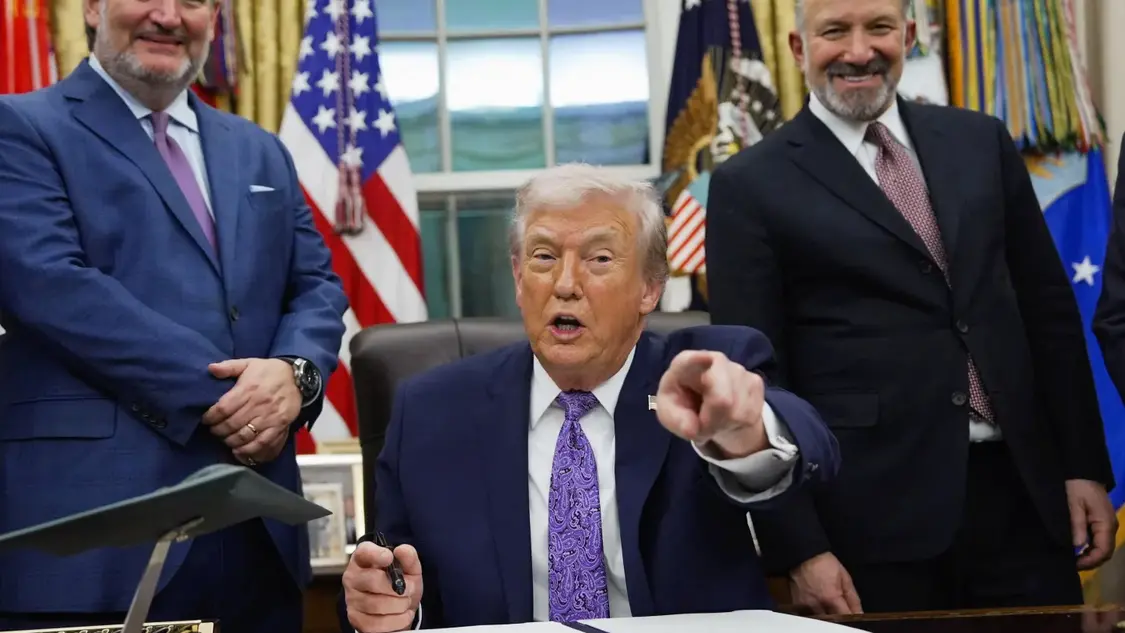
In September, Trump proposed in a public speech that the name artificial intelligence was inaccurate and stated that the U.S. federal government would adopt the new term "superintelligence" in the future. Subsequently, he signed an executive order requiring federal government agencies to use "Super Intelligence" and the abbreviation "SI" whenever possible in official communications, replacing the original "Artificial Intelligence" and "AI".
This order mainly targets federal government agencies and does not mean that all private companies in the United States must use the new names. However, as Trump continues to publicly promote this change, relevant statements have begun to enter the external publicity and executive remarks of some technology companies.
Trump even stated on social media that the White House views anyone who continues to use "artificial intelligence" instead of "superintelligence" as an "enemy." The wording further intensifies the political overtones of the name change and raises questions for technology companies about how to navigate the relationship between government preferences and industry terminology.
One of the first tech figures to respond publicly was Elon Musk. Musk had previously promised to change the name of his related business SpaceXAI to SpaceXSI to match the terminology adjustment promoted by Trump. The move isn't surprising given Musk's close relationship with the Trump administration.
Subsequently, Salesforce CEO Marc Benioff also announced that the company would rename AIForce to SIForce. The move occurred after Trump once again publicly criticized the name "artificial intelligence" and was therefore seen as a sign of companies' quick response to the White House initiative.
Nvidia CEO Jensen Huang also began to use relevant expressions. Huang previously participated in a technology industry meeting convened by Trump. During the meeting, the U.S. government announced that it would require federal agencies to use the name "superintelligence" in official documents. Huang Renxun has always emphasized the opportunities brought by artificial intelligence and believes that external concerns about the dangers of related technologies have been exaggerated.
Nvidia has since announced that it will invest $1 billion in work related to scientific advancement, including support for "superintelligence research." Although this investment commitment does not mean that Nvidia will devote all of its funds to the specific projects involved in the terminology adjustment, the company's use of the term "superintelligence" in its public statements shows that this term has entered its external communication system.
The relationship between Huang Jensen and the Trump administration makes real business sense. Nvidia's business involves advanced artificial intelligence chips, data centers and computing infrastructure, and the U.S. government has important influence in export controls, industrial policy, government procurement and related supervision. For companies like Nvidia, there is business value in maintaining a good relationship with the White House.
Microsoft CEO Satya Nadella became the latest technology leader to start using this statement.
Nadella previously participated in the same technology industry conference. Participants also included Meta CEO Mark Zuckerberg, Google CEO Sundar Pichai, Amazon founder Jeff Bezos, Anthropic CEO Dario Amodei, Musk and others.
After the meeting, Nadella published an article discussing artificial intelligence safety issues, proposing that a safety mechanism similar to an "emergency braking device" should be established for related technologies. In this article, he uses the term "superintelligence" several times to describe related technologies.
Nadella's adoption of the new terminology is particularly noteworthy because Microsoft is not only one of the world's largest technology companies, but also a major player in the development of artificial intelligence infrastructure and models. Microsoft has maintained a long-term cooperation with OpenAI and continues to invest in artificial intelligence computing resources, cloud services and related products. The way its executives name technologies may affect corporate customers, developers and the public's understanding of related technologies.
However, the adoption of the term "superintelligence" by technology companies does not mean that the entire industry has officially abandoned the traditional term "artificial intelligence". There are differences in the statements of different companies. Some companies only use new words for specific occasions and do not announce comprehensive adjustments to product names, technical documents or internal R&D systems.
In fact, artificial intelligence and superintelligence have different meanings in the technical field.
"Artificial intelligence" is a broad concept that includes speech recognition, image generation, recommendation systems and autonomous driving, as well as large language models capable of performing complex reasoning tasks. The capabilities of relevant systems vary greatly, and not all artificial intelligence systems have capabilities that approach or even exceed the overall human cognitive level.
In contrast, "superintelligence" generally refers to intelligent systems that are capable of surpassing the best human beings in almost every important cognitive domain. This concept has existed in academia for many years, and it is not the first time Trump has proposed it.
The book "Superintelligence: Paths, Dangers, and Strategies" published by philosopher Nick Bostrom in 2014 systematically discusses the opportunities and risks that machine intelligence that far exceeds human capabilities may bring. Earlier, relevant academic research has also used this concept to explore the development direction of future intelligent systems.
Thus, labeling all AI technologies collectively as "superintelligence" would effectively erase the distinction between existing technologies and hypothetical superhuman intelligence. A model for generating pictures or music is not on the same level of capabilities as a system that can comprehensively surpass humans in scientific research, strategic decision-making, and other complex cognitive areas.
This conceptual distinction is not only of academic significance, but also related to how the public understands the actual capabilities and potential risks of artificial intelligence. If "superintelligence" becomes a common name for all artificial intelligence products, the degree of technological breakthrough that the term originally represents may be diluted.
For technology companies, there is another layer of contradiction in name change. On the one hand, "superintelligence" sounds more attractive than "artificial intelligence" and can highlight the advancement of technology. On the other hand, if all existing products are uniformly named "super-intelligent", it may be more difficult for companies to reflect the improvement of product capabilities through naming when they launch truly breakthrough new systems in the future.
At the same time, the changes in the relationship between Silicon Valley companies and the Trump administration are also an important background behind this name change.
During Trump’s first term, the relationship between the U.S. government and some large technology companies was quite tense. Immigration policies, social media content management, regulatory measures and the political stance of the technology industry have all caused disputes on both sides.
After entering the second term, many Silicon Valley companies and their executives have become significantly more active in seeking to establish cooperative relationships with the government. Technology companies not only need to pay attention to the impact of government policies on their business, but also hope to obtain a more favorable policy environment in areas such as data center construction, energy supply, advanced chips, artificial intelligence research and development, and international competition.
The Trump administration hopes to accelerate the development of the U.S. artificial intelligence industry and emphasizes that the United States must stay ahead in technological competition with China. The White House’s adjustment to the naming of artificial intelligence is carried out against this policy background.
The rapid embrace of the new terminology by some technology leaders reflects the changing relationship between Silicon Valley and the Trump administration. For these companies, publicly responding to the president's initiative may help maintain good political relations, but this approach may also raise questions about whether the company is overly considering political factors in addition to technical judgment.
Of course, not all businesses have fully embraced this change. Different companies are still choosing their words based on their own technology strategies and public communication needs, and standard terminology in the field of artificial intelligence will not immediately change globally just because of an executive order.
At present, "artificial intelligence" is still the most commonly used concept in academic research, international technical exchanges, product development, and public discussions. The U.S. government can ask federal agencies to adjust the wording in official documents, but it is still very difficult to get the global technology industry, researchers, developers, and ordinary users to fully switch to "superintelligence."
Whether this name change will ultimately achieve the results Trump hopes for remains to be seen. What is certain is that as artificial intelligence gradually becomes a core issue in U.S. economic policy, national security, and competition in the technology industry, the name of the technology itself has begun to become part of political communication.
For Silicon Valley, the real challenge may not be whether AI or SI should be used, but how to maintain a balance between catering to the policy environment, pursuing business opportunities, and accurately describing technical capabilities. After all, it is relatively easy to change a name, but the capability boundaries, potential risks, and social impacts of the technology itself will not change just because the name changes.
Comments