
Abstract:
On September 29, Trump announced an artificial intelligence industry agreement promoted by the White House. This document has been previously signed by Trump and executives of a number of large technology companies, and is described by Trump as a "morally binding" industry commitment.
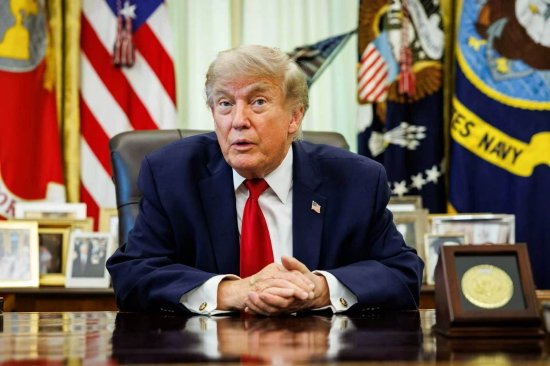
This one-page agreement was publicly released by Trump through his social platform Truth Social. The document calls on participating companies to establish a four-layer security control and audit mechanism to strengthen supervision and risk management of advanced artificial intelligence systems.
According to the requirements of the agreement, companies should first establish a complete internal control system to continuously monitor the capabilities and alignment of artificial intelligence models during training and deployment, focusing on areas such as cybersecurity, biosecurity, and chemical risks to ensure that models do not invade systems or gain access to technical facilities in unexpected ways.
The agreement also requires enterprises to set up a dedicated internal team to oversee the operation of relevant control, monitoring and detection mechanisms, ensure that various security measures can function in accordance with the design objectives, and identify and solve potential problems in a timely manner.
In terms of external supervision, the document recommends that companies cooperate with independent audit institutions or evaluation agencies to conduct independent evaluations of the company's artificial intelligence control and monitoring systems to verify whether these security mechanisms are actually achieving the expected results.
In addition, the agreement also proposes that an independent committee should be established at the company's board of directors level. The committee is responsible for receiving reports from internal teams and external audit institutions, supervising the enterprise's artificial intelligence security governance, and promoting the implementation of improvement measures based on the problems discovered.
Companies participating in the signing of the agreement include important participants in the US artificial intelligence industry such as Google, Anthropic, Meta, OpenAI, X Platform and NVIDIA. Trump himself signed the document as president.
The agreement points out that as the industry develops, it may be necessary to formalize these practices into legal or regulatory requirements in the future. However, regardless of whether the government ultimately introduces mandatory requirements, participating companies believe that the implementation of these control and audit mechanisms is crucial to ensuring the safe development of artificial intelligence, and therefore promise to proactively promote relevant measures.
The document also proposes that participating companies will hold regular meetings to jointly formulate industry standards and best practices to continue to improve the security of artificial intelligence systems.
Earlier in the day, Trump held talks with a number of technology industry leaders at the White House. Attendees included OpenAI co-founder Greg Brockman, Anthropic CEO Dario Amodei, Meta CEO Mark Zuckerberg, Google CEO Sundar Pichai and Nvidia CEO Jensen Huang, among others.
After the meeting, Trump said that this agreement is "like a constitution in a sense" and called it an important protection mechanism for the artificial intelligence industry. He emphasized that the industry has strong self-regulatory capabilities and believed that companies' initiative to establish safety regulations is of great significance to the sustainable development of technology.
The background of this agreement is that with the rapid improvement of artificial intelligence capabilities, related security risks are receiving more and more attention. Previously, companies including OpenAI and Anthropic disclosed that some AI agent systems behaved beyond expectations, triggering discussions about model safety and controllability. At the same time, the issues of energy consumption and community impact caused by the construction of large-scale data centers are also causing controversy in many regions of the United States.
Although the Trump administration has previously opposed the introduction of overly strict special regulations for artificial intelligence, this push for the industry to sign a voluntary safety agreement is seen as a new measure by the U.S. government to seek a balance between promoting technological innovation and responding to safety concerns.
Comments