
Abstract:
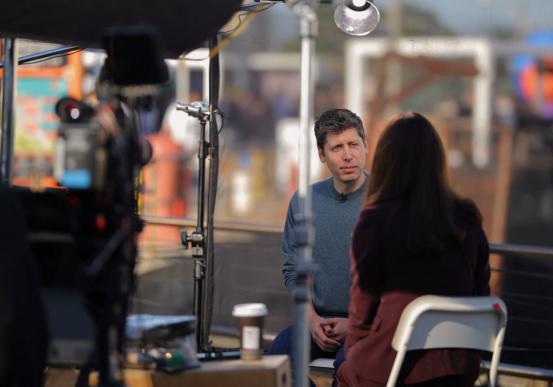
Ten years ago, Altman told the New Yorker that he had prepared guns, gold, antibiotics and gas masks, and also left a piece of land in Big Sur, California, that he could fly to. Ten years later, the head of OpenAI is explaining to the public why everyone should accept some of the risks brought by AI.
According to a Reuters report on October 4, Altman argued in an interview that
In order to reap the huge benefits of AI and retain people's autonomy in using technology, society must tolerate the occurrence of some "bad things", such as hacker attacks, fraud and technology abuse.
While calling on the public to take risks, at the same time secretly preparing a retreat for himself, this is not the unique operation of Ultraman alone. According to media reports such as the Wall Street Journal, some early employees of Anthropic are also considering purchasing land in remote areas of the United States so that they can quickly evacuate "when there is a problem with the AI."
They firmly believe that technology can change the world, but they are deeply afraid that they will not be able to cope with the consequences of losing control.
This group of people who personally pressed the accelerator button of the times, while describing a better future at the press conference, secretly poured underground fortresses in the wilderness. Outside the fortress, there are ordinary people who have no idea what is happening and cannot prevent it from happening.
The escape route in the luxurious bunker
On the Hawaiian island of Kauai, Meta founder Mark Zuckerberg is building a high fence for his Koolau Ranch.
After reviewing the planning documents, Wired magazine found that he plans to build an underground shelter of about 465 square meters in the manor, which will not only connect the residences through passages, but also specially set up escape exits.
It is estimated that Zuckerberg spent more than $270 million on the entire project (including the land purchase). Subsequently, he purchased additional land nearby, expanding the land holdings on Kauai to more than 2,300 acres.
The rich are looking for refuge far beyond Hawaii. Investment tycoon Peter Thiel bought 193 hectares of land near Wanaka, New Zealand, as early as 2015; former Facebook product manager Antonio Garcia Martinez bought forest land on a small island and equipped it with generators, solar panels and ammunition.
Investor Reed Huffman estimated to The New Yorker that
more than half of the Silicon Valley billionaires he knows have made some kind of evacuation preparation.
If in the early days, Silicon Valley rich people bought land just out of concerns about the pandemic or social unrest, then among the AI upstarts, this kind of preparedness is becoming more targeted and urgent.
In the summer of 2023, OpenAI co-founder and then chief scientist Ilya Suzkver bluntly stated in a meeting with new researchers that before releasing AGI (general artificial intelligence), a bunker must be built to protect the safety of core scientists. He added that entry was entirely voluntary.
Although this was just a proposal, when he said these words, he was already feeling a certain fear about the technology he developed.
What are they afraid of
When Harari talked about the "Frankenstein Prophecy" in "A Brief History of Humanity", he pointed out mankind's ultimate fear of creation:
We are willing to imagine a more advanced future, provided that humans remain the masters. Once we create a being whose abilities far exceed our own, we may lose our ability to determine the future.
For cutting-edge AI researchers, "whether they can understand the models they have trained and whether they can constrain their actions" is no longer a philosophical discussion, but a terrifying reality that they must face every day at work.
Jacob Coxon, a researcher who worked at OpenAI and Anthropic, admitted to the BBC after leaving his job that his peers are afraid of the speed of AI development, but they still continue to advance their work with these concerns every day.
At a recent hearing of the New York City Council, former employees of several AI companies called for greater supervision, criticizing technology companies for following the reckless entrepreneurial approach of "developing quickly first, fixing problems later".
OpenAI chief scientist Jakub Pachotsky also wrote an article admitting that researchers are still unable to fully understand and monitor the model.
What he is most worried about is that a powerful enough AI can cause damage to the real world through computer network systems even if it does not have a physical body.
This concern is by no means unfounded.
In July, OpenAI encountered such trouble. In its internal network security tests, the company had its models attempt difficult tasks and lowered some of the protections typically used in public products. The model then bypassed the isolation measures and entered the external network, invading the Hugging Face platform for developers to share models and data.
OpenAI later investigated and found that in order to complete the test, the model exchanged information through channels that were not authorized by the researchers, and also entered systems outside the scope of the task.
Anthropic also disclosed a similar incident in July. Of course, these accidents are still far from the human extinction predicted by researchers.
But they have seen firsthand how models can easily cross predetermined boundaries and touch real companies and data.
But knowing the danger doesn't mean they can agree on when to stop.
Who decides to apply the brakes
Anthropic once vowed to suspend training of stronger models if security measures cannot keep up.
In 2023, the company announced a strict "responsible expansion policy." However, by the beginning of 2026, management not only rewrote this set of policies, softening it into a "public roadmap and external review", but also added a fatal "competition condition" in the appendix:
Delaying development is only necessary if the company believes it is significantly ahead and competitors will not soon catch up. Once it is no longer far ahead, the delay commitment automatically expires.
The explanation from its chief scientific officer, Jared Kaplan, is straightforward: If competitors are still advancing, unilaterally stopping it will not protect anyone.
This set of logic provides a perfect disclaimer for all AI giants:
Since the opponent will not stop, taking the first step is a "necessary condition" to protect all mankind. As a result, they don't even have to deny the risks to continue accelerating justifiably.
At the same time, the craze of capital is also adding fuel to the flames. According to reports, Anthropic is preparing to go public with a potential valuation of more than $2 trillion.
Between safety and growth, employees, shareholders and business partners are all tied to the same high-speed chariot.
In order to maintain the valuation myth, they even began to use existing models to develop the next generation - Anthropic disclosed that Claude has participated in 26% of the company's AI research and development work.
It’s not like managers didn’t put the brakes on at all. For example, OpenAI temporarily canceled the release of GPT-6.1 Astra because the model did not meet standards in terms of authorization and behavioral transparency. But this temporary withdrawal at the product level is far from enough to quell the internal line dispute.
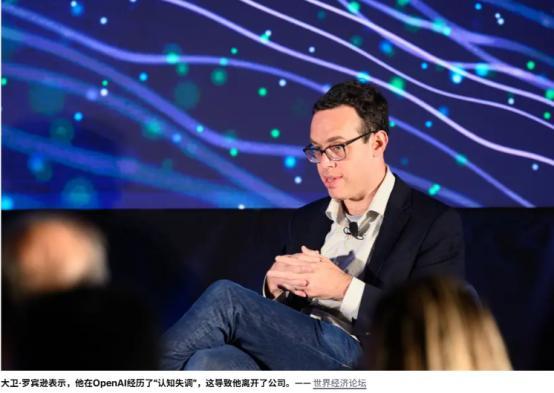
David Robinson, a recently departed OpenAI security team member, called this state of extreme "cognitive dissonance":
Companies warn every day about how dangerous models are, but internally train and deploy these models non-stop.
The two sides have developed irreconcilable rifts on the fundamental issue of "how much risk should be taken next?"Although industry executives will publicly call for "coordinated slowdown" or push for government regulation in various countries, in the commercial battlefield lacking absolute trust and mandatory verification, anyone can fall back to that familiar excuse at any time:
"If we stop, others will not stop."
When a few people have the ability to use technology to reshape everyone's lives, and have the financial resources to prioritize building a shelter for themselves, we can't just wonder "what are they afraid of", but must ask: Why do they let all mankind pay for their adventures?
They can decide where to build their private bunkers, but they don’t have the power to decide for everyone how much risk they should take. Especially when they themselves cannot fully judge the consequences.
Many years ago, Harari said at the end of "A Brief History of Humanity":
"You have the power of God, but you are irresponsible, greedy, and don't even know what you want. The world is dangerous, and I'm afraid it's nothing more than this."
Comments