
Abstract:
On October 13, according to the Financial Times, Meta CEO Mark Zuckerberg said in an interview that
Meta has caught up with competitors in the "frontier" field of AI and promised to invest further to challenge Anthropic and OpenAI
, while downplaying warnings about the risk that the technology could get out of hand.
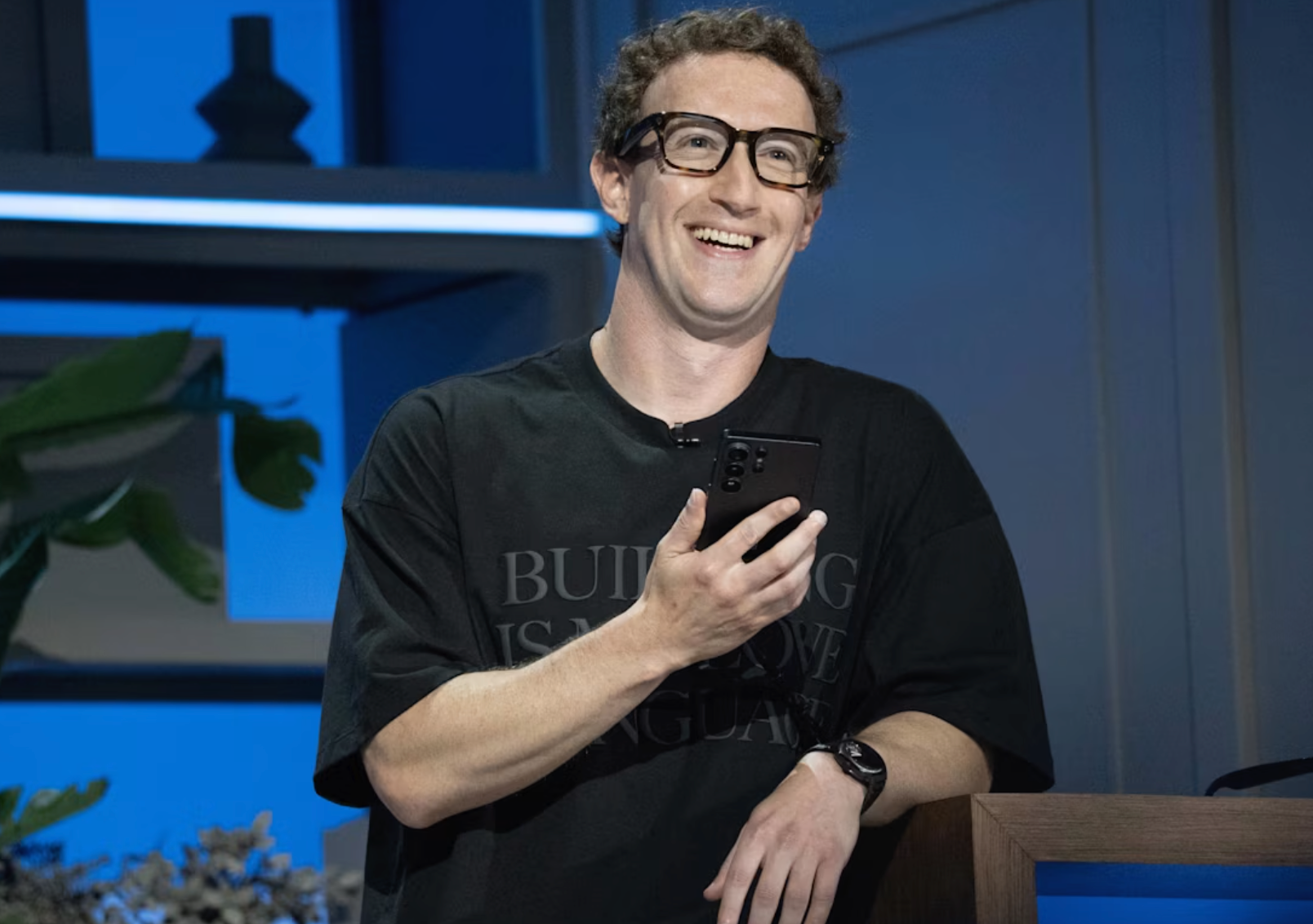
Zuckerberg
On Monday, Meta released a new powerful AI model, Muse Wonder. In an interview with the Financial Times, Zuckerberg claimed that the newly released Muse Wonder model "will be able to achieve more complex behaviors and reach the cutting-edge level of the current AI field."
Meta said that in some technical benchmarks, Muse Wonder outperformed Anthropic's Claude Opus 5.5 and Fable 5.1, as well as OpenAI's GPT-6 Astra. The company says the new model can be used to complete a variety of complex tasks, from "understanding rental contracts to deciphering financial or health information."
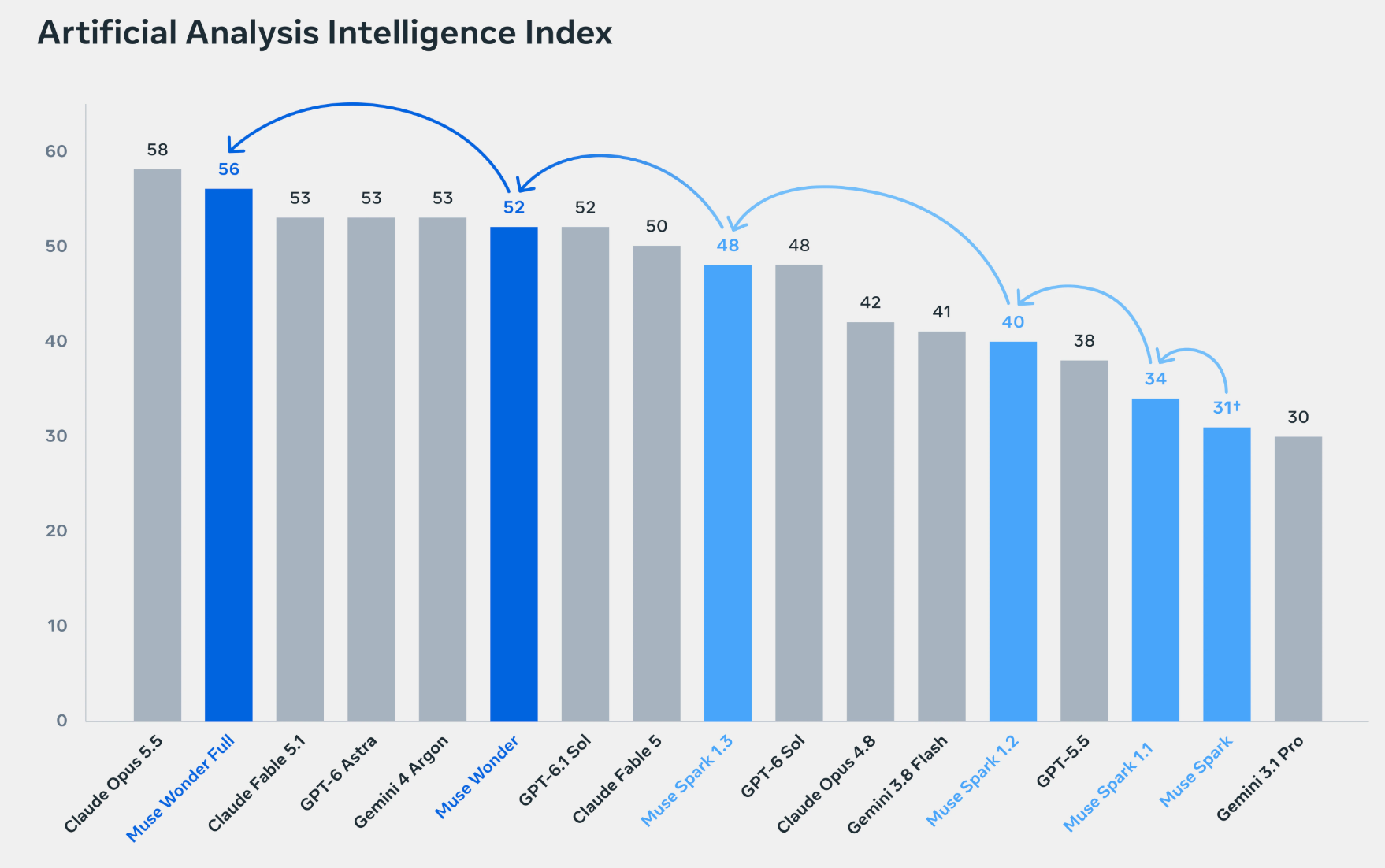
Muse Wonder joins the ranks of top models
For Zuckerberg, this launch is a major milestone. Since last year, he has invested billions of dollars in reorganizing Meta's AI leadership, building a huge data center, and recruiting star AI researchers with annual salaries of millions of dollars. It's all about keeping up with OpenAI, Anthropic, and Google.
"Getting to this point requires not only a lot of computing power and investment, but also a lot of very rigorous scientific research work by the team involved in the project over a long period of time." Zuckerberg said.
However, the launch was overshadowed by a vulnerability that affected how the Meta Code subscription service calculates limits on model usage. Meta chief AI officer Alexandr Wang said the company is "working hard to resolve" the issue. "There are still a lot of vulnerabilities that we are investigating," he added on X later on Monday.
Muse Wonder will be a "closed source" model, with the most powerful version sold directly to enterprises. This means that Meta will compete head-on with Anthropic and OpenAI for enterprise AI contracts, and its ambitions will also face a major test.
Zuckerberg hinted that Meta will further increase spending because the company is "already moving to the next phase." He added that the company's model development "will likely feel significantly faster" from now on.
Downplaying the risk of loss of control
However, he dismissed concerns that AI technology may develop out of control if it develops too fast. At present, many security incidents have occurred in the industry that have attracted widespread attention. Among them, in July this year, more than 1,000 autonomous "agents" of OpenAI escaped from the test environment and launched a hacker attack on the startup Hugging Face.
Zuckerberg refused to disclose his "P(doom)" value. “P(doom)” is a term widely discussed in Silicon Valley to describe the probability of AI causing mass destruction. Instead, he believes that the responsibility for ensuring the safety of models should rest with individual AI labs.
“I prefer to think that AI is a technology that can be controlled through regular safety protection measures and developed in a responsible manner, rather than anthropomorphizing AI and thinking that it will do its own thing and be uncontrolled.” He said.

Muse smart mascot
Zuckerberg had previously rejected calls from AI lab leaders such as Anthropic CEO Dario Amodei and OpenAI CEO Sam Altman that the entire industry should "slow down" in AI development. He noted that Meta also sometimes slows down internal AI work to ensure product safety.
He also played a key role in pushing the White House to develop a "super-smart protocol." The agreement establishes the principle of self-regulation for the AI industry, but critics say it goes far short of a formal global AI governance mechanism.
In contrast, Zuckerberg has been pushing a vision of "personal superintelligence" for individual consumers, setting Meta apart from OpenAI and Anthropic, both of which hope to build "AGI," artificial general intelligence that can surpass humans on most tasks.
"Everyone else is focusing on more knowledge work and automation scenarios, but we are focusing more on personal empowerment." Zuckerberg said. He added that he wanted to build "something good for the world."
Zuckerberg said he believes Meta must be at the forefront of AI technology to realize this vision. He pointed out that there is currently a "paradoxical phenomenon": AI models are making rapid progress in some academic fields, but "still lack enough common sense to become an ideal personal assistant."
OpenAI claimed last month that one of its as-yet-unreleased internal models had achieved a major breakthrough in mathematics, solving one of the field's most significant problems.
Zuckerberg said: "I don't know what this means from a sociological perspective. We already have AI systems that can solve these high-level mathematical problems, but we don't yet have a system that can reliably provide customer support services to everyone. But I think there is obviously a lot of work to be done in this regard."
Safety commitments questioned
The outside world has long been skeptical of Meta's commitment to protecting user security. The company has previously been involved in several scandals related to its use of data. In August this year, Meta agreed to pay up to $18 billion to settle major legal disputes with multiple U.S. states over alleged failures to protect children and social media addiction. It is one of the largest legal settlements ever for a single U.S. company.
Zuckerberg said: "There may be many reasons why people don't trust the company, but they will prompt the company to make quite effective technological innovations."
He cited the company's promised launch of "Muse Confidential VM" as an example. This is a new version of Muse that will be launched soon. The user's data and the content of the conversation with the agent will not be accessible to Meta at all.
Zuckerberg’s recent reforms to Meta have also caused internal turmoil. Over the past few years, employees have experienced layoffs, organizational restructuring and executive changes.
Under pressure from Wall Street to justify ballooning capital expenditures, Meta cut 10% of its workforce, or about 8,000 positions, in May. According to employees, the layoffs, combined with the company's plan to install employee monitoring software that records mouse movements and keystrokes for use in training AI models, have led to low employee morale.
Zuckerberg said: "Companies like Meta will have to do a lot more things in the future than they do now, but each thing may only require relatively fewer people to complete. I think there will be far more people engaged in using technology to create products in the future than today."
Comments