
Abstract:
It seems that mobile phone chips have not been exciting for a long time? In the past few years, whenever the autumn conference is over, we can always hear numbers like "another percentage improvement", but the experience behind those numbers is often difficult to describe. Spend a few more minutes running and you can see it, but if you really want everyone to "feel" it, it's always a layer away. Until the A20 Pro chip appeared this year.
This is a chip that truly makes you "feel" a jump in performance - it brings not just a percentage increase in running scores, but an engineering revolution that fundamentally reshapes the mobile experience.
2nm: Process supremacy in thin and light mobile phones
“The 2nm process allows us to increase the density of transistors, improve energy efficiency, and further improve performance. It brings great improvements at the entire system level.” Dan Murray, Apple’s vice president of chip engineering, said when introducing the A20 Pro.
A20 Pro is Apple’s first mobile phone SoC using 2nm process technology. This is a significant number, and the smaller number for the process technology means that more transistors can be crammed into the same chip area while also allowing them to operate at lower voltages.
It is crucial for small devices such as mobile phones that are powered by batteries and have limited space for heat dissipation. But 2nm is not the only advancement of the A20 Pro. The real breakthrough lies in its fundamental reconstruction of the "internal structure" of the chip - from vertical stacking to a "side-by-side" design.
The heat dissipation revolution of chip packaging
Before the A20 Pro, all of Apple’s A-series mobile phone chips used PoP (Package-on-Package) packaging technology. It is to stack SoC and DRAM memory vertically. The memory chip is like a pot lid, pressing on the SoC pot.
PoP packaging can make the chip small and compact, saving valuable internal space. But the cost is equally obvious. The memory is placed directly on the SoC, which will hinder three people.
As a result, the A20 Pro turned to a new packaging technology-WMCM (Wafer-Level Multi-chip Module, wafer-level multi-chip module). The technology was originally enabled on Mac's M-series chips and is now being brought to iPhone for the first time.
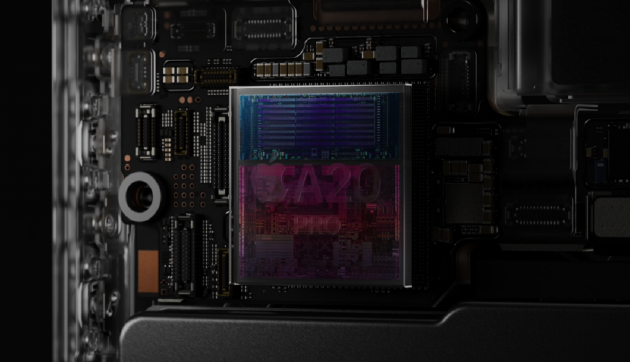
The core change of WMCM is simple: instead of stacking memory on the SoC, place them side by side.
"This will indeed make the size larger, but we work with the system team to solve this problem at the system level. Because the SoC is now directly connected to the VC vapor chamber, the benefit is that it is easy to dissipate heat." Dan Murray added.
It is as if the iron pot (SoC) and the pot lid (DRAM) are placed side by side on the table, and the heat can be quickly dissipated.
The four pillars of iPhone thermal design
If WMCM has changed the "shape" of the chip, then the heat dissipation system built around it by Apple has truly completed a qualitative change from "can dissipate heat" to "can dissipate heat".
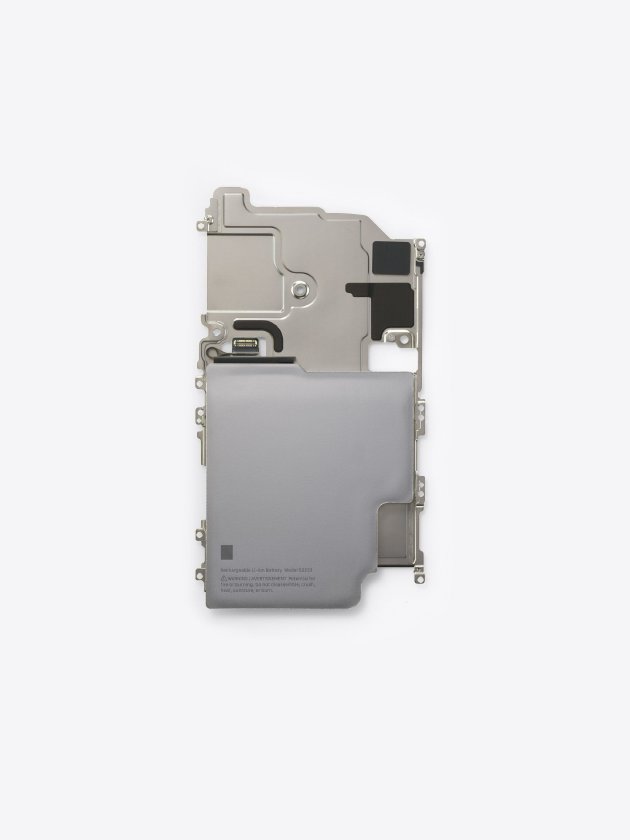
iPhone 18 Pro vapor chamber and battery back internal view
Banafsheh Barabadi, senior manager of thermal design at Apple, summarized the system as "four pillars":
1) SOC direct heat dissipation path, 2) Metal Over Foam thermal interface material, 3) VC vapor chamber with a heat dissipation area three times that of the iPhone17 Pro series, 4) the industry's first nano-twinned copper display backplane used in mobile phones.
“Thanks to these four pillars, the sustained cooling performance has been greatly improved. Compared with iPhone 17 Pro, iPhone 18 Pro’s GPU sustained performance has improved by 40%. Compared with iPhone 16 Pro, sustained performance has almost doubled.” Banafsheh said.
What does this mean? When you run high-load games like "Genshin Impact" on your phone, shoot 4K ProRes videos, or use on-device AI features, iPhone 18 Pro can maintain peak performance for a long time without throttling - something that was almost impossible in the past.
The DNA of the M series: cross-platform technology integration
Another secret weapon of the A20 Pro comes from its "heritage"-it draws heavily on the design experience of the M-series chips on the Mac.
"We are a chip team. Basic modules such as CPU, GPU, and Apple Neural Network Engine are actually designed together. Then it can be expanded to different products and used on Apple Watch, iPhone, iPad, and Mac." Dan Murray introduced.
In other words, the A-series chips used by Apple in mobile phones and the M-series chips used in computers are the work of a group of people.
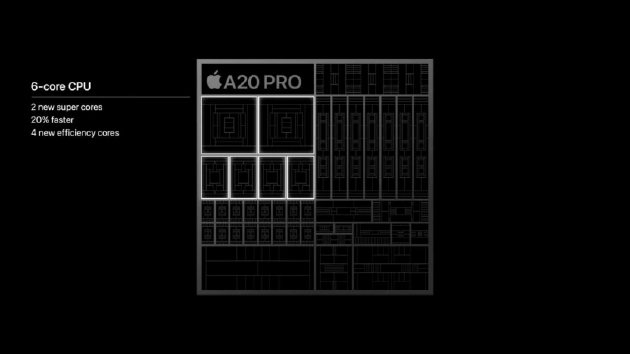
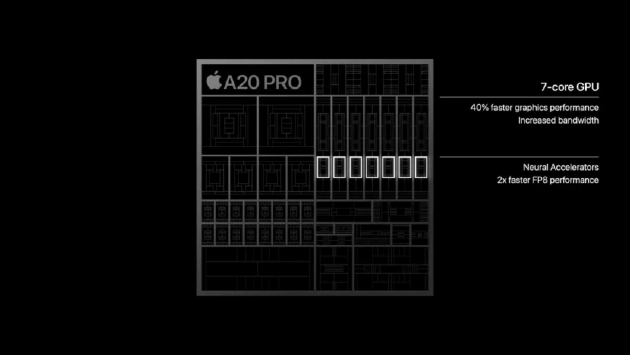
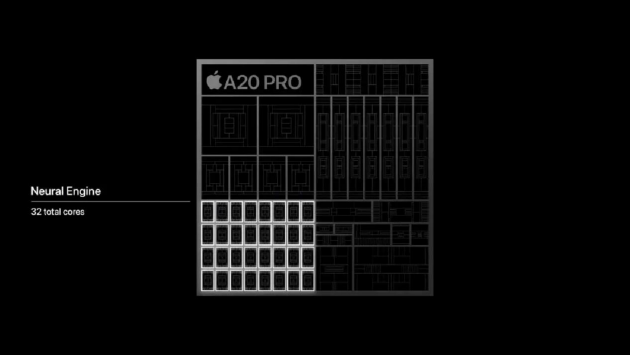
Specifically, A20 Pro has several key cross-platform technology transplants:
Super cores come to iPhone for the first time—these super-large cores originally used in Macs have been retuned on the A20 Pro to fit the thermal and power constraints of the iPhone. They provide desktop-like performance for short burst workloads such as application startup and web page loading.
Dual neural network engine design - A20 Pro is equipped with two independent 16-core neural engines for the first time, with a total of 32 cores. They can operate independently or collaborate in "bonding mode" to achieve higher throughput at lower voltages. This is critical for end-side AI workloads such as Siri, computational photography, and image generation.
Memory bandwidth increased by 50% - expanded from 64-bit LPDDR5 to 96-bit LPDDR5X interface, providing greater data throughput for memory-intensive workloads (such as games, AI inference).
Seven-core GPU - Graphics performance is improved by 40% compared to the previous generation. It is equipped with a second-generation GPU neural accelerator to further enhance image generation capabilities.
This "full ecological" technology sharing makes A20 Pro not an isolated chip, but an extension of the entire Apple hardware system capabilities on the mobile side. It has also greatly improved the AI capabilities of the iPhone 18 Pro series.
Dan Murray mentioned Apple's underlying thinking on AI: "Not all AI workloads have the same computing requirements. CPU, GPU, and ANE all need to be involved. The Core AI framework helps developers map different AI tasks to the most appropriate computing unit and give full play to the advantages of each piece of hardware."
Invisible design, visible experience "At Apple, reducing the surface temperature of the grip area and increasing the sustained load duration are actually two expressions of the same goal. Because our goal is to allow users to have the best experience when doing all operations." - When we asked about the core goal of this generation of thermal design, Banafsheh said.
Apple’s strategy is a two-pronged approach: while improving the system’s cooling capacity, while optimizing the chip’s energy efficiency.
All the decisions made by Apple's relevant teams, from the second-generation VC vapor chamber to the use of nano-twinned copper materials, are to allow the heat in the user's grip area to dissipate as quickly as possible, while ensuring that the chip has enough margin to achieve better sustained performance.
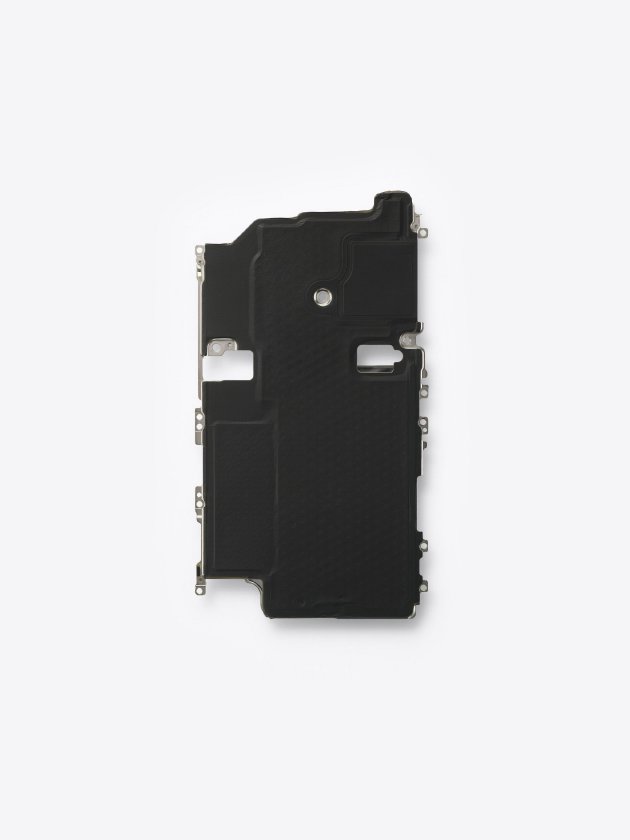
iPhone 18 Pro vapor chamber front internal view
The result of this design concept is that while the iPhone 18 Pro carries a higher performance load, the temperature of the user's holding area is more controllable. You can run large-scale games smoothly for a long time without dropping the frequency, and you won’t feel like you can fry an egg when playing games
“The thing that makes me most proud is that the user is actually invisible. This is also one of the original intentions of our design.” Banafsheh said of this cooling system.
This is very "Apple" - they hope that users care not about the area of VC vapor chambers or the microstructure of nano-twinned copper. They want users to know only one thing: this phone is really stable.
Apple’s product philosophy has always been to hide complexity in details, making the experience natural and smooth. The same is true for the A20 Pro - you don't need to understand what the 2nm process means or how WMCM works. All you need to know is that opening apps is faster, games are more stable, photos are taken more smoothly, and video editing is no longer stuck.
This is the essence of A20 Pro - it is not a technical business card to show off, but a quiet and calm revolution in user experience.
Apple’s engineering voice
From 2nm process to WMCM packaging, from dual neural engines to four major heat dissipation pillars, every technological breakthrough of this generation of chips is not an isolated parameter game, but a complete set of system engineering.
A very 'Apple' product logic is also hidden here: starting from the experience that users really care about, and then using the capabilities of the entire product system to solve it.
From this perspective, A20 Pro is not only a technical report by the Apple chip team, but also a redefinition of the entire mobile computing industry. While the Android camp is still debating the scheduling strategy of "ultra-large core + large core + small core", Apple has quietly integrated desktop-level performance architecture, self-developed AI accelerator, and industry-first heat dissipation solution into a mobile phone less than 9 mm thick.
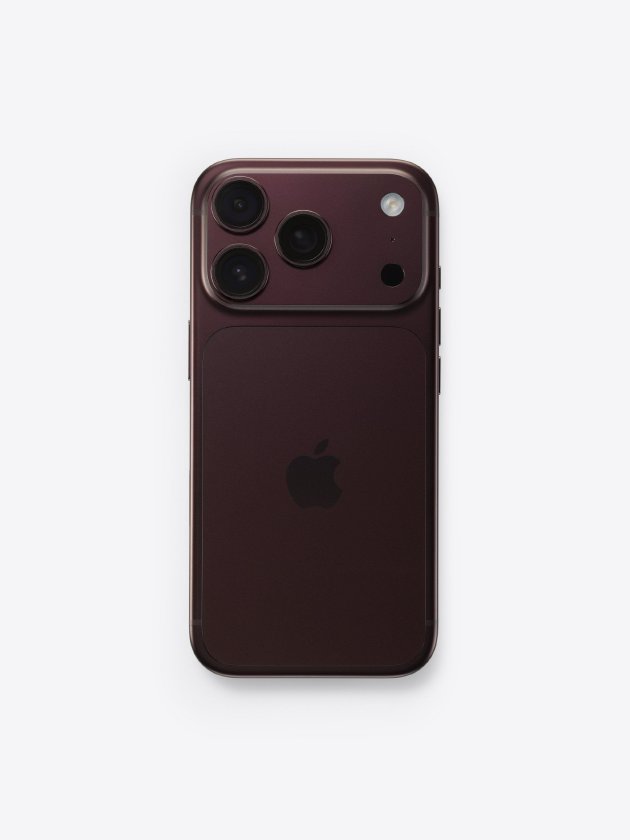
This may be why the iPhone 18 Pro feels so different - it makes people realize for the first time that a mobile phone can be so fast and yet so calm at the same time.
And perhaps only Apple can do this.
Comments