
Abstract:
As Apple’s new flagship iPhone 18 Pro and Pro Max are launched globally, the disassembly team and hardware analysts quickly conducted an in-depth disassembly of the new machines. The exposure of the internal structure fully reveals Apple's hardware layout on the new generation of high-end models. Among them, the main camera variable aperture mechanical structure, the greatly expanded vapor chamber cooling system and the highly integrated chipset layout have become the most eye-catching technical highlights in this teardown.
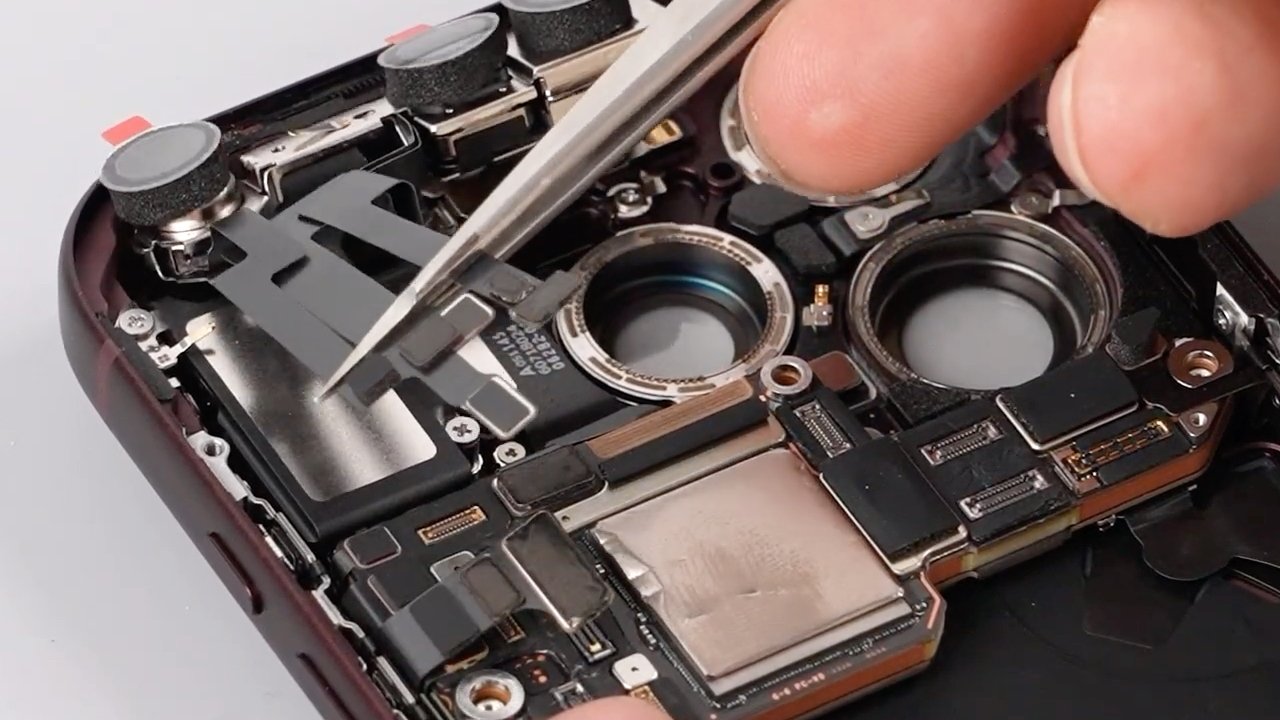
The disassembly results show that the iPhone 18 Pro continues to use an integrated aluminum alloy middle frame with Ceramic Shield material cutouts on the back in the internal structure design of the fuselage, but the stacking efficiency of internal components has been further improved. The most groundbreaking internal change comes from the new 48-megapixel main camera module. When the lens assembly is disassembled, it can be clearly seen that the main camera integrates a sophisticated iris-type mechanical aperture component, which can seamlessly switch between the four physical aperture gears of f/1.48, f/1.8, f/2.8 and f/4.0. This mechanical structure, while maintaining a very small size, occupies a considerable space inside the lens module, directly improving the light intake control and physical blur capabilities.
Another notable hardware upgrade is the thermal management system. In order to support the performance release of the A20 Pro chip built with 2nm process technology under long-term high load, Apple introduced a second-generation heat pipe (Vapor Chamber) cooling architecture inside the iPhone 18 Pro. Compared with the previous generation product, the surface area of the new generation cooling system has been expanded by three times. The vapor chamber directly covers the core chip and power management area of the motherboard, greatly improving the heat conduction efficiency during high-intensity gaming, 4K ProRes video recording or local AI depth calculation, enabling the system to achieve sustained performance improvements of up to 40%.
In terms of wireless communication and motherboard integration, disassembly confirmed that the iPhone 18 Pro sold in most regions has adopted Apple’s self-developed C2 5G baseband chip, showing more compact circuit board wiring and higher energy efficiency; while specific versions (such as the US version of Pro Max) retain the Qualcomm baseband solution configured for specific local frequency bands. In addition, thanks to the removal of the physical SIM card slot and the fine adjustment of the internal space, the battery capacity of the new phone has been significantly increased compared to the previous generation, and the durability of the internal protective pad and connecting cable has also been enhanced.
The internal teardown of iPhone 18 Pro shows that Apple is shifting the focus of hardware innovation from pure industrial design fine-tuning to the ultimate exploration of internal core performance. Whether it is the decentralization of engineering for the variable aperture mechanism or the introduction of ultra-large-area vapor chambers, it is a sign that when mobile devices cope with the increasing computing power and imaging requirements, internal engineering and heat dissipation design have evolved into a key battlefield that determines the comprehensive experience.
Comments