
Abstract:
As Apple's next-generation flagship chip research and development enters a critical stage, detailed technical specifications about the core power heart of the iPhone 18 Pro series have been deeply exposed by foreign media and the semiconductor supply chain. The latest leaked engineering benchmark data shows that the Apple A20 Pro chip, which is based on TSMC's latest 2-nanometer advanced process technology, has achieved explosive jumps in frequency limits, graphics architecture, memory bandwidth and other dimensions. The CPU frequency is said to have soared to a record high of 4.9GHz. Its graphics core has also been significantly upgraded, and its comprehensive memory bandwidth has even approached the level of Apple's desktop-class M3 chip.
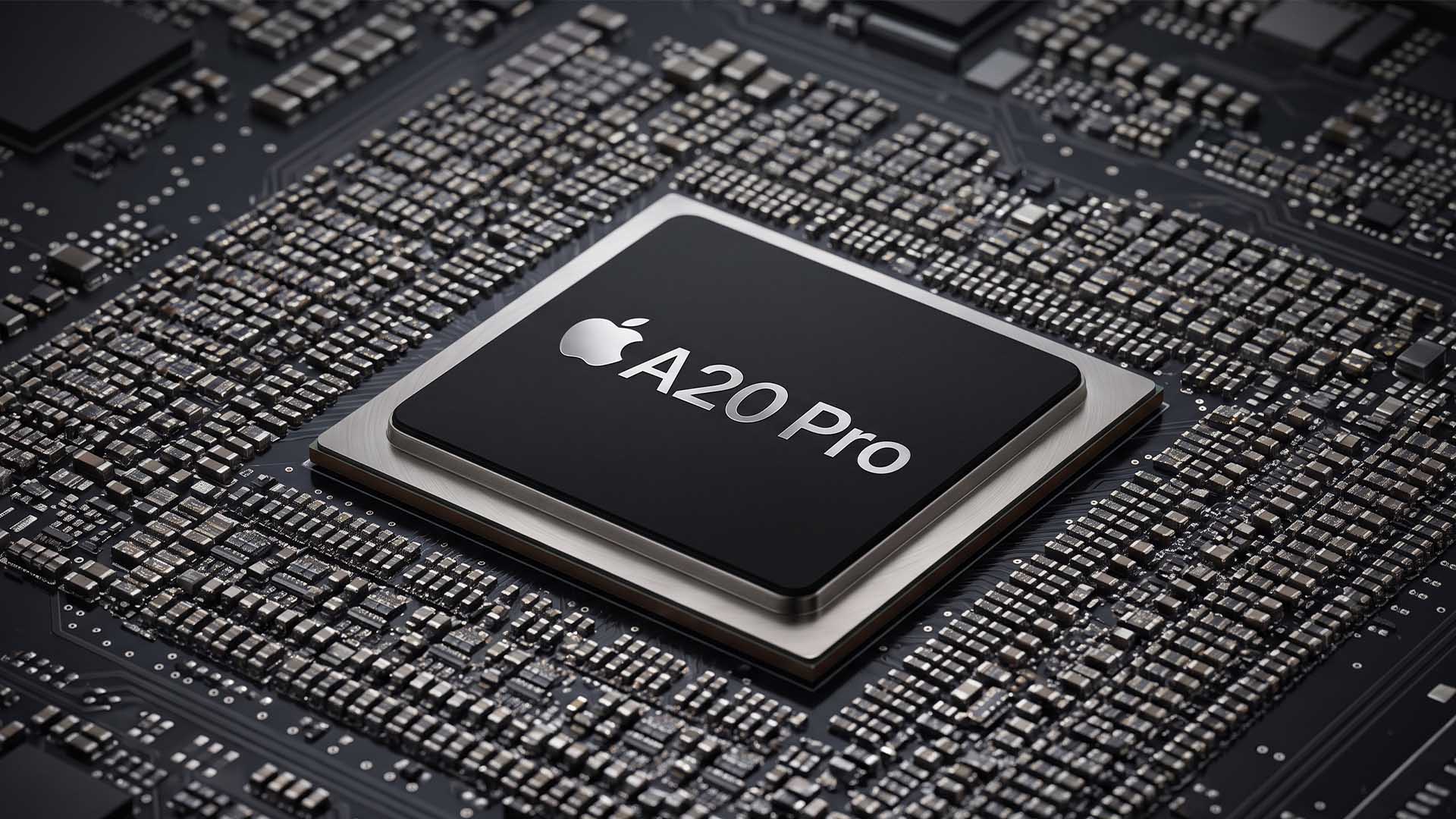
As Apple’s first 2-nanometer commercial mobile processor using TSMC’s all-around gate transistor (GAA) architecture, the A20 Pro has undergone a complete reconstruction of the underlying physical characteristics of the chip. Leaked information shows that Apple’s engineering team aggressively pushed up the performance upper limit of the CPU core with the support of energy efficiency ratio dividends. The A20 Pro's ultra-large performance core (P-Core) extreme turbo frequency is expected to reach an astonishing height of 4.9GHz. This frequency not only significantly refreshes the historical record of smartphone mobile SoCs, but also approaches the operating frequency of most desktop processors, indicating that the chip will have crushing performance in terms of single-core peak explosive power and complex and heavy computing tasks.
In terms of graphics processing, A20 Pro breaks away from the conventional 6-core GPU specifications that the mobile A-series chips have maintained all year round, and radically expands to a new 7-core GPU architecture for the first time. In addition to the physical increase in the size of the computing unit, the new generation graphics architecture has also been deeply optimized in shader instruction parallelism, second-generation hardware ray tracing accelerators, and dynamic cache management mechanisms. Coupled with the new generation neural engine (NPE) dedicated to end-side AI large model calculations, the 7-core GPU can more easily handle host-level high-fidelity 3D mobile games and complex localized neural rendering loads while maintaining excellent temperature control performance.
What is even more eye-catching is the disruptive upgrade of the memory subsystem. The news pointed out that in order to eliminate the data "feeding" bottleneck caused by the surge in CPU and GPU performance, Apple equipped the A20 Pro with higher-specification ultra-high-speed LPDDR5X/LPDDR6 channels and reconstructed the internal cache interconnect bus to increase its comprehensive memory bandwidth to an astonishing level, even at the same level as Apple's basic M3 chip (approximately 100GB/s bandwidth) used in Mac computers. This rare high-bandwidth configuration on mobile phone chips not only completely eliminates the real-time pipeline encoding resistance of 4K/8K ultra-high-definition high frame rate ProRes video, but also provides an abundant physical data throughput base for smoothly running full-modal end-side AI models with billions of parameters on the local device.
Semiconductor architecture analysts pointed out that the radical parameters displayed by the A20 Pro indicate that Apple is breaking the performance boundaries of traditional "mobile phone chips" and "thin and light notebook chips" in mobile chip design. With the joint support of TSMC's 2nm cutting-edge process and extremely high-frequency energy efficiency curve, Apple is trying to completely establish its absolute dominance in the field of mobile single-core performance and generative AI reasoning through the combination of extremely high frequency and ultra-large bandwidth. With the advancement of subsequent tape-out verification and real-machine mass production testing, whether the A20 Pro's actual power consumption performance and sustained performance release can maintain a stable balance in the slim body space will become the biggest factor in determining the hardware competitiveness of the next-generation iPhone Pro series.
Comments