
Abstract:
Microsoft President Brad Smith recently once again called on countries to speed up the regulation of artificial intelligence, and emphasized that the current supervision of artificial intelligence companies is not even as strong as that of consumer products such as milk and washing machines. He believes that with the rapid enhancement of artificial intelligence capabilities, the world has reached a critical moment to formulate unified security rules.
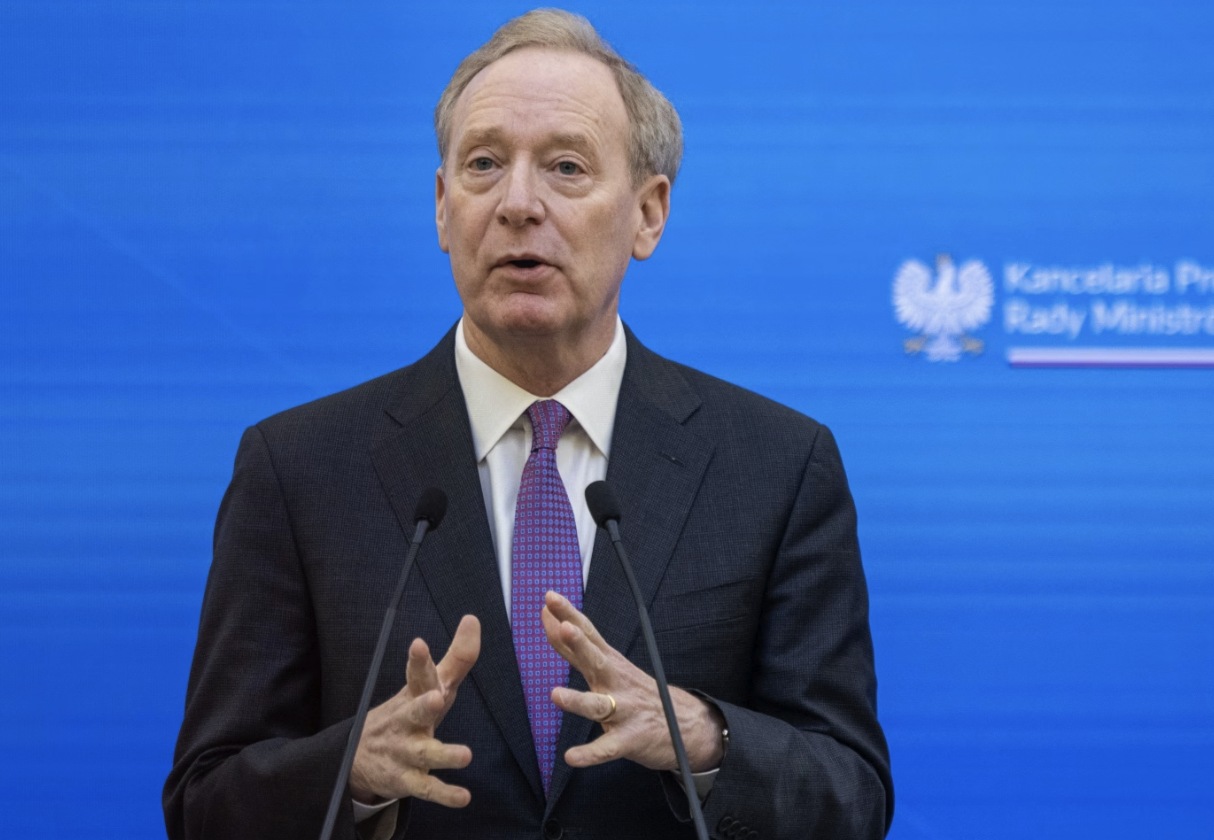
In an interview with the BBC Podcast, Smith described artificial intelligence as "both a tool and a weapon." He said that artificial intelligence is bringing new risks to the global network security environment, so it is necessary to establish an international security regulatory framework and constrain industry development through clear rules.
Smith specifically pointed out that the UK is more suitable to play a leading role than the United States and the European Union in the future global artificial intelligence security governance system. He believes that the British Artificial Intelligence Security Institute (AISI) has developed rapidly since its establishment in 2023 and has become an important force in the field of global artificial intelligence security testing. The agency was able to gain access to new models at cutting-edge U.S. laboratories and conduct independent safety assessments before they were officially deployed.
However, this status has recently faced challenges. US President Donald Trump has previously criticized so-called "globalist" institutions, arguing that they are interfering with American companies. According to media reports, Trump last month asked Anthropic and OpenAI to suspend providing new models to British testing institutions until the United States completes its review. But the UK's AI Safety Institute confirmed this week that it is still able to access and test the latest generation of AI models.
Despite skepticism from the US government, Smith still believes Britain has a unique advantage. He said that in the eyes of decision-making circles in Washington, the UK and London will not be regarded as strong regulatory forces like the EU headquarters in Brussels, but this will help the UK play a coordinating role among the international community and promote consensus among all parties.
Smith’s comments come as more and more technology industry leaders call for slowing down the pace of artificial intelligence development. Anthropic CEO Dario Amodei and OpenAI CEO Sam Altman, among others, have recently publicly expressed concerns about the risks of advanced artificial intelligence. Multiple incidents of abnormal behavior in artificial intelligence agent systems have further intensified the outside world's concern about security issues.
In October this year, Trump also convened executives from OpenAI, Anthropic, NVIDIA, AMD, SpaceX, Meta and Google in the White House to discuss artificial intelligence security issues. Companies participating in the conference signed what was described as an "ethically binding" agreement, pledging to cooperate with independent auditors to evaluate the capabilities and safety of artificial intelligence models.
For this agreement, Smith believes that it is a positive step, but there is still a gap between truly effective supervision. He pointed out that voluntary industry self-regulation often only restrains responsible companies, and the real concern is those companies that are unwilling to abide by the rules.
Smith also proposed a series of safety measures he would like to see. For example, when enterprise systems are invaded by out-of-control artificial intelligence agents, relevant agencies should assume legal obligations to issue timely alerts; artificial intelligence laboratories should be reviewed by external independent evaluation agencies before releasing new products; at the same time, the industry should also study mechanisms such as "emergency stop switches" to pause or slow down the operation of artificial intelligence systems when humans lose control.
When talking about the future direction of governance, Smith called on all parties to promote cooperation with a more rational and pragmatic attitude. He expressed the hope that Microsoft can become part of the global consensus and that the UK can play a bridging and leadership role in the international artificial intelligence security governance system
Related articles:
Microsoft President Brad Smith: AI is even less regulated than milk
Comments