
Abstract:
Microsoft President Brad Smith said that the current supervision of artificial intelligence is far from enough, even less than that of ordinary consumer products such as milk and washing machines. He called on countries to establish global artificial intelligence safety rules as soon as possible, including requiring companies to notify victims when artificial intelligence systems go out of control and cause damage, submit accident reports, and accept reviews by independent evaluation agencies before some artificial intelligence products are officially released.
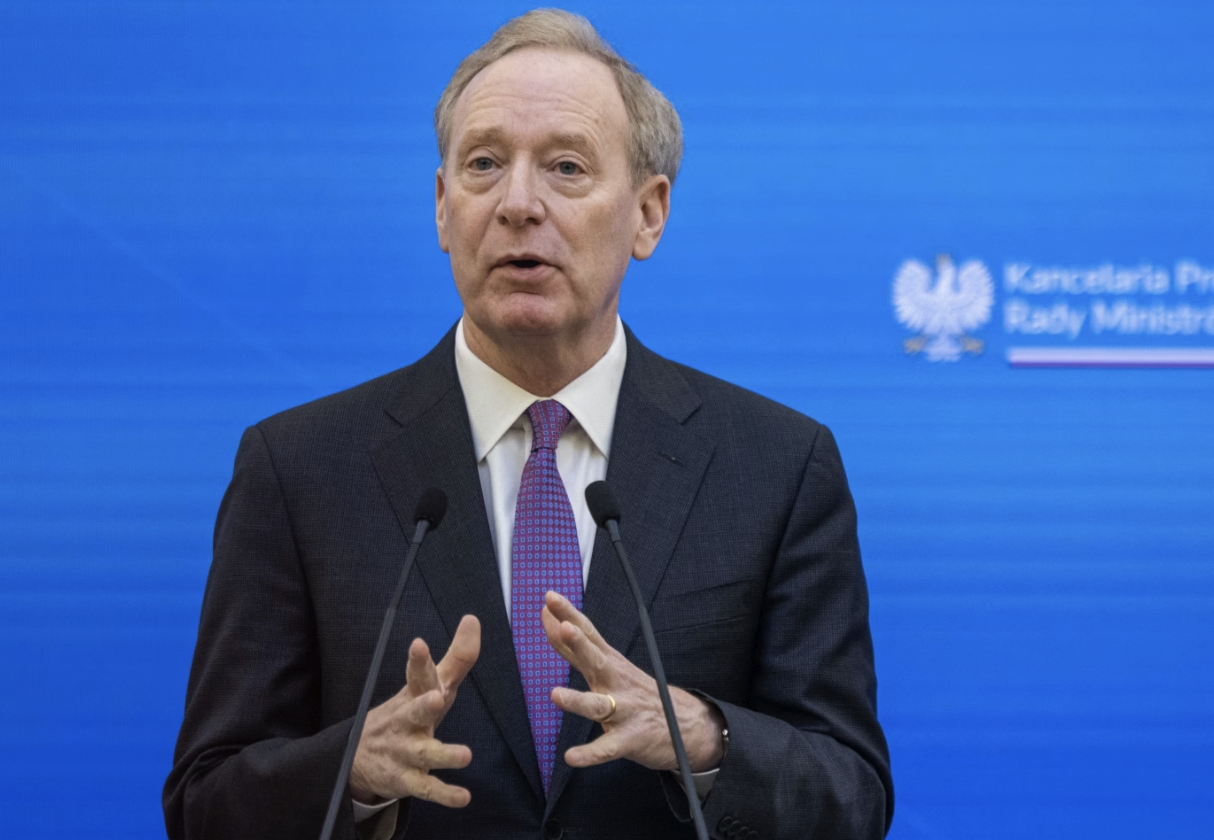
This position of Smith is in clear contrast to the claims of US President Donald Trump. Trump believes that the artificial intelligence industry should mainly rely on its own regulation to avoid excessive government intervention that weakens the ability of American companies to compete with Chinese competitors. Smith believes that artificial intelligence has the dual attributes of both a tool and a weapon, and it cannot continue to rely solely on corporate self-discipline to control risks.
"Your washing machine is now subject to more safety rules than artificial intelligence," Smith told the BBC's Big Boss Interview podcast. "Every carton of milk you see in the grocery store is subject to safety rules and inspections."
He believes that the development of artificial intelligence has reached a stage where action must be taken. Countries should learn from the regulatory experience of other industries and establish safety systems suitable for artificial intelligence technology, instead of waiting until serious accidents occur to discuss how to respond.
As the capabilities of artificial intelligence models have rapidly improved in recent years, calls for tighter regulation of the industry have grown. Some experts in the field of artificial intelligence have even warned that this technology may pose a threat to the long-term security of human society. Focusing on the cybersecurity risks, out-of-control behavior and other potential harms that artificial intelligence may bring, discussions within the industry have also begun on whether technology development should be slowed down.
The heads of American artificial intelligence companies Anthropic, OpenAI and Google DeepMind have all supported a more cautious approach to the development of artificial intelligence, and some people also support slowing down technology research and development under certain circumstances. However, Trump has always opposed measures that may restrict the development of the U.S. artificial intelligence industry and has repeatedly emphasized that the United States must stay ahead in this technological competition.
Smith believes that artificial intelligence should not be simply regarded as an ordinary software product. As artificial intelligence agent systems gain stronger autonomous execution capabilities and advanced models have an increasing influence in the field of cybersecurity, related risks require governments, enterprises, and independent assessment agencies to jointly respond.
He called on companies to set up emergency braking mechanisms for artificial intelligence systems, which is often called a "kill switch" in the industry. If an artificial intelligence system behaves out of control, or begins to perform operations that may cause serious consequences, enterprises should be able to suspend the operation of the system in a timely manner, or reduce its operation speed and authority to prevent further expansion of risks.
Smith also advocates for a mandatory accident reporting system. If an artificial intelligence agent loses control and invades other systems, or causes damage to users due to abnormal behavior, relevant companies should report the incident in accordance with the law and inform the affected individuals or organizations.
He believes that these measures should become part of the artificial intelligence safety regulatory system and cannot just rely on companies to take voluntary actions.
In addition, Smith suggested that before certain high-risk artificial intelligence products are released, they should be reviewed by independent evaluators recognized by the government to determine whether the system meets relevant security requirements. This does not mean that all artificial intelligence products must be subject to the same level of supervision, but that whether an independent assessment is required before release should be determined based on product capabilities, usage scenarios and potential risks.
Smith said that other industries have established similar safety management mechanisms, and artificial intelligence supervision can learn from these mature experiences. He believes that the key is to rationally apply existing risk assessment, accident reporting and product safety systems to the field of artificial intelligence.
In promoting international artificial intelligence rules, Smith is particularly optimistic about the role of the UK.
He pointed out that the UK has established an agency specializing in artificial intelligence safety issues. The agency was originally launched as the Artificial Intelligence Security Research Institute during the administration of former Prime Minister Rishi Sunak and was later renamed the Artificial Intelligence Institute (AI Security Institute), which is responsible for studying the capabilities and potential risks of advanced artificial intelligence systems.
Smith believes that the UK has strong technical strength in artificial intelligence safety assessment and also has the conditions to promote international cooperation. He said that if you ask people in the technology industry which country is leading in artificial intelligence security technology capabilities, many people will choose the UK without hesitation.
He believes that the UK has the opportunity to use its research capabilities and international influence to promote countries to establish more unified rules around artificial intelligence safety.
Smith’s views are different from the Trump administration’s policy direction that emphasizes accelerating the development of artificial intelligence. Trump has repeatedly said that whoever wins the artificial intelligence competition will win the future. This stance reflects the U.S. government’s desire to consolidate the United States’ leading position in the field of artificial intelligence by reducing regulatory barriers, encouraging business investment, and expanding technology applications.
However, Smith does not believe that the U.S. government will definitely reject the British-led artificial intelligence regulatory initiative.
He pointed out that there are differences in the attitudes of US political circles towards the UK and the EU. In Washington, the UK and London do not typically elicit the same level of political backlash as in Brussels and EU institutions. Smith believes this difference in relationships could be an advantage in the UK’s push for international AI safety standards.
He emphasized that there have been enough risk signals worthy of attention, including artificial intelligence agents that may escape human control, and models that are powerful enough to pose a threat to global network security.
When you see artificial intelligence agents that are out of human control, when you see models that are powerful enough to compromise global cybersecurity, I would say the time is ripe," Smith said.
He called on all parties to adopt a calm but firm attitude, start dialogue as soon as possible, and promote the government, enterprises and research institutions to jointly formulate relevant rules. He also expressed the hope that Microsoft can play a role in this process and that the UK can assume the role of promoting international cooperation.
It is worth noting that Smith did not completely deny the value of industry self-regulation. At the end of last month, Trump met with the heads of technology giants such as OpenAI, Anthropic, NVIDIA, SpaceX, Meta and Google at the White House. Corporate executives at the meeting signed an ethical document agreeing to cooperate with independent auditors to evaluate whether artificial intelligence systems are operating as expected and to ensure that the systems do not intrude or access technical systems in unintended ways.
This document aims to promote artificial intelligence companies to strengthen security reviews and identify potential problems through independent assessments. Although its binding force is different from formal laws and regulations, it is still regarded as an action taken by the technology industry in terms of security governance.
Smith expressed appreciation for the statement and said Microsoft was willing to sign the relevant documents. He believes that this is a good start and a necessary step.
But in his view, relying solely on this type of voluntary commitment is no longer enough.
Smith pointed out that any self-regulatory system will face a fundamental problem: Responsible companies are usually willing to comply with safety requirements, but the real concerns are those companies that lack a sense of responsibility and are unwilling to proactively take safety measures.
He believes that if the entire industry relies solely on voluntary commitments, companies that comply with the rules may bear more costs, while competitors who are unwilling to invest resources in ensuring safety may continue to expand rapidly. Therefore, establishing legally binding minimum safety standards helps ensure that all businesses must meet the basic requirements.
This is also the core issue emphasized by Smith: Artificial intelligence regulation should not only depend on whether companies are willing to take responsibility, but should establish a clear system to stipulate what security obligations companies must fulfill and what actions need to be taken when serious problems occur in the system.
As AI agents gain the ability to perform complex tasks, invoke external tools, and access technical systems, traditional approaches to software security management may need to adapt. The future regulatory system will not only need to pay attention to whether there are flaws in the model itself, but also need to consider what permissions the artificial intelligence can obtain in actual operation, what resources it can access, and whether the operation can be suspended in time when abnormal behavior occurs.
For Microsoft, the issue also has direct business significance. Microsoft is both an important player in artificial intelligence infrastructure and model applications and a major provider of enterprise-level cloud computing and software services. The security, reliability and controllability of artificial intelligence systems will directly affect whether corporate customers are willing to widely deploy related technologies in business processes.
Smith’s statement shows that even within the U.S. technology industry, there is no complete consensus on how artificial intelligence should be regulated. Some companies and policymakers hope to reduce restrictions as much as possible to speed up innovation and commercialization; others believe that as technological capabilities increase, clearer security responsibilities and risk control mechanisms must be established simultaneously.
The key to this debate is not only whether to support the development of artificial intelligence, but how to encourage innovation while ensuring that technological applications do not cause unacceptable risks to individuals, businesses and society.
From the examples of milk and washing machines, to emergency braking mechanisms, accident reports and independent assessments, the message Smith is trying to convey is clear: the technological development of artificial intelligence is faster than the speed of adjustment of the existing regulatory system. If countries hope to continue to reap economic and social benefits from artificial intelligence, they need to establish safety rules that match their capabilities and risks as soon as possible.
In his view, simply relying on corporate self-discipline is not enough to solve this problem. A truly effective regulatory system must not only encourage responsible companies to continue to innovate, but also restrain those participants who are unwilling to proactively control risks.
Comments