
Abstract:
Facing increasingly rampant and escalating online fraud activities, ASEAN is strengthening cooperation with Google and other technology companies. On November 10, 2026, the ASEAN Foundation and Google.org, a charity under Google, officially launched a regional anti-fraud digital resource platform called "Scam Ready ASEAN" in Manila, Philippines. It aims to help Southeast Asian people identify online scams, understand prevention methods, and find the correct reporting channels when encountering scams.

The new platform, called Scam Ready ASEAN Resource Hub, is a free and open digital learning service open to the public. It integrates online fraud prevention courses, interactive learning tools, and fraud reporting hotlines and contact information for each member country, covering all 11 ASEAN member states. Users can learn common fraud techniques through the platform, learn how to identify suspicious information, protect personal accounts, and take appropriate actions after encountering fraud.
The launch of this platform is a further implementation of the previous cooperation plan between ASEAN and Google. In September 2025, Google.org promised to provide US$5 million in funding to the ASEAN Foundation to expand online fraud prevention education in Southeast Asia, and is expected to cover approximately 3 million people by 2027. The program was officially launched in Malaysia in April 2026, and then gradually expanded to the entire Southeast Asia region.
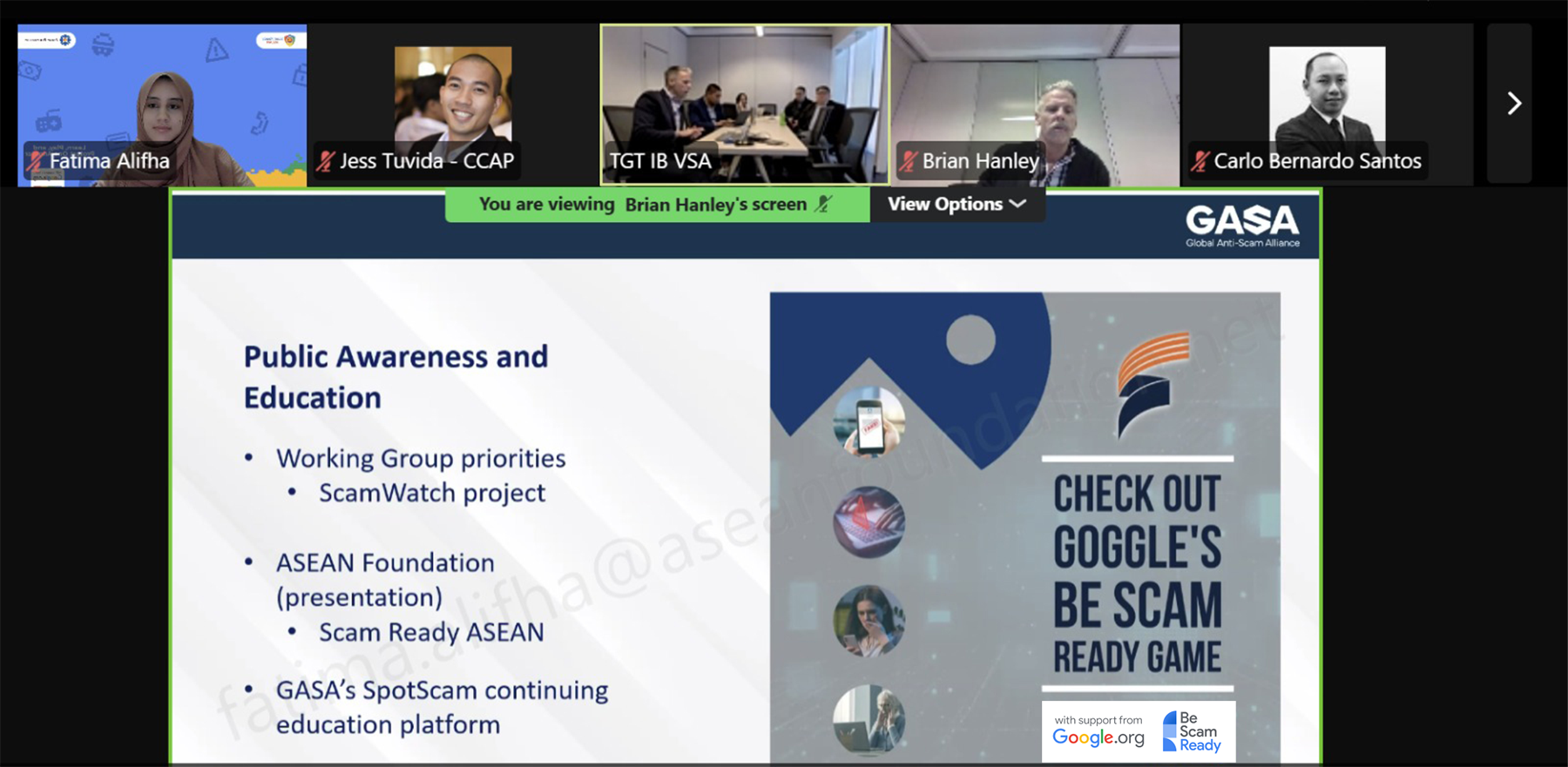
An important part of the new platform is the interactive educational game "Be Scam Ready" developed by Google. Different from traditional anti-fraud promotional materials, this game simulates real-life fraud scenarios, allowing participants to identify fraud in an environment without actual financial risks, and learn how to make correct judgments. The game involves common phishing, fake investment, identity impersonation and other social engineering scams to help users gain identification experience before actually encountering similar situations.
The project also adopts a train-the-trainer model to train anti-fraud educators in local communities. According to data released by the ASEAN Foundation, since its launch in April 2026, the program has established cooperation with 20 local implementation agencies in 11 ASEAN member states and recruited 2,332 trainers, exceeding the original target of 2,000 people. These trainers will further teach practical cyber security knowledge to at least 550,000 people, focusing on young people, teachers, parents, caregivers and the elderly.
Aiming at the elderly, a group vulnerable to online fraud, the project has also recruited 151 ASEAN Digital GrandPals and plans to help at least 22,000 elderly people and their surrounding groups increase their awareness of fraud prevention through community activities. In addition, the project also organized community promoters and content creators to use social media and offline activities to spread anti-fraud knowledge. So far, relevant digital promotion activities have received more than 8 million online exposures.
The background of this cooperation is that the economic losses caused by online fraud in Southeast Asia have reached an alarming scale. According to estimates from the Global Anti-Scam Alliance, the economic losses caused by online fraud and fraudulent activities in Southeast Asia in 2024 will be approximately US$23.6 billion. Scams not only involve fake investments, phishing, and impersonating customer service, but also increasingly use artificial intelligence-generated voices, images, and videos to disguise themselves as real people or institutions.
The proliferation of artificial intelligence technology is further changing the way fraud operates. Criminal gangs can use AI to generate realistic voices and videos to impersonate relatives, business managers, or government workers; automated tools also enable fraud information to be spread on a large scale at a lower cost. At the same time, instant payment systems and cross-border digital platforms allow funds to be transferred more quickly, and fraud gangs are often located in different countries, making it difficult for law enforcement agencies to track funds and combat criminal networks.
Another Asia-Pacific anti-fraud action plan announced by Google on November 3 also shows that the company is strengthening protection from three aspects: product technology, industry cooperation and public education. The Android platform is expanding scam detection capabilities, including identifying phone impersonation that may be driven by artificial intelligence, and strengthening developer authentication against malicious apps. Google has also signed the "Industry Agreement to Combat Internet Fraud and Fraud" with companies such as Adobe, Amazon, Microsoft, Meta and OpenAI, hoping to weaken the activities of transnational fraud networks by sharing threat intelligence and coordinating defense measures.
At the same time, Google.org also announced an additional US$6 million in funding to support The Asia Foundation and Tech for Good Institute in conducting anti-fraud education, developing artificial intelligence-assisted defense tools, and helping policymakers improve response measures in the Asia-Pacific region. This funding arrangement is part of Google's broader Asia-Pacific anti-fraud operations and is different from the US$5 million in project funding previously provided to the ASEAN Foundation.
Piti Srisangnam, Executive Director of the ASEAN Foundation, said that online fraud is no longer just a simple network security or financial crime problem, but a regional problem affecting families, personal livelihoods and social digital trust. Only with the joint participation of governments, technology companies, financial institutions and social organizations can a more effective protection system be established.
David Weller, Google's senior director of global affairs in the Asia-Pacific region, also said that no single agency can defeat a complex transnational fraud network alone. Strengthening collaboration between the public and private sectors, while improving the fraud prevention capabilities of ordinary people, is key to building digital resilience across Southeast Asia.
The resource platform launched this time not only provides knowledge and educational content, but also brings together reporting channels in different countries, making it easier for users to find relevant local institutions. ASEAN also plans to hold at least nine regional and national-level public-private cooperation dialogues in the future to promote the establishment of a closer information exchange mechanism between governments, banks, financial technology companies, telecom operators and Internet platforms.
From the overall layout, this cooperation between ASEAN and Google is not just about launching an anti-fraud website, but trying to establish a comprehensive system covering technical protection, community education, cross-border collaboration and public policy. As artificial intelligence continues to lower the threshold for committing fraud, it is no longer possible to rely solely on users to be more vigilant in dealing with increasingly complex criminal methods. How to allow technology platforms, financial institutions and law enforcement agencies to share information in a timely manner, while allowing ordinary users to have the ability to identify and respond to fraud, will become an important issue for future network security construction in Southeast Asia.
Comments