
Abstract:
U.S. President Trump announced the establishment of the "Super Intelligence Force" (SIF) on October 4, led by Director of National Intelligence Jay Clayton, with participation from the heads of the Federal Trade Commission, the Pentagon, and the Office of Personnel Management. The task force will coordinate the federal government's artificial intelligence efforts and report to Trump and White House Chief of Staff Suzy Wiles.
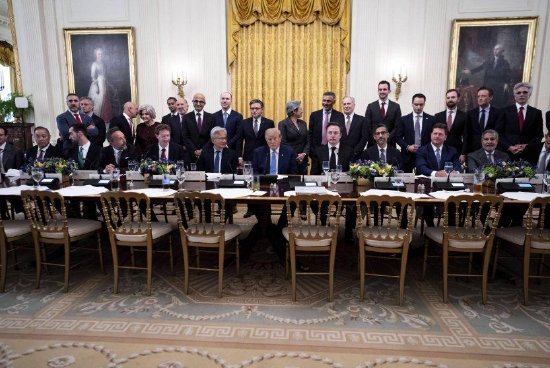
Four officials are responsible for connecting companies and the public
Trump said that the task of the working group is to coordinate the actions of the federal government, maintain the United States' leading position in the field of artificial intelligence, and protect the interests of the American people. Its docking scope includes consumers, public interest groups, religious organizations, critical infrastructure providers and artificial intelligence companies.
In addition to Clayton, officials leading the task force include Federal Trade Commission Chairman Andrew Ferguson, Pentagon Chief Technology Officer Emile Michael, and Office of Personnel Management Director Scott Cooper.
Clayton served as chairman of the U.S. Securities and Exchange Commission during Trump's first term and was confirmed by the Senate as director of national intelligence in July this year. The appointment will further his involvement in federal policy coordination on artificial intelligence.
Before the establishment of the working group, Trump met with the heads of major technology companies at the White House on September 29 to push the companies to sign an agreement with voluntary security measures as the core.
The company commits to establishing a four-tier safety supervision mechanism
This "White House Super Intelligence Agreement" was signed by the heads of Google, Anthropic, Meta, OpenAI, xAI and NVIDIA, requiring companies that develop and deploy cutting-edge models to establish a four-layer control and audit mechanism.
The first layer is internal control, which monitors whether the model's capabilities and behaviors are as expected during model training and deployment, focusing on cybersecurity, biosecurity, and chemical threats, and preventing models from invading or accessing technical systems in unexpected ways.
The second level is to set up an internal team to check whether the control, monitoring and detection mechanisms are operating normally, and to promote problem rectification. The third level is to introduce an independent external audit or evaluation agency to test the actual effect of the above mechanism. The fourth level is for the independent committee of the board of directors to receive internal and external evaluation reports, and supervision issues are resolved.
Participating companies also commit to meeting regularly to develop security standards and best practices. The agreement proposes that these measures may be considered to be incorporated into legal or regulatory rules in the future; companies currently commit to proactively implement these control and audit arrangements.
"Superintelligence" becomes a new term in the federal executive branch
The working group name continues Trump’s recent tweaks to artificial intelligence terminology.
On September 29, Trump signed an executive order requiring federal executive departments to replace "artificial intelligence" and "AI" with "superintelligence" and "SI" in official communications, public propaganda, websites, reports, policy documents and other scenarios to the maximum extent permitted by law.
The executive order also clarifies that the current scope of application of "superintelligence" follows the definition of artificial intelligence under current U.S. law. Previously issued regulations, presidential documents, contracts, appropriations and other historical documents do not need to be modified as a result.
The White House science and technology policy director is also required to submit the text of proposed legislation within 60 days, propose a definition of "superintelligence" at the federal level, and evaluate whether there is a need to modify the expression of artificial intelligence in existing laws. The establishment of this working group further clarifies the federal government's coordinator after corporate security commitments and administrative department terminology adjustments.
Comments