
Abstract:
Seventeen countries including the United States, Japan, the United Kingdom, and Germany jointly supported the "Kyoto Vision for the Golden Age of Science" at the 23rd Annual Meeting of the Science, Technology and Society Forum held in Kyoto on October 4. The declaration proposes to expand opportunities for scientific researchers to use AI tools, scientific data, computing infrastructure and experimental facilities, and to reform scientific research funding and organization methods to reduce unnecessary administrative burdens and improve the efficiency of scientific discovery.
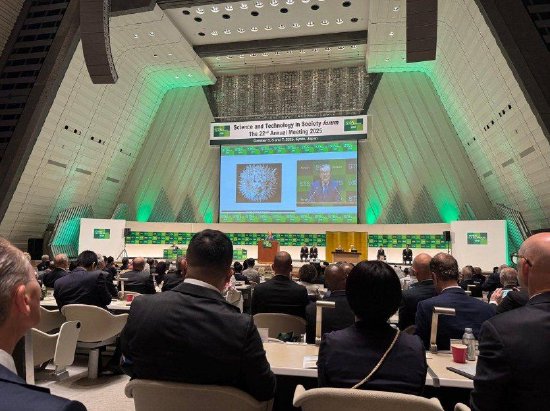
Integrate AI into scientific research processes to expand the use of experiments and computing resources
This initiative was promoted by Michael Kratsios, director of the White House Office of Science and Technology Policy, and centered on three directions: reform of scientific research institutions, AI scientific research applications, and talent cultivation.
The declaration encourages the integration of AI into scientific research processes, including analyzing large amounts of existing knowledge, building more accurate models of physical and biological systems, and promoting autonomous, closed-loop scientific discoveries. Closed-loop research feeds experimental results back to the system to adjust the next round of experimental design, forming a continuous iterative research process.
To support these applications, participating countries have proposed efforts to expand researchers' access to AI tools, scientific data, computing infrastructure and experimental facilities, so that the scale of resources can meet new research needs. The White House stated that the combination of AI and automated experiments is expected to expand the experiments and analysis work that scientific researchers can carry out.
In addition to the United States, countries supporting the declaration include Argentina, Bulgaria, Chile, Cyprus, Germany, Greece, Indonesia, Italy, Japan, Kazakhstan, South Korea, New Zealand, Poland, Singapore, the United Arab Emirates and the United Kingdom.
Adjust scientific research funding methods to support long-term and high-risk research
The "Kyoto Vision" also focuses on how scientific research funds are allocated and how research institutions organize their work.
The declaration proposes that for different scientific research goals, a combination of tools such as long-term funding, rapid grants, bonuses, and challenges should be used, and new institutional models that give researchers varying degrees of autonomy, resources, and direction guidance should be explored. The goal is to make the funding system better support research ideas with breakthrough potential, while reducing unnecessary administrative burdens on researchers.
Participating countries also support the development of "meta-science", which uses empirical methods to study scientific research activities themselves, evaluate which organizational methods and funding mechanisms can achieve better results, and encourage governments to build relevant research and evaluation capabilities.
Research quality is also part of the manifesto. The document calls for maintaining research reproducibility and transparency, clearly disclosing errors and uncertainties, accepting impartial peer review, and treating negative results and results that do not find significant effects as valuable scientific contributions.
In terms of talent training, the declaration proposes to support potential students and young researchers as early as possible, expand practical opportunities to operate, maintain and improve complex scientific research instruments, and encourage cross-field joint doctoral projects, research grants and collaborative research.
The United States and South Korea promote supporting scientific research policies
This declaration is in line with the scientific research policies being promoted by participating countries.
The U.S. Department of Energy's "Genesis Project" has included national laboratories, enterprises and universities in AI scientific research cooperation, and is building a comprehensive platform connecting supercomputers, experimental facilities, AI systems and proprietary scientific data to accelerate research in the fields of energy, basic science and national security.
Bae Kyung-hoon, Deputy Prime Minister of South Korea and Minister of Science, Technology, Information and Communications, participated in the release of the declaration. The Ministry of Science, Technology, Information and Communications of South Korea stated that it will continue to promote scientific research system and policy innovation, and participate in relevant international cooperation discussions. Pei Qingxun also met with Kratsios to discuss the direction of science and technology and AI policies between the two countries, as well as follow-up measures to expand scientific and technological cooperation.
The "Kyoto Vision" focuses on common policy directions, specifically involving the opening up of scientific research resources, reform of funding mechanisms and talent training. Countries will promote implementation through their own scientific research institutions and cooperation projects.
Comments