
Abstract:
U.S. President Donald Trump publicly stated on November 20 that the U.S. government would prevent U.S. technology companies from building data centers overseas or impose a "Tremendous Tax" on these companies. This statement means that the Trump administration may further incorporate artificial intelligence infrastructure construction into domestic industrial policies in the United States, trying to keep data center investment, advanced computing capabilities and related economic benefits in the United States as much as possible.
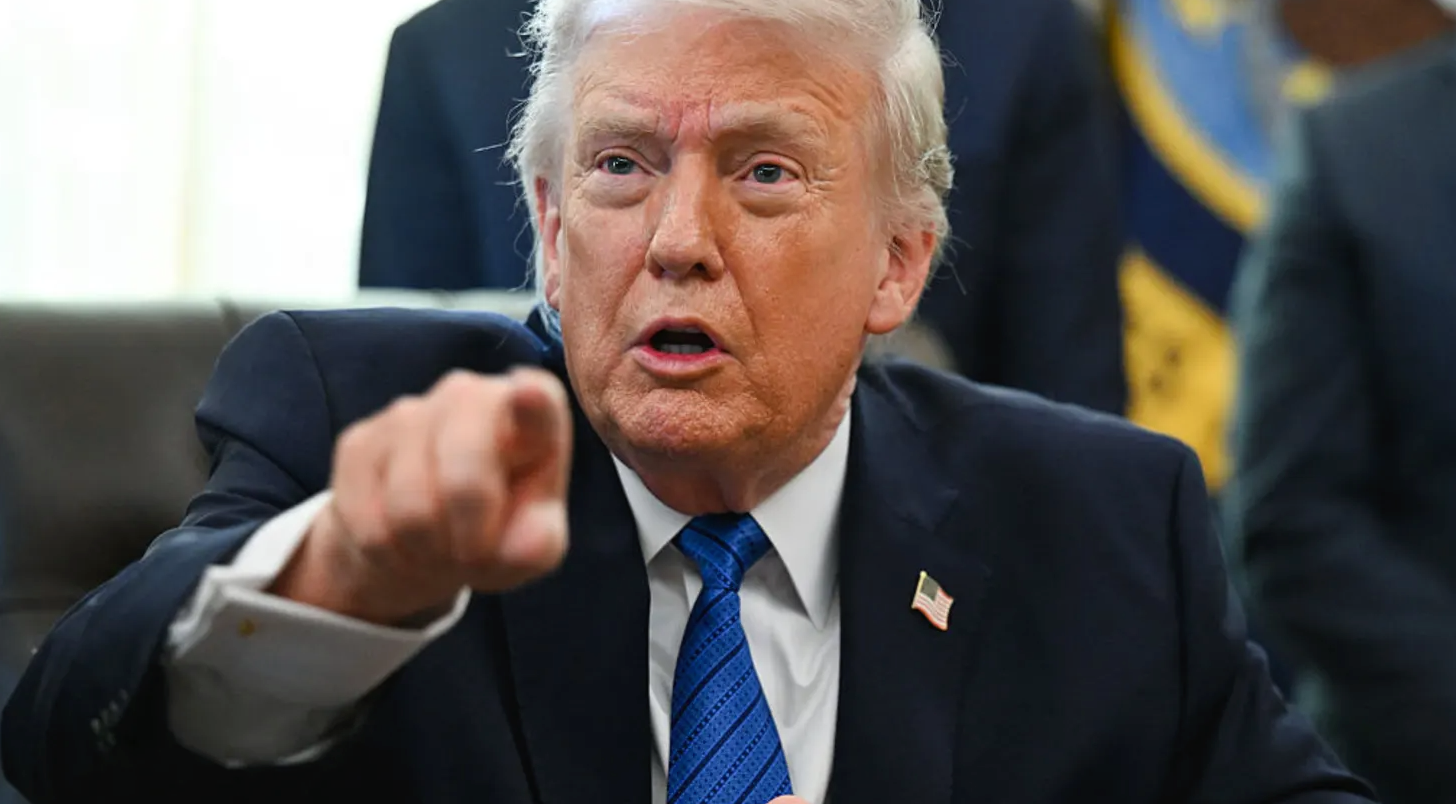
Trump made the above statement at a press conference held at the White House. At that time, he had just concluded a tripartite summit with Chinese President Xi Jinping and Russian President Vladimir Putin, and then talked about the development of the artificial intelligence industry and the construction of U.S. data centers.
Trump said that the United States will not allow domestic companies to build data centers in other countries. He claimed that China may use these overseas data centers to obtain relevant computing resources, so the United States must prevent this from happening.
He also said that if American companies choose to build data centers overseas, they will face very high tax penalties. However, Trump did not announce a specific tax rate, nor did he explain how this policy would be implemented.
What is even more noteworthy is that Trump admitted that he has not discussed this plan with relevant government officials. This means that the current stance is closer to a policy idea proposed by the president than to a formal policy that has formed a complete implementation plan.
Axios pointed out that there are obvious legal problems with this proposal. Under the U.S. Constitution, the power to levy federal taxes rests with Congress. The president cannot create a new federal tax simply by making a personal announcement. Therefore, if Trump hopes to prevent companies from building data centers overseas by imposing additional taxes, Congress may need to pass corresponding legislation.
It is unclear whether Trump intends to seek congressional approval or attempt to use existing executive powers to penalize companies investing overseas through other means.
The background of this proposal is that the controversy surrounding the construction of AI data centers in the United States is rapidly heating up.
As the scale of artificial intelligence models continues to expand, companies such as Microsoft, Google, Amazon, Meta, and OpenAI are investing hundreds of billions of dollars in building data centers. These facilities require large amounts of electricity, cooling water and land resources, and some projects also require new substations, transmission lines and other supporting infrastructure.
While technology companies describe data centers as an important foundation for the competitiveness of the U.S. artificial intelligence industry, local residents are increasingly concerned about the impact of these projects on electricity prices, water supplies, land resources, and the environment.
During the 2026 U.S. midterm elections, data center construction has become an important political issue. Some community residents oppose large-scale data center projects, worried that the increase in power demand will push up household electricity bills, and also question whether technology companies receive too much tax incentives and public resource support.
After the Democratic victory in the midterm elections, Congress is expected to further strengthen oversight of large technology companies and data center projects.
Trump took another approach. He not only asked American companies to keep data centers in the local area, but also encouraged local residents to actively negotiate with technology companies when they propose construction projects, asking them to provide more benefits to the community.
Trump said that data center companies have a lot of money, and communities should not directly reject these projects, but should require companies to provide more returns to local residents and local governments. He even suggested that local governments take advantage of the investment needs of enterprises and strive for better economic conditions.
However, requiring all U.S. companies to build data centers locally would also conflict with the actual operational needs of global Internet and cloud computing businesses.
A data center is not an ordinary factory. Its deployment location directly affects network latency, data transmission costs and service reliability. Cloud computing companies usually need to deploy multiple data centers in different countries and regions so that users can access services nearby.
For example, businesses such as financial transactions, real-time communications, online games, and artificial intelligence reasoning are very sensitive to network delays. If European users must connect to data centers in the United States, the increased data transmission distance may affect the service experience.
In addition, the laws of some countries and regions require that certain types of data must be stored and processed locally. For U.S. companies that provide global cloud computing services, building local data centers is not only a business option, but may also be a necessity to meet data protection and regulatory requirements.
Therefore, even if the U.S. government hopes to centralize AI infrastructure locally, it will be difficult for technology companies to completely abandon overseas data center networks.
This statement also echoes the Trump administration’s recent actions to tighten export controls on artificial intelligence chips.
On November 16, the U.S. Department of Commerce announced a new interim final rule, introducing new export licensing requirements for overseas data centers that provide large amounts of advanced computing capabilities to companies in restricted countries and regions such as China, Russia, and Iran.
The new rules not only focus on which country the chips are actually exported to, but also extend the scope of supervision to the situation of remotely renting computing power in overseas data centers through the Internet. In other words, even if advanced Nvidia chips are installed in data centers in Malaysia, Singapore or other third countries, as long as these facilities provide computing resources of a specified scale to companies in restricted countries, they may trigger U.S. export control requirements.
In this way, the U.S. government hopes to plug the loopholes that allow companies to bypass chip export restrictions and prevent Chinese companies from indirectly obtaining the right to use advanced AI chips through overseas cloud computing services.
But the tax penalties for overseas data centers proposed by Trump this time obviously cover a wider scope. Previous export controls focused on specific countries, specific chips and specific computing capabilities, while the new proposal seems to want to directly restrict US companies from building data centers around the world.
The policy goals of the two are not exactly the same: the former emphasizes national security and export controls of advanced computing technology, while the latter focuses more on keeping investment, employment, energy infrastructure and artificial intelligence industry benefits in the United States.
This may also bring new operating uncertainties to global companies such as Microsoft, Google, Amazon and Meta. These companies not only need to build increasingly large AI data centers in the United States, but also maintain local computing infrastructure in Europe, Asia and other markets.
If high taxes are really imposed on overseas data center investments in the future, U.S. companies may need to re-evaluate their global infrastructure layout and even transfer some overseas construction plans to the United States.
However, so far, Trump has not announced the specific policy text, tax rate, applicable enterprise scope or implementation time, nor has he stated whether this proposal will apply to overseas projects that have already started construction.
Therefore, this statement cannot be regarded as the United States has officially banned technology companies from building data centers overseas.
From a larger industrial background, the Trump administration is trying to expand artificial intelligence competition from chip manufacturing and model research and development to the geographical layout of computing infrastructure. The United States hopes to not only master advanced AI chip and model technologies, but also control as much as possible the data centers, energy and computing resources that support the operation of these technologies.
But artificial intelligence has become a highly globalized industry. Data center construction not only depends on capital, but is also affected by factors such as power supply, land prices, network conditions, local laws and customer distribution. Whether U.S. companies can find a balance between government policy requirements and global business needs will be the key to whether this proposal can truly be implemented.
At present, Trump is proposing a policy concept that has not yet formed a specific legal plan. It remains to be seen whether it will eventually develop into new tax legislation, administrative restrictions, or simply remain at the political statement stage.
Comments