
Abstract:
On October 19, the flight demonstration of Tesla’s new sports car was impressive. The Wall Street Journal published an article stating that Elon Musk’s latest idea for Roadster is not focused on cold gas rocket thrusters, but to cope with competition from Chinese car companies.
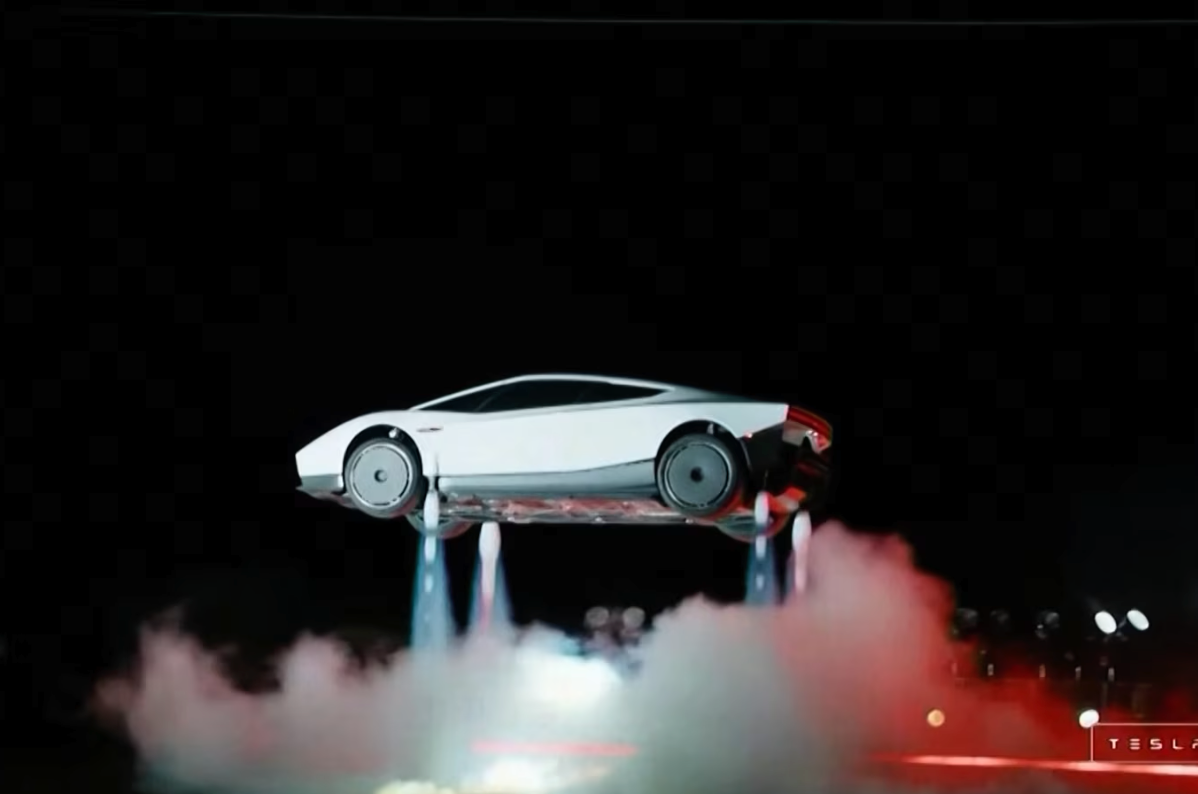
New Roadster flight demonstration
The debut of Tesla’s new Roadster sports car is purely a visual feast. The sports car's design is reminiscent of a cross between a jet fighter and a Lamborghini. It is equipped with an adsorption system that allows the body to hang upside down 69 feet (about 21 meters) above the ground. Its most iconic feature is the cold gas rocket thruster: it allows the car to jump over a row of vehicles while completing a roll in the air.
Through this flying sports car, Musk once again demonstrated his image as the most dreamy entrepreneur in the United States. So when the Tesla CEO holds a glitzy display at a rocket facility near Waco, Texas, as he did last Thursday, people have to pay attention. But that's not because the new Roadster will be a best-seller. After nearly a decade of delay, it's hard to believe that this flagship sports car will actually go into production in 2028 and have all the features Musk has demonstrated.
In many ways, it doesn't really matter whether this car can fly or not. By releasing the Roadster, which is packed with extraordinary technology, Musk has once again shown that he has given up on designing cars for ordinary consumers. He said the Roadster will be the last new model Tesla launches for humans to drive. In the future, his energy will be focused on transforming Tesla into a robotics company.
"Give" the automobile market to China?
In fact, Musk is handing over the Volkswagen market to Chinese car companies. He has said that Chinese auto companies are so powerful that many Western automakers simply cannot compete without government intervention. This phenomenon clearly reveals the development direction of the Western automobile industry.
The Paris Auto Show held last week also released this signal. With so many Chinese car brands on display, the show looked more like the Shanghai or Beijing Auto Shows. Across Europe, the arrival of Chinese car brands has almost overnight broken the market structure long occupied by established car companies.
Although U.S. automakers have not been directly impacted by competition from Chinese automakers in their home market so far, they seem to be stuck in a dilemma of indecision and confusion. This has caused the pace of new model introductions to slow to its lowest level since at least the 1970s.
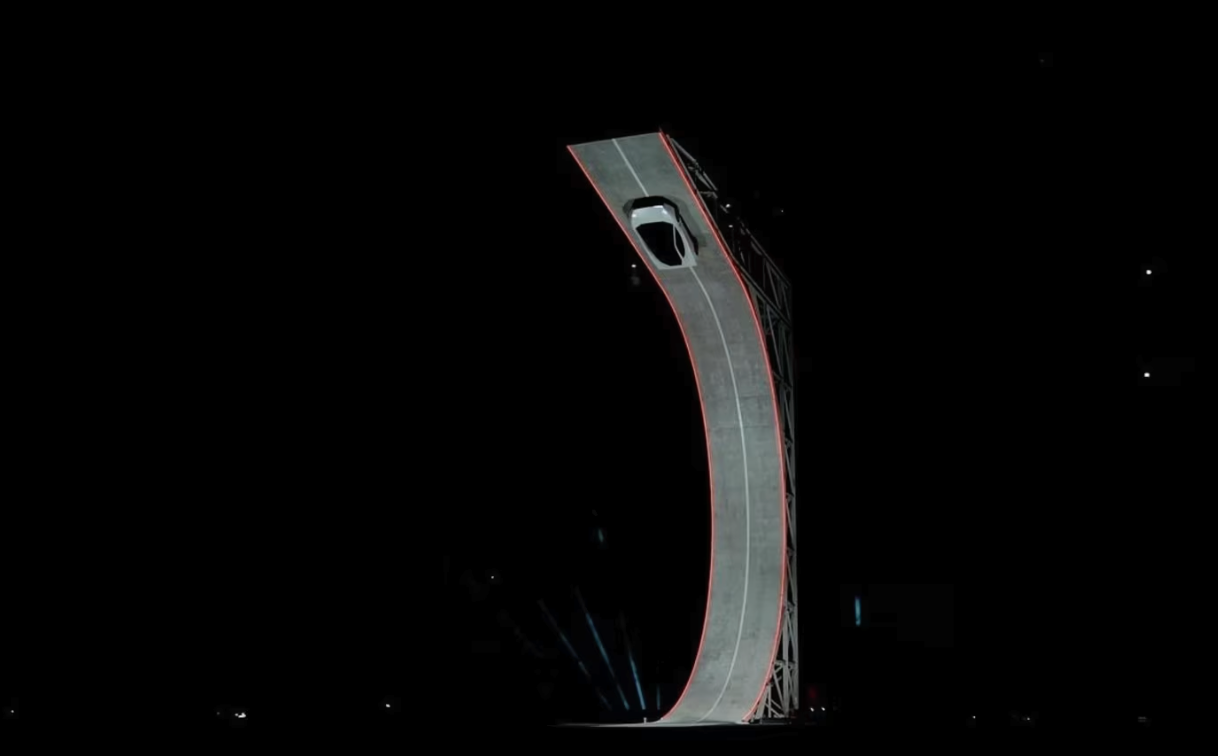
Roadster hanging upside down on the ramp
Michael Dunne, who has been engaged in consulting in the automotive industry for many years and has worked in China for many years, said: "China's manufacturing industry has turned cars into ordinary commodities and lowered costs. No one can compete with them... The only way out for Western car companies is to enter the high-end market, otherwise they will be squeezed out of the market."
Dunn will launch a new book exploring this issue in January next year, titled "Car Wars." He said: "In the future, Western car manufacturers will gradually become niche car companies that only serve market segments."
If you don’t advance, you will retreat
Western automakers have not yet collectively followed Tesla’s lead and begun developing their own flying cars. But there are signs that some car companies are feeling the same pressure as Musk: either achieve a breakthrough or be eliminated.
Porsche’s sales in the Chinese market fell sharply. Faced with this situation, the company announced a business boost plan earlier this month, deciding to launch more expensive models instead of blindly chasing sales. As part of that plan, Porsche unveiled the Mission S last Thursday.
Admittedly, Porsche's mid-engine supercar pales in comparison to Tesla's dazzling performance. Having said that, when the rocket thrusters made by Musk spray out thick mist and the Roadster is tumbling in the air, it is indeed difficult for other car companies to attract the public's attention.
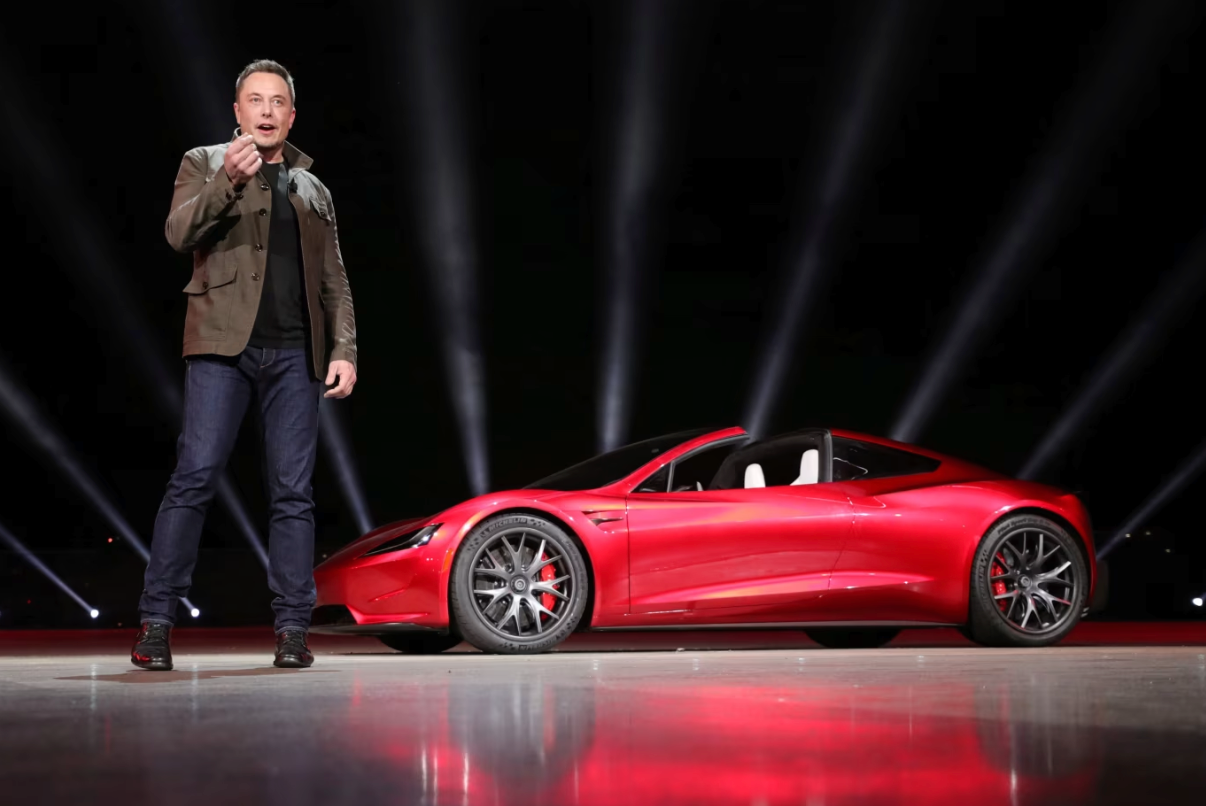
Musk released the new Roadster in 2017
To be clear, Musk is not betting Tesla's future on becoming a niche car company. The new Roadster will serve the same purpose as the version unveiled in late 2017: to stoke public enthusiasm while buying time for Musk to turn his more ambitious promises into reality.
The U.S. market may face impact
In 2017, Musk surprised everyone with the debut of the new Roadster. It was a "one more thing" moment when Tesla was in need of some Jobsian magic. That year, Tesla was struggling to ramp up production of its Model 3, which had staked its fate on the company, and needed a vision for its future.
The streamlined design of the Roadster sports car, as well as the promise of zero-to-100 acceleration time that seemed almost contrary to the laws of physics at the time, succeeded in doing this and even exceeded expectations. The event showed that even as Tesla strives to make electric cars affordable for everyone, it can still launch high-end models.
However, between then and Tesla becoming the world's most valuable automaker, something unexpected happened: China's own auto industry, inspired by the success of Musk's electric car vision, took off.
Dunn said that China's auto industry has benefited a lot from state support, including low-interest loans, free land, low-price energy and vocational skills training.
As a result, China has created a massive industrial machine that now threatens and may even engulf the Western auto industry.
The chaos in the European auto market has given U.S. business executives a preview of what may happen in the future: Once China finds a way to enter the U.S. market, U.S. auto companies may face a similar impact. A new report from consulting firm Arrowhead shows that the production cost of electric vehicles made in China is about US$11,000 lower than similar models in Europe.
Once upon a time, Musk was still a headache for American auto executives. At that time, Tesla had an advantage in the cost of building cars, and Musk boasted of plans to further reduce costs.
In early 2024, the situation changed. Musk seems to be aware of a new reality.
Around that time, Musk said Chinese automakers were the most competitive in the world. He said on an earnings call: "They will be very successful in markets outside of China, depending on what tariffs or trade barriers countries put in place. Frankly, I think if there are no trade barriers, they will almost defeat most other automakers in the world."
Musk's remarks were initially interpreted as his support for imposing tariffs on Chinese cars, but he later stated that he did not advocate such a move. Since then, though, his interest in human-driven cars has waned significantly.
Instead, he is doubling down on physical AI and a purpose-built self-driving taxi, the Cybercab, which recently joined Tesla’s fledgling fleet of self-driving taxis. A few days ago, Tesla said that the launch of Cybercab has increased to more than 300 vehicles in the first month of entering the Austin, Texas market. This is far from Musk’s prediction that Tesla will eventually produce at least 2 million Cybercabs per year.
On Thursday, Musk did not reveal how many rocket-propelled sports cars Tesla would actually produce. What really matters to him is using dazzling demonstration videos to create buzz on social media, attract attention, and keep people looking forward to new technologies and products that Tesla may launch in the future.
Comments