
Abstract:
On August 26, the Second Asian Xenotransplantation Conference concluded in Chengdu, Sichuan. Nearly 150 experts and scholars from China, the United States, South Korea, Japan and other countries discussed key issues such as immune rejection, gene editing, and clinical translation.
"In terms of xenotransplantation, China should be among the first in the world."
Pan Dengke, co-chairman of the conference and chairman of Chengdu Zhongke Aoge Biotechnology Co., Ltd. (hereinafter referred to as "Zhongke Aoge"), said.
Just in March this year, Dou Kefeng, an academician of the Chinese Academy of Sciences, led a team from the Xijing Hospital of the Air Force Medical University to carry out
the research on "Pig liver transplantation into humans to break the barriers to cross-species organ transplantation", which was selected as one of the "Top Ten Progress in Chinese Science" in 2025. This research achieved a major clinical breakthrough for the first time in transplanting pig liver into humans.
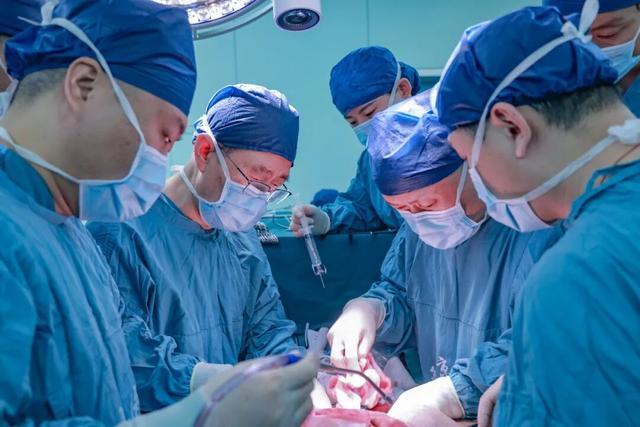
Academician Dou Kefeng and Professor Tao Kaishan of Xijing Hospital performed the surgery.
Behind these major developments, there is a grim reality - about 300,000 end-stage liver failure patients in my country are in urgent need of liver transplantation every year, but only about 10,000 people wait for a suitable liver source; more than 1.3 million kidney disease patients require dialysis, and the vast majority of them will not be able to wait for a matching kidney throughout their lives.
Xenogeneic transplantation opens a new door to solve the problem of organ shortage.
Gradually build a complete technology chain
Xenotransplantation refers to the cutting-edge medical technology of transplanting animal organs into human bodies. This road has been accompanied by continuous setbacks since the beginning.
The earliest clinical attempts at xenotransplantation date back to the last century.
In 1964, American doctor Keith transplanted a chimpanzee kidney to a patient with renal failure. The patient returned to his job as a teacher after the operation, but survived for 9 months due to a sudden electrolyte imbalance. In 1984, American doctor Bailey transplanted a baboon heart into a baby girl suffering from congenital heart disease. The baby suffered myocardial damage on the 16th day after the operation, but she survived for 21 days. In 1992, the American doctor Stazer tried to transplant a baboon liver into a patient with fulminant liver failure. The patient ultimately survived for 70 days and died of compound infection.At that time, scientists placed their hopes on chimpanzees, baboons and other primates - they are the closest relatives to humans and have the closest organ functions. However, the successive failures of early clinical trials, coupled with practical issues such as primate ethical controversies, difficulty in large-scale breeding, and risks of zoonotic diseases, have made this road narrower and narrower.
Pan Dengke has been deeply involved in the field of xenotransplantation donor pigs for more than 20 years. He told reporters: "Primates and humans are too closely related, but there is a high risk of cross-infection of endogenous viruses. This is one of the reasons why the academic community finally gave up on chimpanzees and baboons as donors."
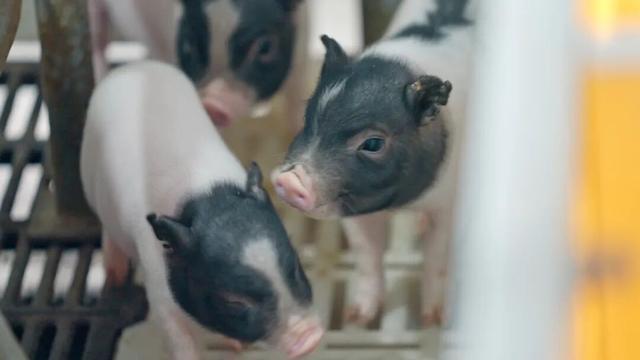
Medical pigs at DPF Medical Donor Pig Breeding Center.
Subsequently, scientists targeted pigs. This animal, whose organs are close in size to humans, reproduces quickly, and has a low risk of cross-species transmission of pathogens, has become internationally recognized as the best source of xenogeneic organs.
In 2002, the world's first key heterologous antigen knockout (GTKO) gene-edited pig was born, and scientists finally found the key to overcoming hyperacute rejection.
But technological breakthroughs do not equal clinical breakthroughs.
To safely transplant organs from a gene-edited pig to humans, a series of questions such as immune rejection, coagulation disorders, and viral infection need to be answered.
The answers to these questions can only be gradually approached through repeated trial and error in animal experiments.Our country’s scientific research team began arduous efforts at the end of the last century.
Professor Chen Gang’s team at the Organ Transplantation Institute of Tongji Hospital of Huazhong University of Science and Technology has been involved in xenotransplantation research as early as 1999. In 2019, the team relied on a new type of gene-edited pig to restart the experiment, but it was unable to break through the bottleneck of one month of survival of transplanted kidneys for a long time. "We have experienced too many failures." Chen Gang said frankly. It was the numerous failures that allowed the team to pinpoint the core crux - they found that conventionally raised domestic pigs generally carry porcine cytomegalovirus. The virus does not cause any symptoms in the pigs, but once it enters the human body with the organ transplant, it will greatly accelerate the rejection reaction, just like lighting a match next to a powder keg. This key discovery became the key to breaking the deadlock. The team immediately developed cytomegalovirus-negative gene-edited pigs to block the risk of infection from the source.
In November 2025, Chen Gang's team announced that the gene-edited pig kidneys functioned well in macaques and survived for more than one year.
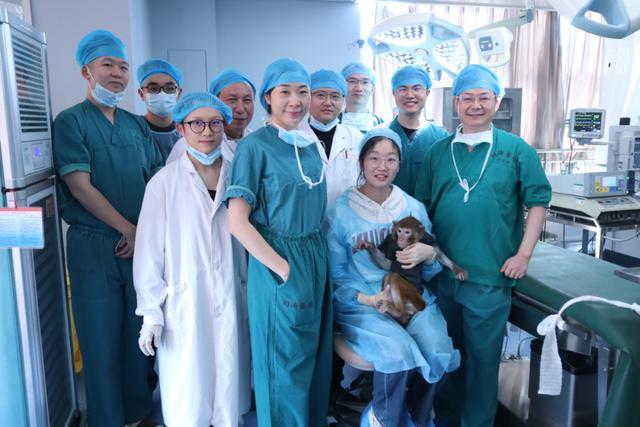
Professor Chen Gang (first from the right) team from the Organ Transplantation Institute of Tongji Hospital, Tongji Medical College, Huazhong University of Science and Technology.
If kidney transplantation still has dialysis as a "fallback", and patients can still rely on dialysis to maintain their lives even if they cannot wait for a kidney source, then liver transplantation has almost no retreat. "The liver is responsible for hundreds of functions such as metabolism, detoxification, protein synthesis, and bile secretion. It is the well-deserved 'chemical factory' of the human body." Wang Lin, director of the Department of Hepatobiliary, Pancreatic, and Spleen Surgery at Xijing Hospital, explained. Because of this,
xenogeneic liver transplantation is recognized as the "Holy Grail" in the field of transplantation, and it is also an insurmountable difficulty for researchers around the world.
Dou Kefeng’s team chose to rise to the challenge. In May 2013, at Xijing Hospital, Dou Kefeng's team, together with the Beijing Animal Husbandry Research Institute and the Sichuan Experimental Animal Research Institute, transplanted part of the liver of a GTKO transgenic pig into a monkey. During the operation, the team removed the monkey's spleen and placed the pig's liver into the vacated space of the spleen fossa - this is the team's original method of spleen fossa auxiliary liver transplantation.
The success of this operation opened the first door to xenogeneic liver transplantation in Asia.
In the past nearly ten years since then, Dou Kefeng has led the team from single organ to multiple organs, from liver to heart, kidney, cornea, and bones, practicing repeatedly and constantly improving. In March 2024, they reached a milestone breakthrough and successfully transplanted the liver of a six-gene-edited pig into a brain-dead patient. This special liver worked normally in the human body for 10 days, secreting bile and synthesizing proteins without any obvious immune rejection.
From monkeys to humans, this step is of great significance.For more than ten years,
my country's multiple core teams have worked separately to complement each other, and have gradually built a complete xenotransplantation technology chain.
From surgical innovation to virus clearance, from donor breeding to clinical transformation, the jigsaw puzzle of xenotransplantation in China is falling into place piece by piece, and a complete picture is slowly unfolding.There is still a long way to go from “can be made” to “useful”
As we enter 2025, the pace of breakthroughs in xenotransplantation in China has accelerated significantly. At present, more than 20 cases of human transplantation of large pig organs have been completed around the world, involving the four major organs of heart, kidney, liver, and lung. The research levels of China and the United States are among the best in the world.
In March last year, Dou Kefeng’s team transplanted a gene-edited pig kidney into a 69-year-old patient with end-stage renal disease—the first living donor xenogeneic kidney transplant in Asia and the fifth in the world. Until November, the pig kidney was removed after working for 261 days, setting a record for the second longest pig kidney in the world to survive in the human body. This pig kidney not only "survived" in a living human body, but actually "worked".
In the same year, a team from the First Affiliated Hospital of Guangzhou Medical University transplanted a pig's left lung into a brain-dead patient. The transplanted lung maintained ventilation and gas exchange functions for nine days, which was the world's first xenogeneic lung transplant.
With continuous technological breakthroughs, a complete set of xenotransplantation technology paths that meet my country's clinical needs is gradually becoming clear.
However, there is still a long way to go from "can be made" to "useful".
This distance is reflected in three technical problems:
Immune rejection, coagulation disorders and cross-species infection. Any one step is enough to make the entire operation fail.
Immune rejection is the first obstacle standing in front of xenotransplantation.
The human immune system is like a highly alert "army". Any foreign substance will be recognized as an "intruder" and violently attacked. Layers of immune attacks can cause complete necrosis of transplanted organs within minutes. Even if the pig genes most likely to induce severe rejection are deleted through gene editing, there are still a large number of unknown antigens that may trigger immune attacks. In the world's first gene-edited pig heart transplant in 2022, antibody-mediated rejection was the core cause of organ failure.Coagulation disorders are the second hurdle that must be overcome.
After pig organs enter the human body, thrombotic microangiopathy and consumptive coagulopathy will occur, inducing fatal bleeding or thrombosis. Even if the naturally existing anti-pig antibodies in the human body are eliminated in advance, the occurrence of coagulation disorders cannot be completely avoided.Cross-species virus infection is a long-standing safety concern.
The scientific research community has been worried that latent endogenous retroviruses in the pig genome will be "activated" after transplantation and then transmitted to humans. There are currently two mainstream response methods: one is to screen breeding pigs that do not carry active viruses at all to eliminate risks from the source; the other is to directly inactivate virus fragments through gene editing technology to make them lose their ability to infect. The goal is to ensure "zero infection."Even if the above three difficulties are overcome one by one, the long-term survival rate is still unknown.
The current longest survival record in the world is measured in months, while clinical needs are measured in years.
Problems such as chronic rejection and organ function decline have not yet been completely solved and still require repeated trials and optimizations.In addition,
there are also cognitive and ethical difficulties.
Dou Kefeng recalled: "When I first proposed the idea of xenotransplantation more than 20 years ago, my colleagues generally found it difficult to agree. They all said how could pig liver be used in humans?" When the team applied for a national scientific research project, review experts generally did not recognize the feasibility of xenotransplantation and bluntly stated that the research goals could not be realized. "Xenotransplantation research is extremely difficult, and it is an extreme test for researchers both physically and mentally." Dou Kefeng once wrote in his diary.
Dou Kefeng, an academician of the Chinese Academy of Sciences, shows his diary to reporters. Photo by Science and Technology Daily reporter Wang Yuhan
Survey data shows that 70 to 80% of patients with kidney disease are willing to receive pig kidney transplants, but the overall acceptance rate among ordinary people is less than 60%. There is a significant cognitive gap between patients' urgency and public hesitation. How to build a bridge between scientific facts and public sentiment is a social issue that must be faced when xenotransplantation moves towards clinical application.
Shortcomings in systems and standards are also prominent.
At present, relevant national departments have not officially approved clinical trials of xenotransplantation. All xenotransplantation surgeries in China can only be carried out in the name of "compassionate use", and there is a lack of unified operating specifications and donor testing standards. “Only through in-depth collaboration among universities, hospitals and biological cultivation companies can cutting-edge technologies truly benefit millions of patients,” Pan Dengke said.Leave an independent and controllable innovation path
Faced with many difficulties, Chinese scientists never stopped. The formation of the "China Plan" was not achieved overnight, but was a systematic project built layer by layer through technological breakthroughs in donor selection, surgical procedures, immune regulation, transitional treatment and other aspects.
In the selection and breeding of donor pigs, my country has taken a localized route that is different from Europe and the United States.
Large white pigs are commonly used as donors in foreign countries because of their mature animal husbandry system and reliance on early technological paths. However, the price is that additional growth genes must be edited to control organ size. The widespread use of mini pigs in my country is based on "adapting measures to local conditions" - using China's unique mini pig resources to naturally solve the problem of organ size matching. It also has multiple advantages such as resistance to inbreeding, PERV-C negative, and low expression of sLAIR-1, allowing gene editing to focus on more core aspects such as immune rejection and biosecurity. Pan Dengke said: "The six-gene-edited Bama pigs bred in my country can also be bred naturally, achieving stable mass production and significantly reducing breeding costs."
DPF Medical Donor Pig Breeding Center.
Pan Dengke introduced,
In order to ensure the quality of feeding, there are extremely strict standards for feeding density and pathogenic microorganism control.
Gene-edited pigs that meet the standards will enter the ultra-clean DPF (Designated Pathogen Free) medical donor pig breeding center for feeding and observation. "The environment of DPF has strict standards.Medical pigs will be raised in an ultra-clean environment. The air and drinking water must be filtered and purified, and the feed must be irradiated in accordance with international standards."
Pandenko said that this is to ensure that the donor pigs do not carry any hidden dangers that may cause rejection or infection when they leave the factory.In terms of surgical procedures, two sets of original procedures by Dou Kefeng's team and Sun Xuyong's team from the Second Affiliated Hospital of Guangxi Medical University have overcome the core pain points of liver transplantation and multi-organ transplantation respectively. The former is the first auxiliary liver transplantation that preserves the patient's autologous liver, fully ensuring the blood flow supply of the transplanted pig liver and reducing surgical risks; the latter independently develops single-incision combined transplantation technology, which can simultaneously complete the in-situ implantation of the liver and bilateral kidneys with only one wound, greatly simplifying the complex process of multi-organ transplantation.
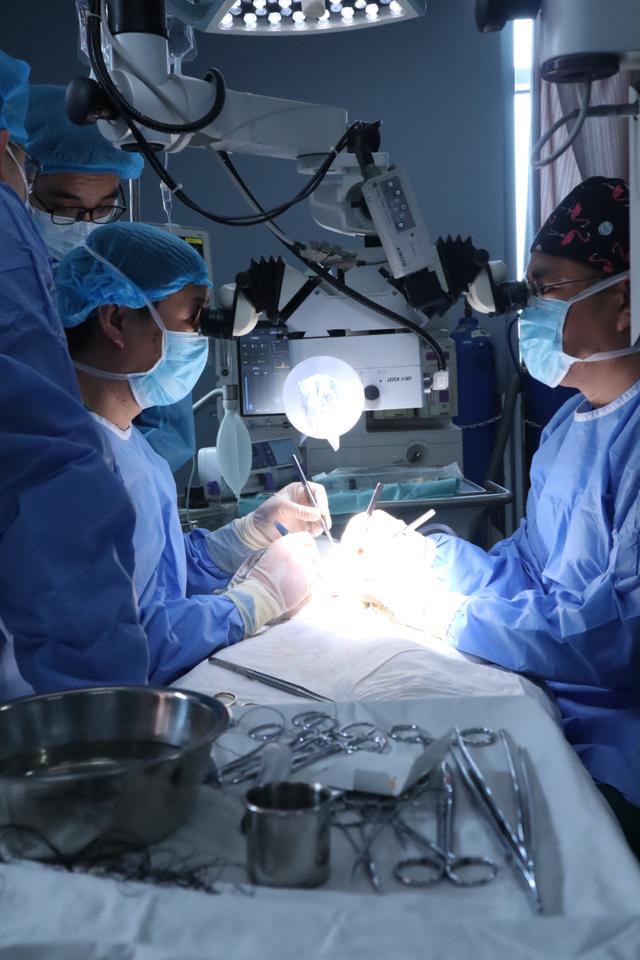
Professor Chen Gang (first from right) of the Organ Transplantation Institute of Tongji Hospital Affiliated to Tongji Medical College of Huazhong University of Science and Technology and his team perform the operation.
In response to the biggest problem of postoperative immune rejection, Dou Kefeng's team found a balance between suppressing immune attack and preventing postoperative infection, and simultaneously controlled complement activation, cellular and humoral multiple immune responses, and formed a standardized postoperative monitoring process. Chen Gang's team took a different approach and pioneered real-time in vivo drug concentration monitoring technology to achieve personalized and precise drug delivery. For example,
the former provides a set of "standard answers" that are suitable for most patients; the latter provides a "customized plan" that is tailored to each patient's specific situation.
The two complement each other and together form a complete toolbox for postoperative management.In addition, Dou Kefeng’s team also explored a very forward-looking transitional treatment path. In February this year, the team carried out extracorporeal perfusion therapy of gene-edited pig liver: the blood of liver failure patients was taken out of the body and flowed through the in vitro edited pig liver to complete toxin metabolism, helping the patient's damaged own liver to gradually repair. This approach does not require surgery or life-long immunosuppressants, and buys patients a valuable window of time.
Based on the above accumulation, Wang Lin believes that the clinical transformation of xenotransplantation will be promoted in layers:
Skin xenotransplantation has been maturely applied, and kidney transplantation has broad development prospects. Extracorporeal perfusion, which is less invasive and suitable for emergency treatment, may become the first popular application direction in the field of liver disease.
Based on the analysis of clinical needs, Chen Gang said: "Xenogeneic organs can only be popularized if they survive stably for one year. If the average survival period reaches three years in the future, xenotransplantation can become a routine treatment option."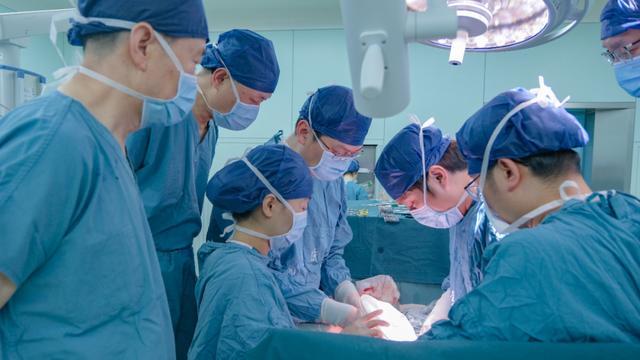
Professor Wang Lin (second from right) of Xijing Hospital performs free-receptor abdominal aorta and inferior vena cava surgery.
Supporting system specifications are also being improved simultaneously. On May 1 this year, the "Regulations on the Management of Clinical Research and Clinical Transformation Application of New Biomedical Technologies" were officially implemented, and the accompanying "Guidelines for the Registration of Clinical Research on New Technologies for Xenotransplantation" came into effect simultaneously. This is the first national regulation in China that covers the entire chain of xenotransplantation. It clearly delineates core requirements such as donor pig screening, transplant product quality control, and a full set of standards for clinical research operations, filling a long-standing gap in industry supervision.
The implementation of regulations means that xenotransplantation has officially entered a new stage of "rules and regulations" from "scientific research and exploration".
Facing the future, how can this technology be better developed?
Dou Kefeng suggested that he hopes the country will pay more attention from a strategic level, support advantaged units in building research platforms, and concentrate on key technologies such as multi-gene editing, immune tolerance induction, and long-term organ preservation. In terms of supervision, a cross-department coordination mechanism is established to realize traceability management of the entire process from gene editing, breeding, transportation to transplantation and follow-up. In terms of clinical promotion strategy, priority is given to breakthroughs in the "bridging treatment" scenario - using pig livers to maintain the lives of patients with acute liver failure until human organs are found, or to help patients who cannot immediately obtain a donor to survive the dangerous period. This can both accumulate experience and reduce initial risks. At the same time, xenogeneic cornea, skin, pancreatic islet and other low-immunogenic tissue transplantation can also be promoted simultaneously to meet diversified medical needs.
In order to standardize development, Wang Changxi, director of the Kidney Transplantation Department of the First Affiliated Hospital of Sun Yat-sen University and chairman of the Transplantation Technology Branch of the Chinese Medical and Biotechnology Association, proposed: "For xenogeneic transplantation, a more stringent and complete review process must be established to fully protect the subject's right to informed and voluntary choice, and at the same time, it is equipped with a long-term follow-up monitoring mechanism to continue to track potential cross-species infection risks."
How far is the road to xenotransplantation? No one can give a definite answer. However, over the years, domestic scientific researchers have repeatedly tried and made mistakes to overcome multiple problems such as immunity, coagulation, cross-species viruses, and gene editing technology, and have built a fully independent and controllable "Chinese solution" for xenotransplantation. There will be more breakthroughs in the future.
"Pig liver, heart, kidney, skin, bones, muscles, corneas, etc. can all make great contributions to human medical treatment. However, this requires further in-depth research." Dou Kefeng said.
The ultimate goal of xenotransplantation is not to create a miracle, but to give every patient waiting for an organ a chance to live.
Comments