Fudan University has made a key breakthrough in the field of integrated circuits! The "Breaking Dawn" picosecond flash memory device developed by the school's Zhou Peng/Liu Chunsen team has an erase and write speed as fast as 400 picoseconds, which is equivalent to 2.5 billion operations per second. It is the fastest semiconductor charge storage device currently mastered by mankind. On April 16, Beijing time, the relevant research results were published in the international journal "Nature".
Charge memory is the foundation for the vigorous development of information technology. Electric charges can drive current changes in electronic devices with astonishing speed and excellent reliability. With the combination of complex electrical signals, efficient transmission and precise processing of data can be achieved.
"Memory" and "hard disk" in personal computers are two typical representatives of charge memory. "Memory" - static random access memory "SRAM" and dynamic random access memory "DRAM", the access speed limit is less than 1 nanosecond, which is approximately equivalent to the speed of three transistor switches, representing the highest level of information access speed today. However, its stored data will be lost when the power is turned off. This "volatile" feature requires it to consume a certain amount of power to function, limiting its application under low-power conditions.
In contrast, "hard disk" - non-volatile memory represented by flash memory, will not lose data after power is cut off, and has the advantage of low power consumption. However, because its electric field-assisted programming speed is much lower than the transistor switching speed, it is difficult to meet the needs of extremely high-speed access to large amounts of data, such as AI computing and other scenarios.
Therefore, in response to the computing power and energy efficiency requirements required for current AI computing, storage technology urgently needs a breakthrough, and the breakthrough point lies in solving the most critical basic scientific problem in the field of integrated circuits: surpassing the non-volatile access speed limit of information, that is, it will not be lost when power is turned off, and access will be faster.
It is understood that the research team has focused on research to break through the charge storage speed since 2015. "The hardest thing is to break the mindset." Professor Zhou Peng said, "At the beginning, I always feel that if the access speed is high, the data will inevitably be lost due to power outages, and it is difficult to change the perspective of thinking about the problem."
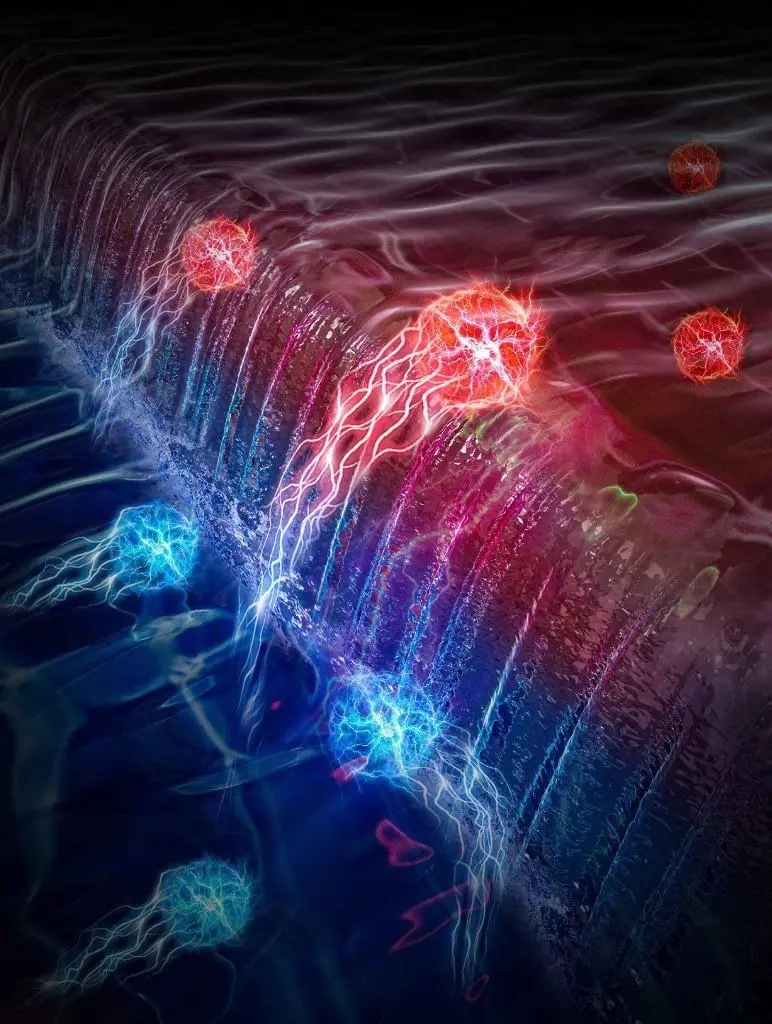
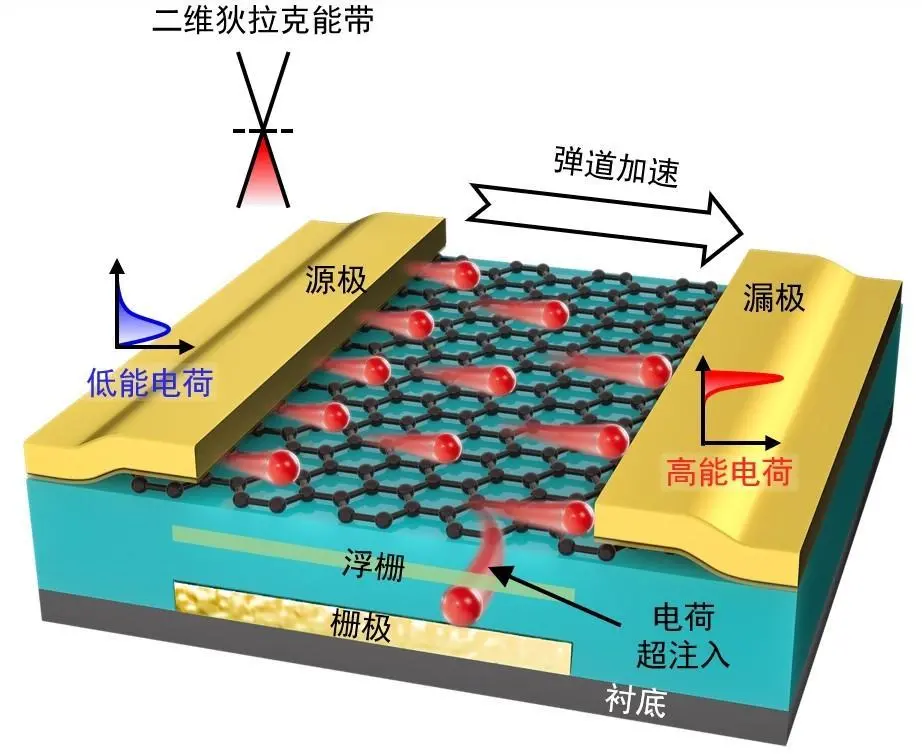
By breaking through the bottleneck of basic theory, the research team discovered a "super-injection" mechanism of charge storage. Liu Chunsen introduced that the existing hard disk flash memory mechanism is to inject charges into the channel of the material to achieve signal storage. When the injection voltage is about 5 volts, the injection speed is the fastest. If the voltage is high or low, the speed will slow down. "Our result is to start from the bottom of the technology, propose our own theoretical innovation, and adjust the physical mechanism of the material to achieve 'unlimited' and 'super-injection' storage that 'the higher the voltage, the faster the storage', and increase the non-volatile storage speed to the theoretical limit." Based on this, the research team redefined the boundaries of existing storage technology and successfully developed the "Daybreak" picosecond flash memory device, whose performance surpasses the world's fastest volatile storage SRAM technology at the same technology node.
“The name ‘Breaking Dawn’ comes from the homophony of ‘pi’ in ‘picosecond’. We hope that this technology can help China’s semiconductor industry break through the ‘darkness before dawn’ and ‘sing a rooster and the world will be white’,” said Zhou Peng.
According to reports, flash memory, as the most cost-effective and widely used memory, has always been the cornerstone of the technology layout of international technology giants. The above achievements are not only expected to change the global storage technology landscape, promote industrial upgrading, and spawn new application scenarios, but will also provide strong support for my country to achieve technological leadership in related fields. Liu Chunsen revealed that relevant products are currently undergoing small-scale mass production.