Amazon has announced the launch of its new robotic system Vulcan, which it calls the first tactile robot. Amazon officially launched the new robot today at the "Delivering the Future" event in Dortmund, Germany. The company believes this represents a big step forward in robotics for its distribution centers.
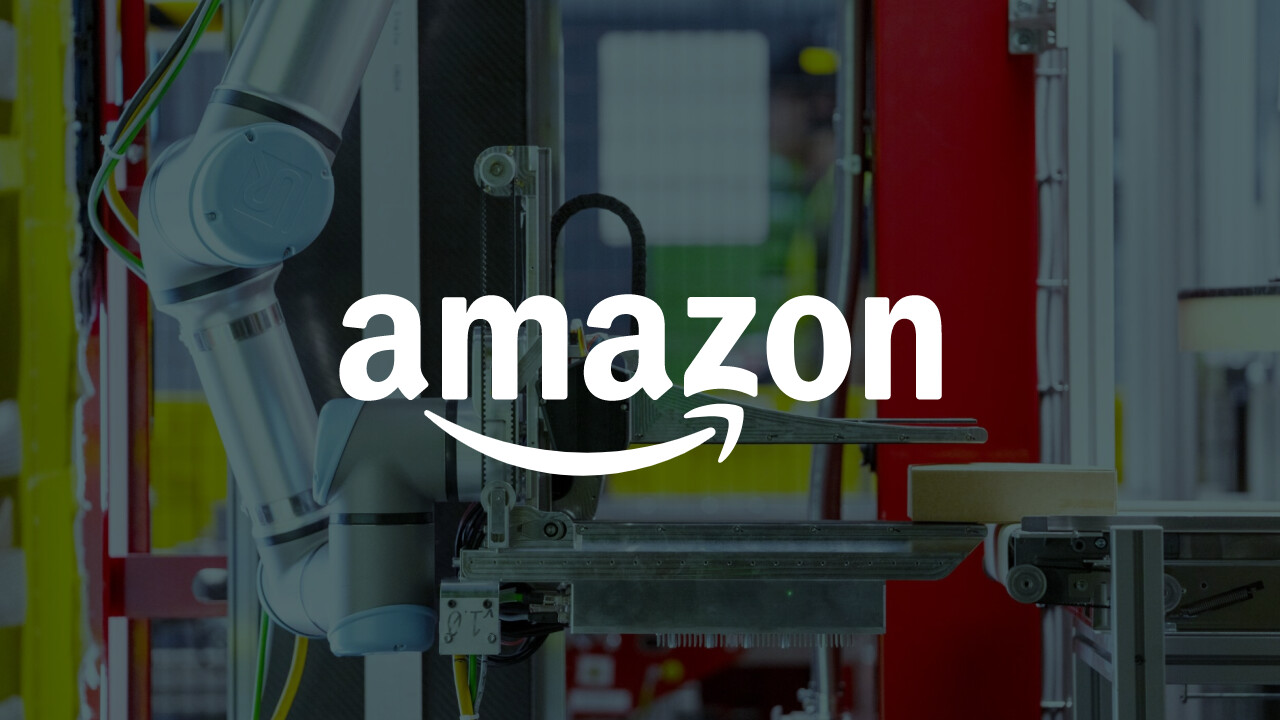
Standard industrial robots often lack contact sensing capabilities, which can cause the robot to be damaged or stop operating when it encounters unexpected obstacles. Vulcan overcomes this limitation using advanced engineering and "physical AI" technology, allowing it to understand when and how to interact with objects. Aaron Parness, director of applied science at Amazon, called Vulcan “a fundamental leap forward,” noting:
It not only sees the world, but also feels the world, achieving functions that Amazon robots have not been able to achieve so far.
A key application for the Vulcan is moving items in crowded storage bays. These storage compartments may hold many different items closely packed together. It would be difficult for a robot that lacks a sense of touch to move in such a small space without damaging items. Vulcan uses force feedback sensors and a specialized "end-of-arm tool," essentially a paddle that can grip items and a tool that gently moves existing items, adjusting the grip strength and force applied to avoid damage when picking up or storing cargo.
Vulcan uses a combination of cameras and suction cups to pick up items, ensuring it only picks up the right items and nothing else gets mixed in. Amazon says Vulcan can pick up and store about 75% of all items in its distribution centers at speeds comparable to human workers. Here are images shared by Amazon of Vulcan at work:
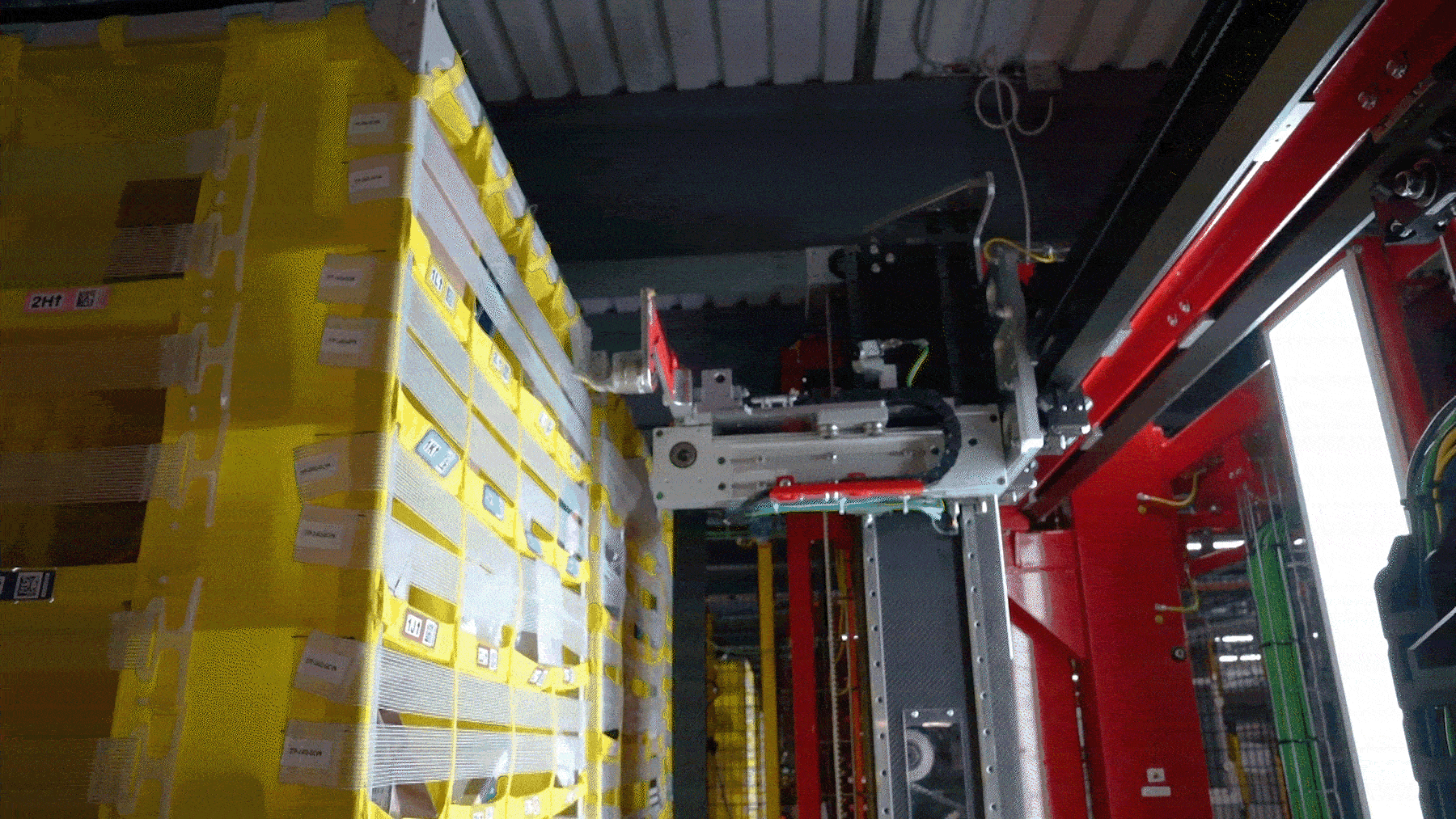
The integration of Vulcan is also designed to improve worker safety and ergonomics. The robot is deployed to move items stored in the highest and lowest parts of storage bays, tasks that typically require employees to use ladders or bend down. By assigning these physically demanding jobs to Vulcan, the company hopes human workers will be able to focus on tasks at a more comfortable height, reducing stress and improving overall workflow.
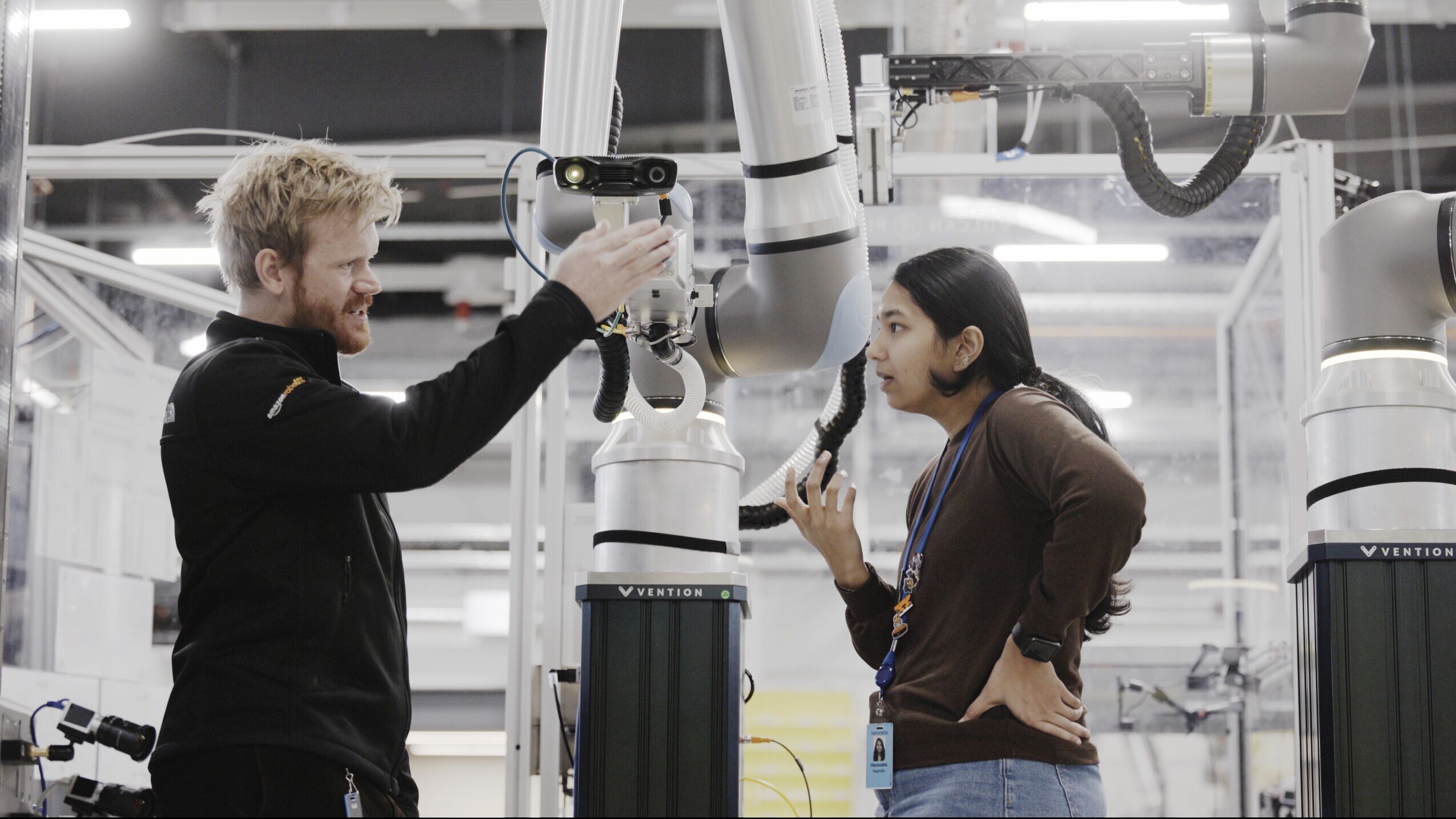
Amazon plans to deploy Vulcan systems in fulfillment centers in Europe and the United States over the next few years.
Speaking of artificial intelligence, the company is also actively deploying in many fields in addition to physical robots. Amazon Prime Video is reportedly testing artificial intelligence dubbing to make foreign language content more accessible, and is currently piloting English and Latin American Spanish dubbing for some titles. Additionally, the company recently launched its Nova Sonic audio model, an AI model designed for natural, real-time voice interactions, and updated its Nova Reel video generation model to version 1.1, which now allows users to create videos up to two minutes long.
You can learn more about Vulcan here.