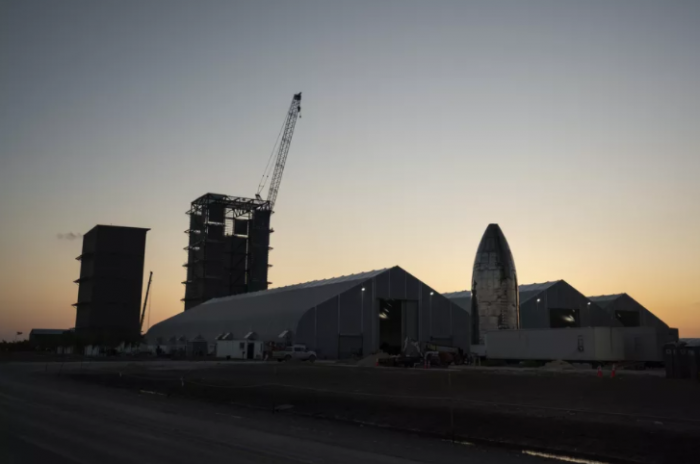
The U.S. Occupational Safety and Health Administration (OSHA) said on Friday it has launched an investigation after a crane rolled over at SpaceX's Starbase in Texas on Tuesday. According to eyewitnesses, at around 13:00 pm local time on June 24, a crane suddenly rolled over while trying to lift the irregular wreckage of the "Ship 36" starship that exploded on June 18. This may be due to a misjudgment of the center of gravity of the load or unstable ground.
It is unclear whether any SpaceX employees were injured as a result of the incident. According to previous reports, SpaceX’s history of workplace injuries exceeds the industry average.
In 2014, an employee at the company, Simon LeBlanc, died on the job, and an OSHA investigation concluded that the company failed to protect him from obvious hazards.
Earlier this year, the Department of Government Effectiveness (DOGE), led by Musk, cut OSHA's resources and closed at least 11 of the agency's field offices. With DOGE, Musk seeks to reduce federal agency budgets, personnel and even certain regulations, limiting their ability to investigate and enforce existing laws.
The crane rollover accident follows a series of explosions and other setbacks for SpaceX's Starship Super Heavy launch vehicle, the largest rocket ever built and key to Musk's ambition to carry equipment and people to Mars.
Environmental activists in the United States and Mexico say the explosions have harmed sensitive habitats, wildlife and marine life. SpaceX posted online that during the most recent explosion on June 18, its activities did not cause damage to the surrounding area.
Previously, the Starship spacecraft was expected to play an important role in NASA's efforts to return to the moon. SpaceX has secured more than $20 billion in contracts from the federal government, mostly from the U.S. Department of Defense and NASA.
Meanwhile, NASA's proposed streamlined budget for next year has yet to be approved by Congress, which could affect the agency's business with SpaceX and shift the focus of its missions.
As President Trump's biggest financial supporter, Musk has tried to appoint his friend and commercial astronaut Jared Issacman to lead NASA during Trump's second term. But Trump later withdrew his nomination of Isaacman.