A dazzling new image from the Hubble Space Telescope reveals the spiral galaxy NGC 1309, located 100 million light-years away in the constellation Eridanus. With its swirling blue stars, dust lanes and hundreds of background galaxies, this cosmic scene is not only beautiful but also scientifically interesting.
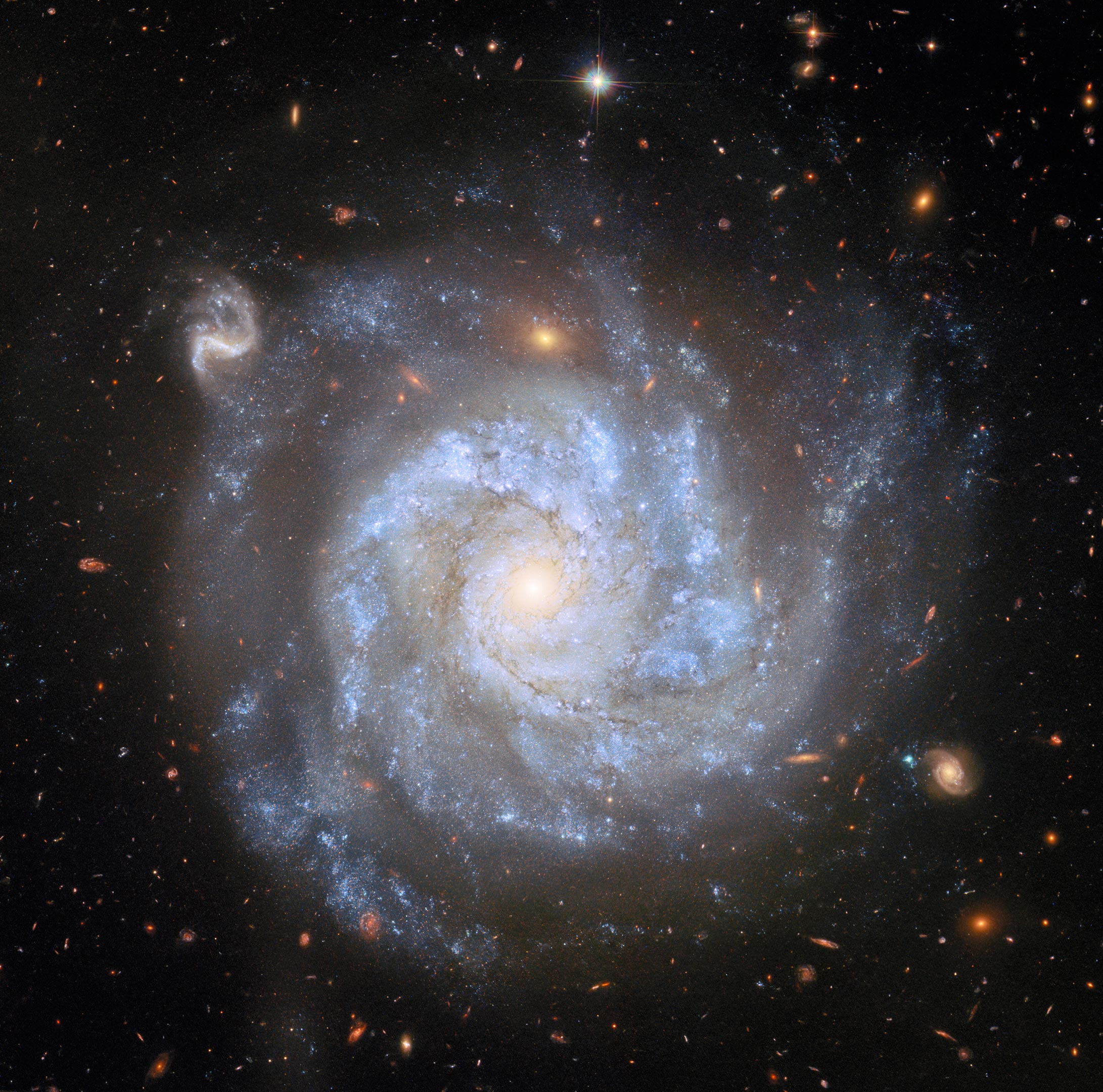
This stunning Hubble image shows the spiral galaxy NGC 1309, which not only reveals its rotating stars and hot dust, but also hides a cosmic mystery. Image credit: ESA/Hubble and NASA, L. Galbany, S. Jha, K. Noll, A. Riess
This Hubble Space Telescope image of the spiral galaxy NGC 1309 shows stunning detail. Located in the constellation Eridanus, about 100 million light-years from Earth, this galaxy is an example of cosmic structure and beauty.
This image shows NGC 1309's vibrant blue stars, swirling clouds of dark gas, and softly bright center. There are hundreds of distant galaxies scattered around the galaxy. Each little speck or point of light represents an entire galaxy, with one notable exception. Near the top of the frame is a star, easily identifiable by the diffraction spikes produced by the telescope. This star belongs to our Milky Way galaxy and is only a few thousand light-years away.
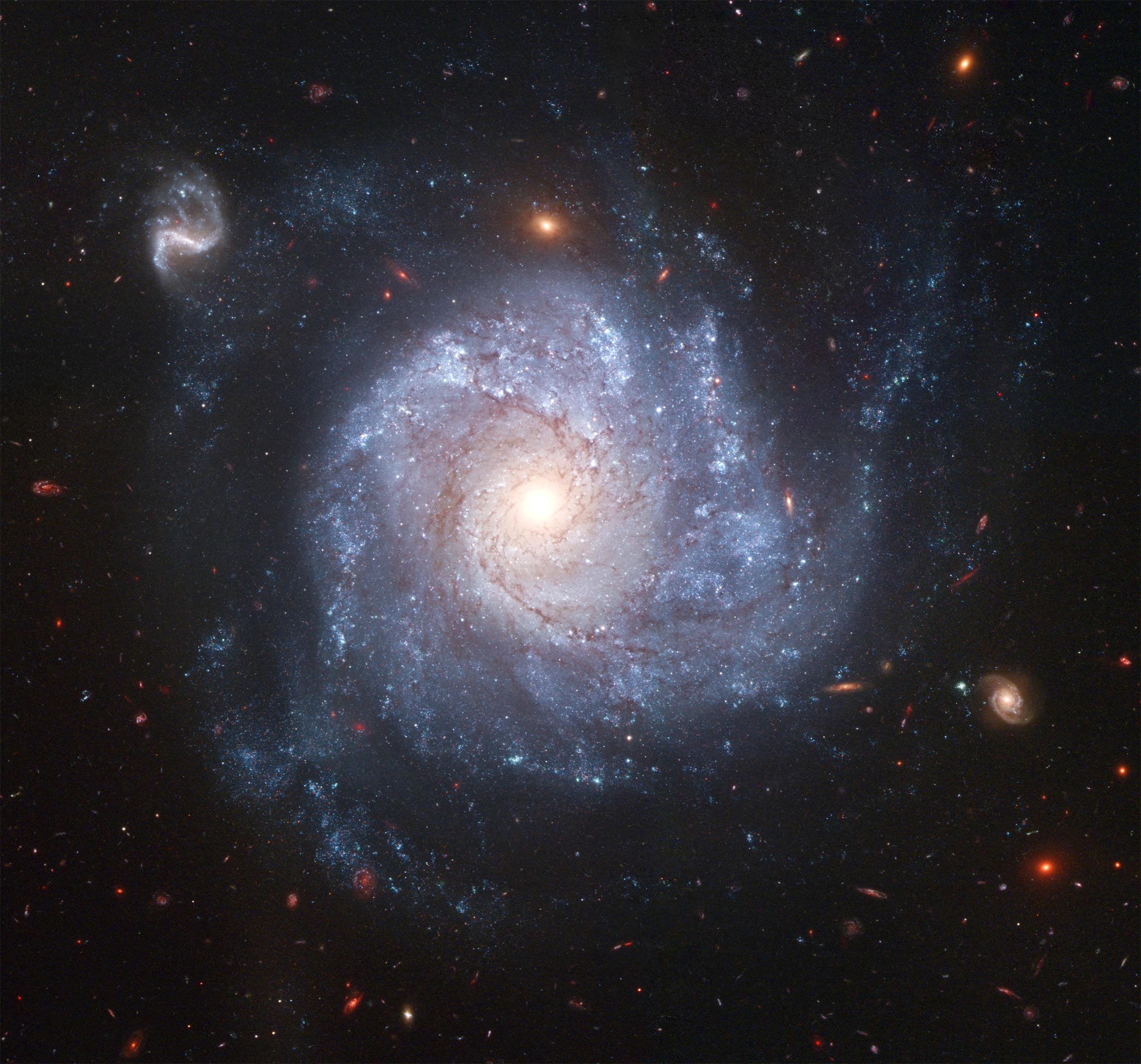
This color photo from Hubble in 2006 captures stunning detail of face-on spiral galaxy NGC 1309. Image credit: NASA, ESA, Hubble Heritage Team (STScI/AURA) and A. Riess (STScI)
Hubble has observed NGC 1309 multiple times, with early images released in 2006 (see above) and 2014 (see below). The galaxy is particularly notable for two striking supernovae: SN 2002fk (observed in 2002) and SN 2012Z (observed in 2012). SN 2002fk is a typical example of a Type Ia supernova, which is caused by the explosion of a white dwarf star (the dense core left behind after the death of a star).
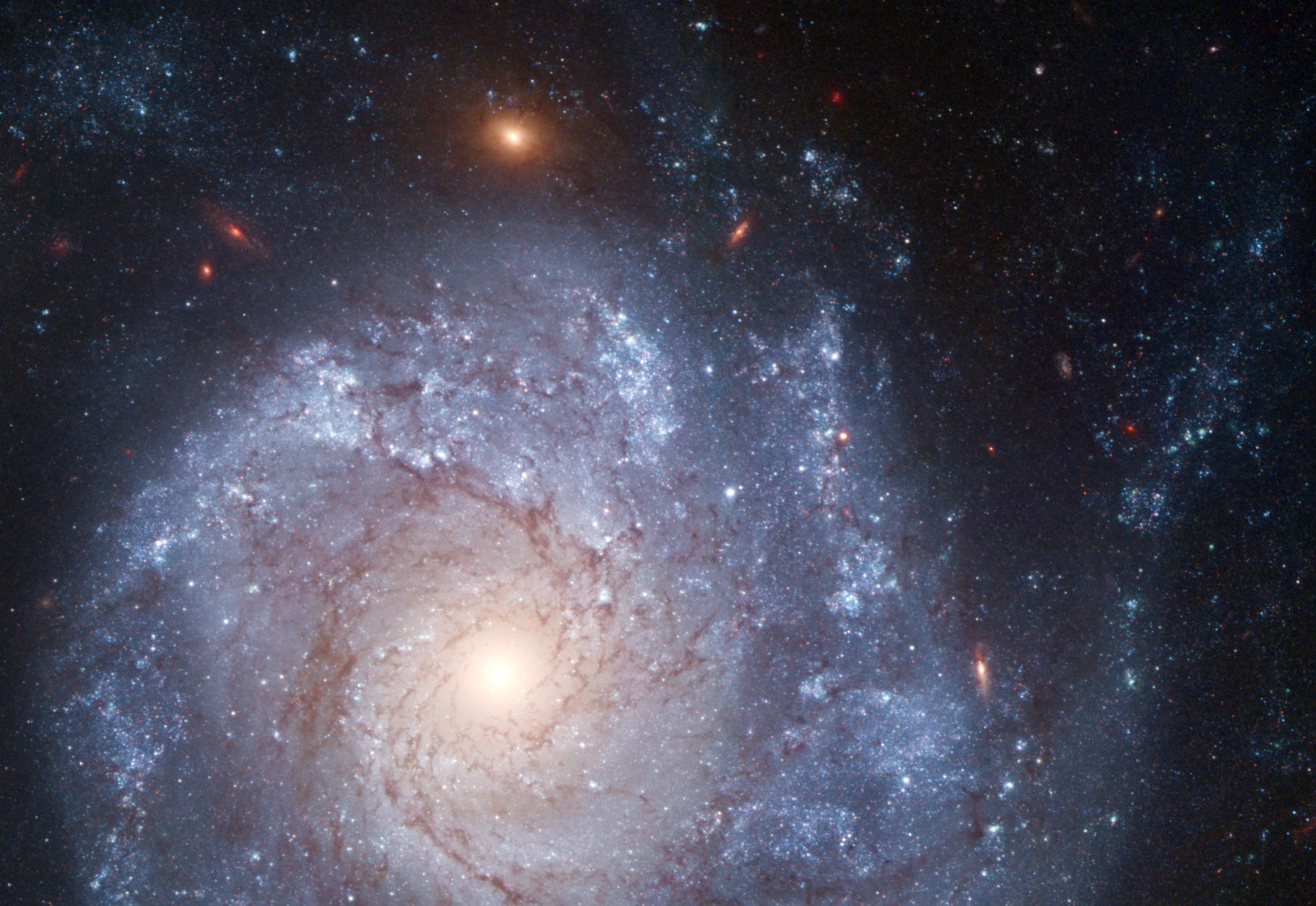
This image shows spiral galaxy NGC 1309 as captured by Hubble in 2014. Astronomers observed a rare Type Iax supernova on the edge of the galaxy. Image credit: NASA, ESA, Hubble Heritage Team (STScI/AURA), and A. Riess (JHU/STScI)
SN 2012Z, on the other hand, is a bit of an anomaly. It was classified as a Type Iax supernova: Although its spectrum was similar to a Type Ia supernova, the explosion was not as bright as expected. Hubble's observations show that in this case, the supernova did not completely destroy the white dwarf, but left behind a "zombie star" that was brighter than before the explosion. Hubble has been observing NGC 1309 for several years, and this is the first time the supernova's white dwarf precursor has been identified in images taken before the explosion.
Compiled from /scitechdaily