On August 11, Riot Games announced that it would crack down on alt accounts and power leveling in League of Legends. According to the new regulations, starting from version 25.18, any behavior that improves the level of the account and makes profits through proxy playing will face a ban - this type of service has now become a gray industry, and even Elon Musk admitted to buying power boosting in "Path of Exile 2".

A player who makes a living by boosting and reselling "League of Legends" accounts angrily questioned Riot Games developers on social platforms. He @ Riot Product Director Drew Levin complained: "How will I make a living after the new regulations are introduced? 90% of my income comes from boosting, and I can only earn 15% of this amount as a coach." The official response was to give him a link to McDonald's recruitment page.
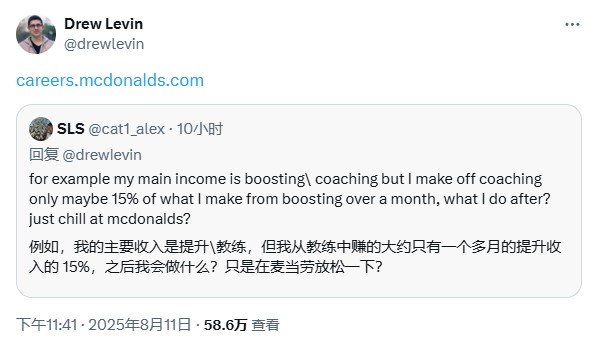
"Brother, when you make money by destroying other players' gaming experience, don't you ever think that this business is disgraceful?" Levin said bluntly in a follow-up reply, "We would rather ban all power boosting accounts by mistake than give a green light to your 'business'." When the power booster argued that "high-end power boosting does not destroy the balance," the director even more sharply sarcastic: "Treat the game ranking system as an 'industry'? You are bargaining with the people responsible for maintaining fairness."

Although some players who rely on power leveling or fishing are dissatisfied with this, most netizens support Riot’s decision. However, some people also question: In the world of online games where the rules are higher and the devil is higher, how effective can these new rules be?