Many medications must be administered as a slow intravenous drip rather than as a quick injection, which can be frustrating and inconvenient. However, this may be about to change thanks to new improvements to existing "spray drying" technology.
Protein-based drugs are often used to treat conditions such as certain cancers, metabolic disorders, and autoimmune diseases, and must be taken in large doses to achieve the desired effect.
Unfortunately, if these drugs are dissolved at such high concentrations in a single injection volume of carrier fluid, the protein molecules can clump together, causing the mixture to be too viscous to safely inject. Therefore, a more dilute dose must be administered intravenously, dripped over several hours.
To solve this problem, Associate Professor Eric Appel of Stanford University and colleagues developed a biocompatible polyacrylamide copolymer called MoNi. Unlike most existing pharmaceutical additives, it has an unusually high glass transition temperature. This means it stays hard and glassy at high temperatures instead of becoming soft and slimy.
The scientists combined MoNi with water and therapeutic proteins, including albumin, human immunoglobulins and monoclonal antibodies used to treat COVID-19.
They then sprayed the mixture onto the surface to form aerosolized droplets, which evaporated the water in the droplets. This process creates a fine powder made up of tiny particles - each consisting of a protein core wrapped in a smooth molybdenum-nickel shell.
In the final step, the powder is mixed with a carrier liquid in which the particles remain suspended and do not clump together. The researchers thus achieved protein concentrations of over 500 milligrams per milliliter. In other words, the liquid contains more than 50% drug by weight, twice the content of previous injections.
Yes, the mixture remains fluid enough to inject "smoothly and easily". What's more, MoNi's formula dissolves once it enters the bloodstream.
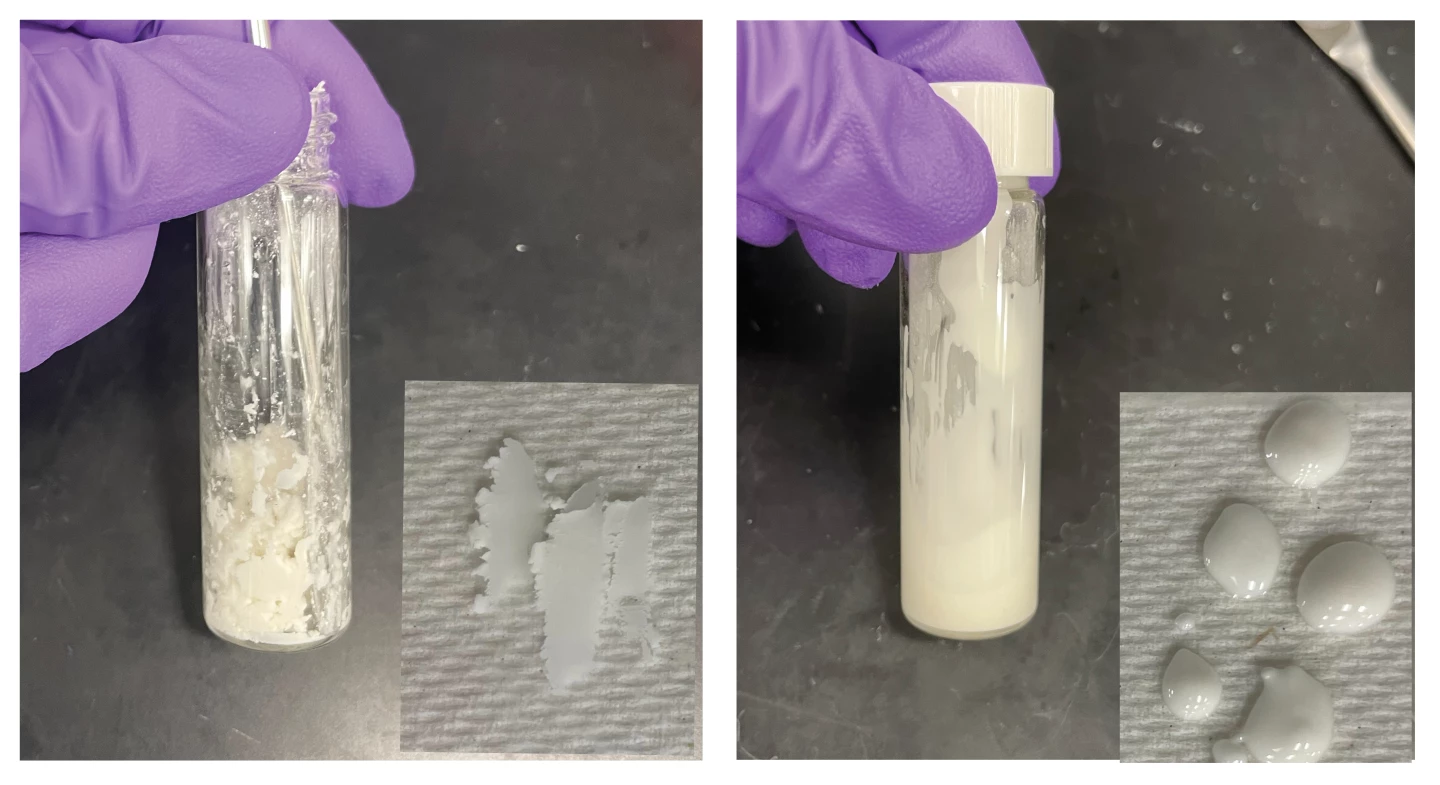
Spray-dried protein particles without MoNi coating form a paste-like substance (left), whereas spray-dried protein particles with MoNi coating form an injectable suspension that flows like a liquid (right)
"This is a platform that is potentially compatible with any biologic drug, so we can inject it easily," Appel said. "This takes these treatments from being an ordeal with intravenous infusions that took hours in the clinic to being done at home in seconds with an auto-injector."
The research was published in a paper recently published in the journal Science Translational Medicine.