The U.S. Department of Agriculture (USDA) has confirmed that it will cancel the annual food insecurity survey it has conducted since the mid-1990s. This survey was originally conducted in December every year and covered about 40,000 households. It was used to measure the food security status of various states and different groups of people, and served as an important basis for the government to formulate food aid policies and fund allocation.
The Department of Agriculture’s Economic Research Service informed staff at an internal meeting this week that the survey will no longer receive funding in 2025. A USDA spokesperson said that this "non-mandatory report" has become excessively politicized in recent years, and after review, it is no longer necessary to continue. However, the 2024 survey results will still be announced on October 22.
After the news was announced, internal employees and academics who had long studied the data were generally shocked. Colleen Heflin, a professor at Syracuse University, pointed out that the survey has provided an important reference for measuring the basic food needs of American families over the past 30 years. It is particularly worrying that it is now suspended in the context of high inflation and a deteriorating job market.
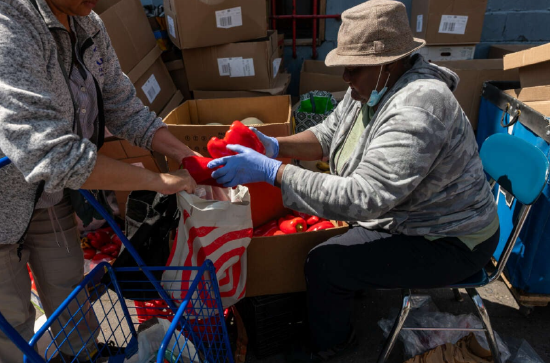
According to 2023 data, 13.8 million children in the United States live in households that have experienced food insecurity, the highest level in nearly a decade. Food banks have also reported an increase in the number of families seeking assistance in recent years, due to factors including the end of pandemic relief and rising prices.
The survey, which serves as a supplement to the U.S. Population Survey (CPS), asks: "In the past 12 months, have you been worried that you would run out of food before you had the money to buy it?" The USDA uses the data to compile its annual food security report, considered the official source of measuring hunger in the United States.
The decision to cancel the survey echoes recent cuts in federal food aid. The bill passed by Congress this summer and signed by the President of the United States slashed the food stamp (SNAP) budget and tightened the conditions for receiving it.
Several experts have criticized the move as potentially weakening monitoring of the welfare of vulnerable groups. Baylor University professor Craig Gunderson said food insecurity has become a key indicator of the living conditions of vulnerable groups. Lindsay Smith Talley, a professor at the University of North Carolina, put it bluntly: "If you don't measure it, the only reason is to plan to cut aid - so that you can pretend that hunger does not exist."