Apple recently removed the controversial ICEBlock app from the App Store following a request from U.S. Attorney General Pam Bondi, who claimed that the app was used to endanger the safety of U.S. Immigration Enforcement (ICE) agents. In the past, Apple has often come under pressure from countries, especially authoritarian regimes, to remove apps or services they deem to be security risks. This time, the U.S. government adopted a new strategy after the controversy over developers’ freedom of speech.
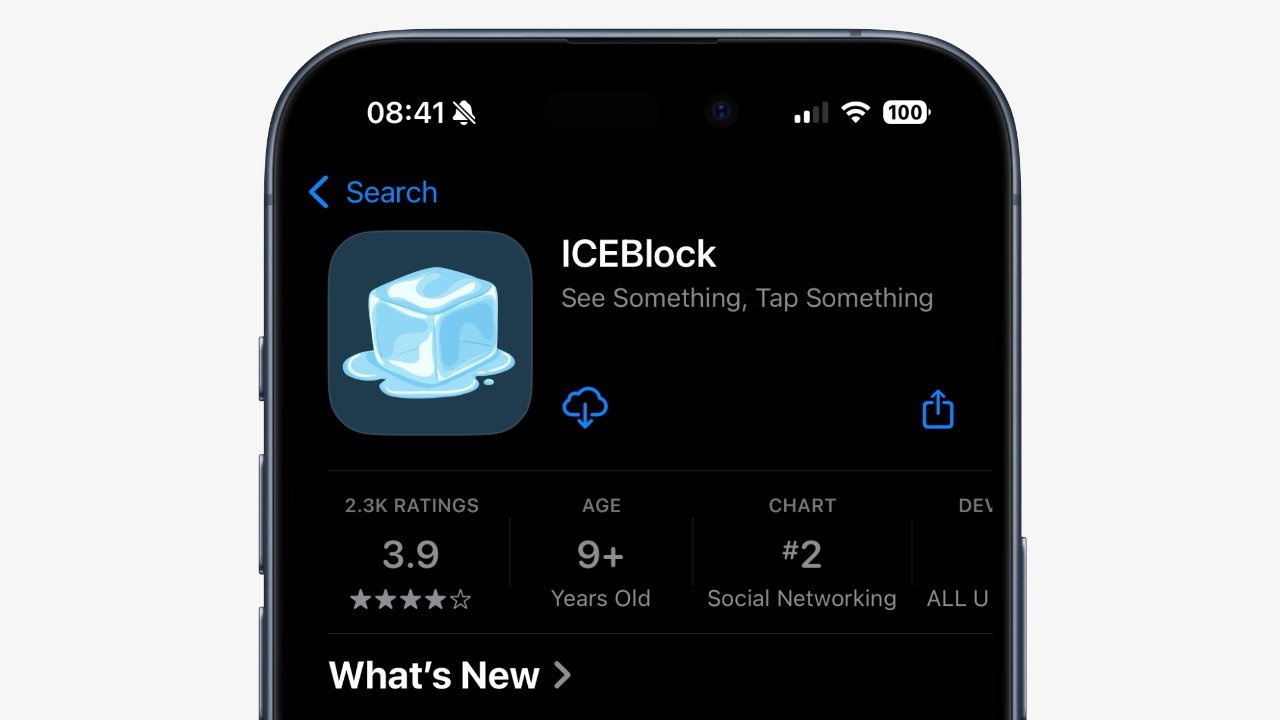
According to Business Insider, U.S. Attorney General Pam Bondi said that the Department of Justice has asked Apple to force ICEBlock to be removed from the shelves. Because the department has legal authority, Apple had to cooperate.
Apple said in a statement that the removal of ICEBlock was based on security risk information obtained from law enforcement: "We created the App Store to create a safe and trustworthy application discovery environment. Based on the security risk information involving ICEBlock provided by law enforcement, we have removed this app and similar apps from the App Store."
In fact, ICEBlock itself does not have any illegal or dangerous functions, and its operating principle is no different from the application of crowdsourcing road potholes and speed measuring points. Users can mark locations on the map where ICE activity may occur to help others choose safer travel routes. For groups at risk of being targeted by law enforcement, contact with law enforcement officers can pose risks.
However, Pam Bondi and her supporters believe the app was used to plan attacks against ICE agents, thereby endangering their safety. It is worth noting that there is currently no conclusive evidence of such behavior, but the relevant departments insist on this statement.
The developers of ICEBlock have issued a statement stating that they will object to the delisting decision.
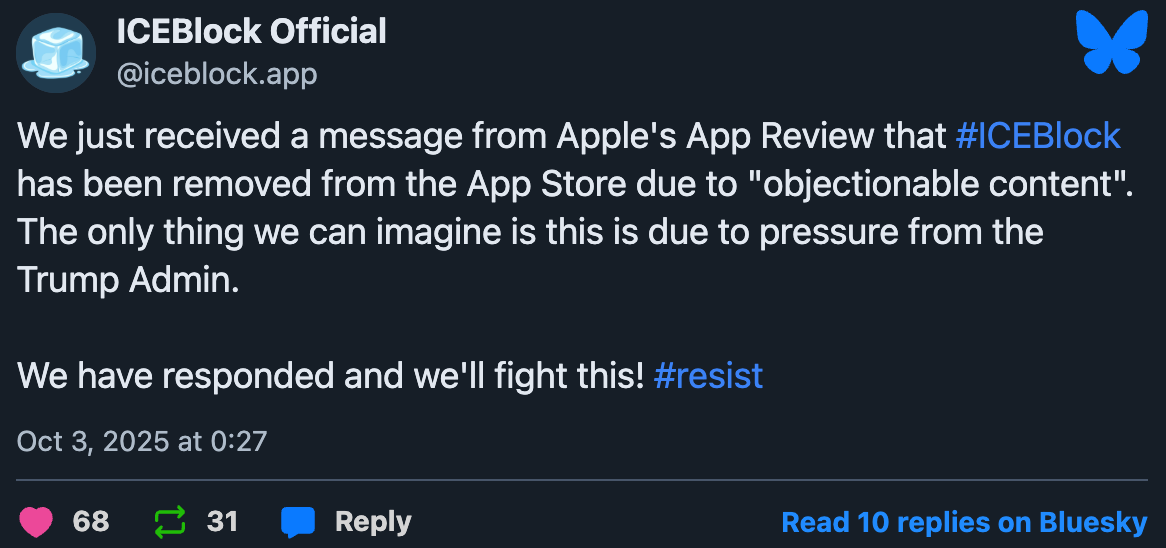
Although ICEBlock has mixed reviews, Apple must comply with the laws of the country and region where it is located and the requirements of relevant departments. For example, in China, Apple restricted the AirDrop function to weaken protesters’ ability to disseminate information.
It is unclear whether ICEBlock can return to the App Store. Under the current leadership of the US government, it is unlikely.