HSBC plans to privatize Hang Seng Bank through a scheme of arrangement, with a price premium of more than 30% per share. According to a Reuters report on the 9th,HSBC Holdings plans to privatize its holding subsidiary Hang Seng Bank in Hong Kong for a total price of approximately US$13.6 billion.The move is aimed at responding to performance pressure and deteriorating asset quality faced by Hang Seng Bank due to the weakening property market.
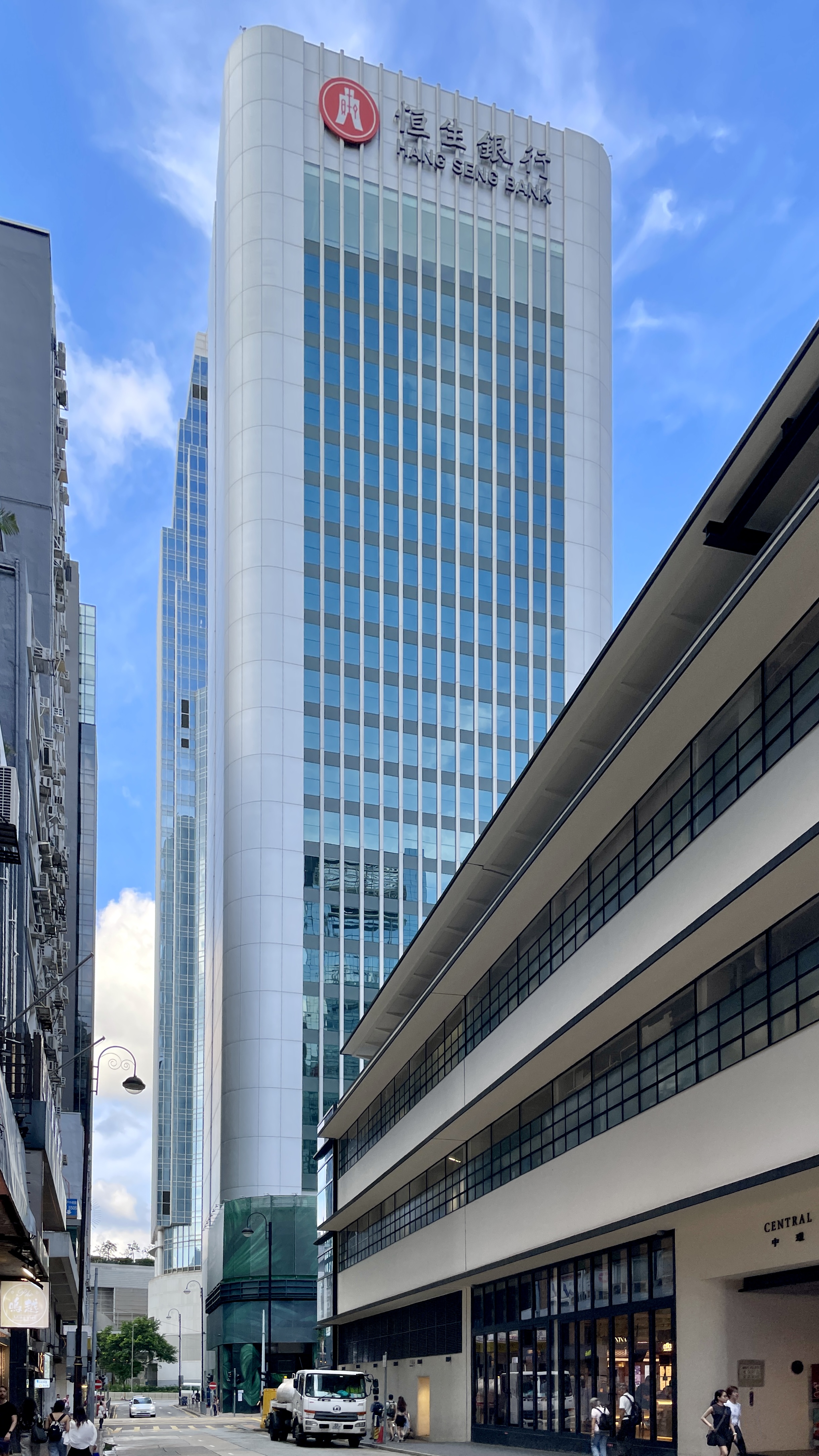
HSBC Asia Pacific, as the offeror, has requested the board of directors of Hang Seng Bank to submit a proposal to the scheme shareholders to privatize Hang Seng Bank through a scheme of arrangement in accordance with Section 673 of the Companies Ordinance.
If the plan comes into effect, the plan shares will be canceled in exchange for plan consideration, which is HK$155 for each plan share held.The planned consideration is equivalent to a premium of approximately 30.3% over Hang Seng Bank's closing price of HK$119.00 per share on the previous day, with a transaction valuation of approximately HK$106.1 billion (US$13.63 billion).
HSBC Chief Executive Ai Qiaozhi said in an interview that the relevant measures were purely commercial decisions based on strategic considerations. The privatization showed the bank's confidence in Hong Kong's prospects and was an investment to promote growth and had nothing to do with bad debts. He also mentioned that a 30% premium is a very substantial and attractive offer.
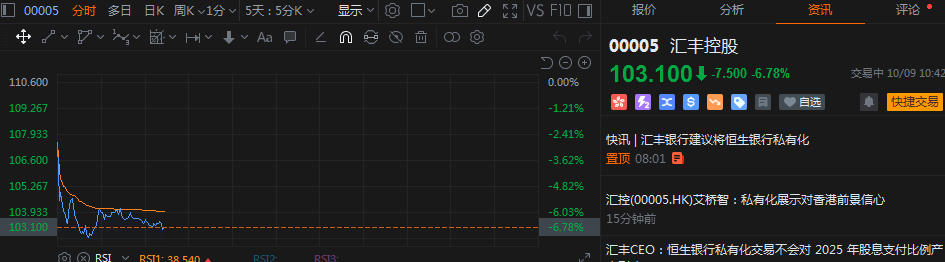
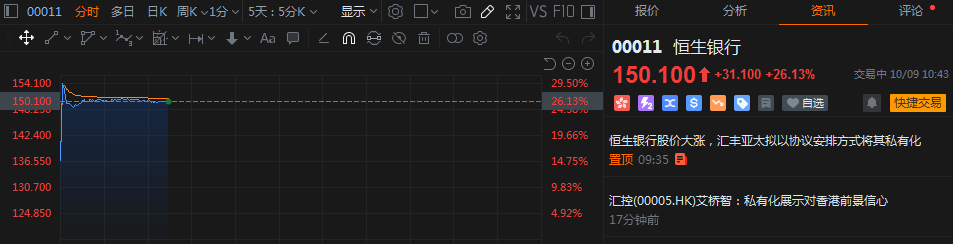
After the announcement,HSBC Holdings Hong Kong shares fell more than 6%, and Hang Seng Bank soared more than 26%, setting the pace for the largest single-day rise in history.
Reuters reported last year that HSBC had begun planning to tighten risk management on Hang Seng Bank in early 2024 due to concerns about intensifying global economic headwinds and other factors. The privatization is seen as a decisive step towards strengthening controls and directly intervening in risk management strategies.
HSBC said completion of the deal would have an impact on its capital adequacy ratio.The acquisition is expected to reduce its common equity tier 1 capital adequacy ratio (CET1) by approximately 125 basis points.As of the end of June, HSBC's CET1 ratio was 14.6%.
In response to the decline in capital ratios, HSBC has formulated corresponding plans. The bank expects its CET1 ratio to return to its target operating range of 14.0% to 14.5% through organic capital growth and suspending its share repurchase program over the next three quarters.