A research team at the Massachusetts Institute of Technology (MIT) in the United States has successfully developed a new microrobot inspired by seabirds. The robot is capable of flying in the air and diving underwater using the same set of wings, and does not need to rely on any additional mechanical hardware when switching between the two environments. It can complete the cross-media jump from underwater to air in less than one second.
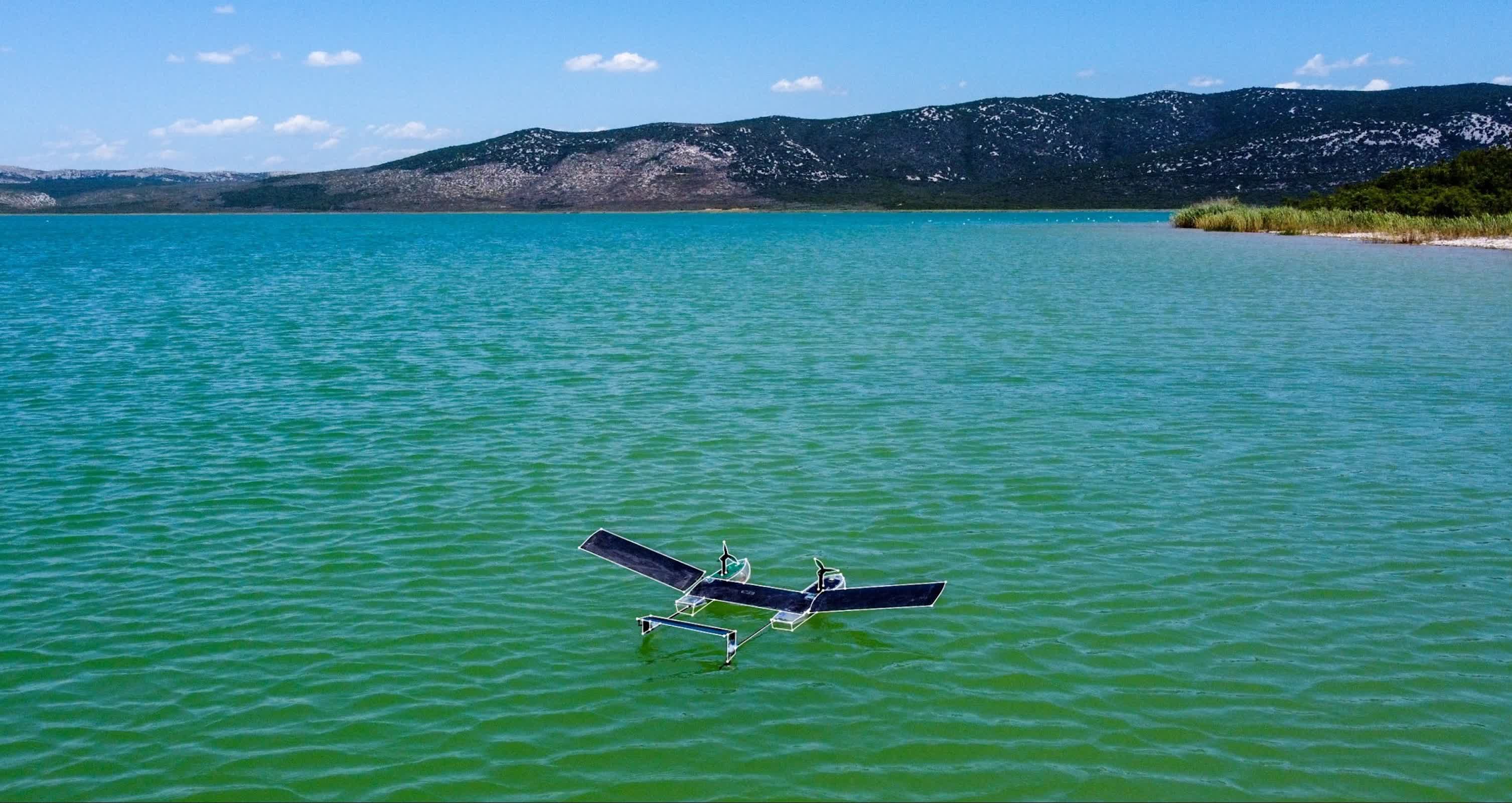
The research results were published in the journal Science and came from the laboratory of MIT mechanical engineer Raphael Zufferey. In nature, diving seabirds such as puffins can perfectly balance flying and swimming even though they face air and water, two media with completely different physical properties. Zufire said that from an engineering perspective, designing a wing that could operate efficiently in both air and water seemed unthinkable in the past.
This innovative amphibious robot weighs only about half a pound (about 0.23 kilograms) and has a wingspan of nearly three feet (about 0.9 meters). In order to avoid adding unnecessary mechanical complexity, the R&D team made bold subtractions in the design. First, the robot completely abandons its legs. Seabirds in nature often rely on their feet to push on the water to assist in taking off, but for robots, adding legs means more complex mechanical challenges. The team therefore decided to directly use the power generated by the wings to lift the robot out of the water.
Secondly, it also differs from real seabirds in wing design. Many diving birds fold their wings when diving. To avoid introducing more joints and motors, researchers turned to solving this problem by making the wings more flexible. The robot's wings are made of translucent nylon fabric and reinforced with carbon fiber struts. This combination of materials gives the wings enough toughness to adapt to the resistance of both air and water flow. When flying in the air, its wings can continuously flap five to six times per second; in order to break out of the water, the robot will instantly increase the flapping frequency to about ten times per second to generate sufficient water-breaking power.
In addition to the wings, the robot's body structure is also unique. Its central structure adopts an open design, with internal components directly exposed. The research team did not seal the entire system as a whole, but performed individual waterproofing treatments on each component. Zuffire explained that this design allows water to fill the entire system, which not only keeps the robot light enough to fly, but also maintains neutral buoyancy underwater so that it does not drift blindly in the water or sink.
During field tests in Lake Geneva, the robot demonstrated impressive performance. The video record shows that there was only a faint ripple on the water surface, and the robot broke out of the water in less than a second and soared directly into the air.
Glenna Clifton, an animal movement biologist at the University of Portland, who was not involved in the project, praised the results. Clifton believes that this robot is not only an outstanding engineering achievement, but also a valuable scientific research tool. It perfectly explains how biology inspires robotics, and robotics in turn helps humans further understand the mechanism of biological movement.

Regarding future application prospects, the research team said that this technology has great potential in actual scenarios. A robot that can fly to distant seas, land, and dive into the water to collect data would be extremely useful for monitoring coastal environments, such as tracking algal blooms, observing marine life, or studying the evolution of coastlines.
Currently, the robot is expected to fly nearly four miles (approximately 6.4 kilometers) on a single charge, or swim more than a mile (approximately 1.6 kilometers) underwater. Clifton pointed out that being able to maintain such excellent performance while taking into account two extreme environments and switch freely between the two is undoubtedly a landmark step in the field of sea and air cross-media robots.
The project was developed over approximately two years. It is reported that the team is currently working on upgrades and improvements. Future versions are expected to be equipped with more professional sensors for data collection and further optimize its motion algorithms.