Although Apple’s latest M5 chip MacBook Pro looks almost identical to the 2024 model, a recent iFixit disassembly report shows that Apple has made many fine optimizations in the internal structure, from battery replacement to cable layout, revealing a design concept that pays more attention to maintainability.
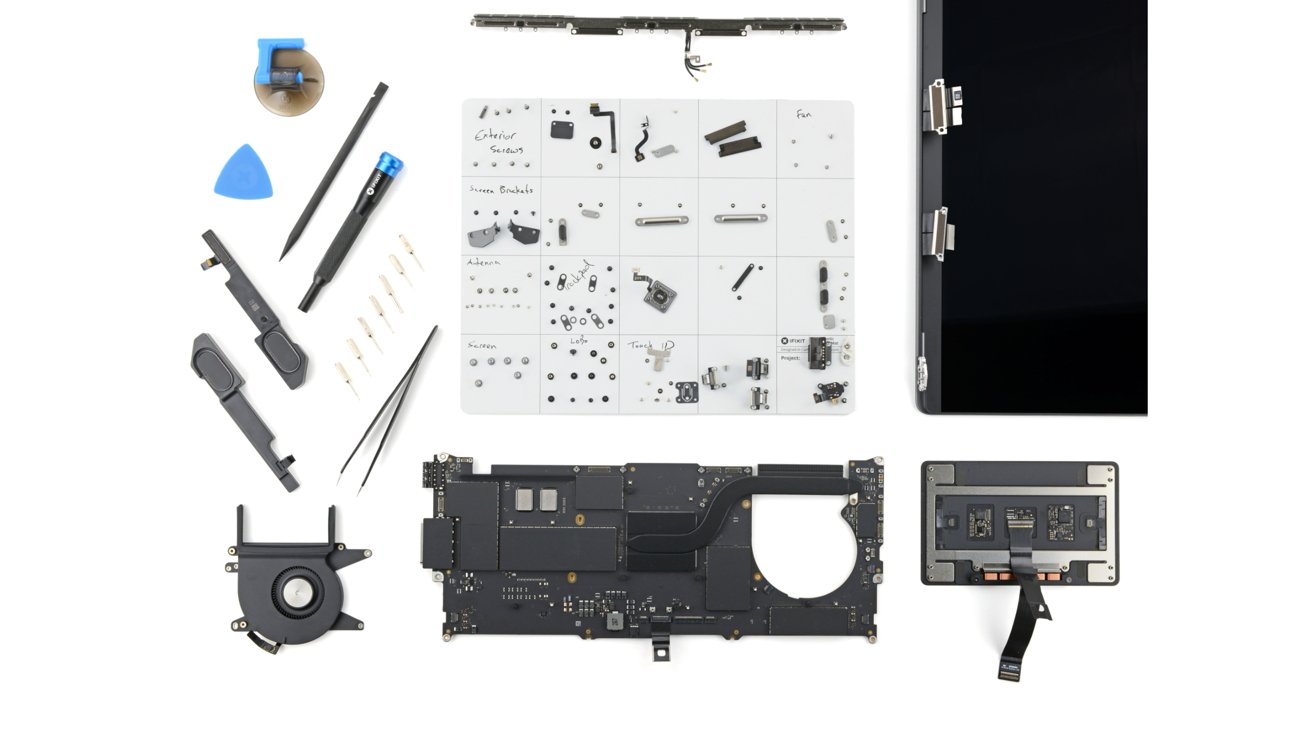
The object of this disassembly is the 14-inch M5 MacBook Pro. Although the exterior continues the design of the previous generation, many details have been improved inside. Apple has simultaneously released an official maintenance manual for its new products. For the first time, it clearly requires that the battery management cable be unplugged before maintenance to prevent short circuits during the maintenance process. This is a safety measure that has not been mentioned in official documents in the past, reflecting Apple's emphasis on self-service maintenance and third-party maintenance needs.
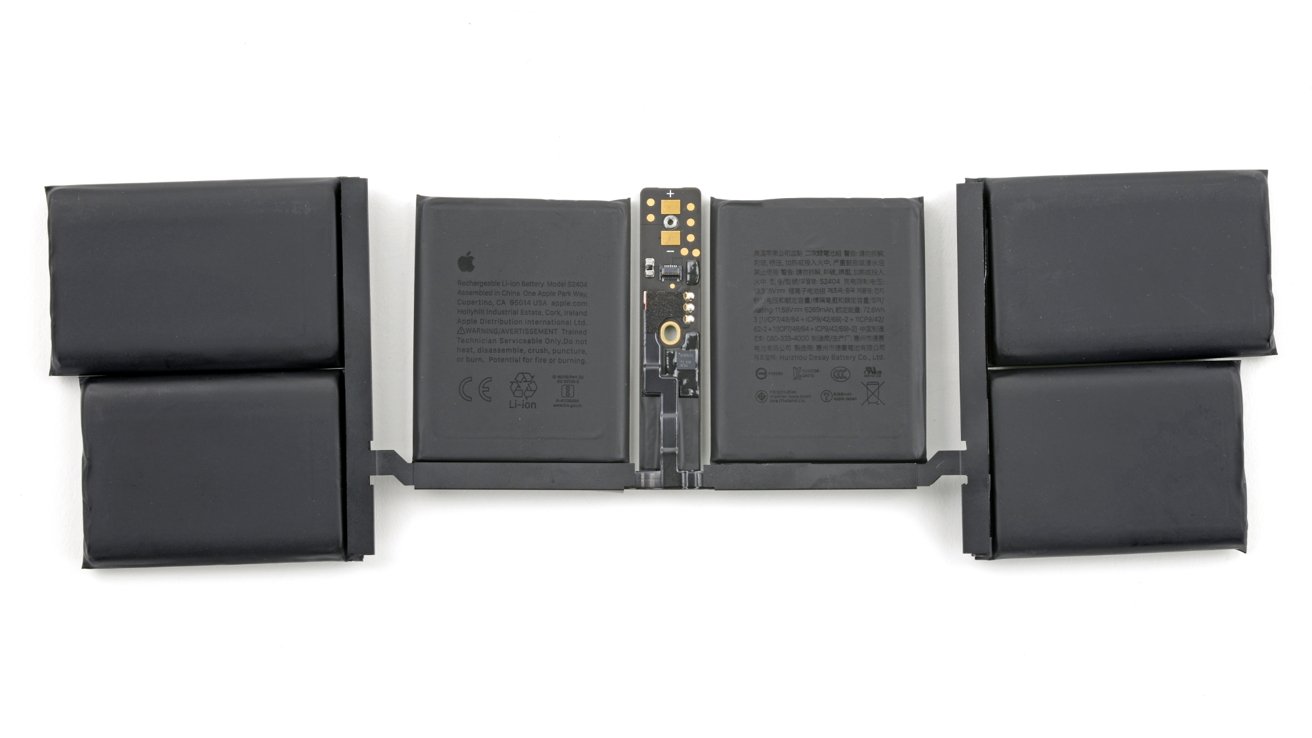
The six-cell 72.6Wh battery layout of the new MacBook Pro is similar to that of the previous generation, but the internal structure of the fuselage has been adjusted. Technicians can directly pull out the battery adhesive strip without removing the trackpad first, making the battery easier to safely remove. This change simplifies the tedious operation process in the past. Although the final assembly structure is still integrated with the upper shell, the convenience of maintenance has been improved to some extent.
During the disassembly process, iFixit found that most interfaces and fans can be replaced independently, but obtaining these parts still requires dismantling the motherboard and many ancillary structures, making the maintenance threshold high. For example, the fan cannot be removed until the motherboard is taken out. Apple still has not designed the fan module above the motherboard. This change will not affect performance, but it will obviously reduce the difficulty of repair.
The layout of the motherboard of the new machine is still compact, with the M5 chip in the center and integrated storage and power management components around it. Professional CT scans show that the stacked design is even tighter.
When replacing the screen, you need to first remove the antenna bracket and several micro screws that are fastened to the hinge area before you can loosen the hinge assembly and detach the screen. The Touch ID module also needs to be disassembled separately, and reinstallation requires the use of Apple's "Repair Assistant" software to complete the calibration. In actual testing, some Touch ID modules have difficulty pairing; while the keyboard backlight and touchpad can be calibrated smoothly.
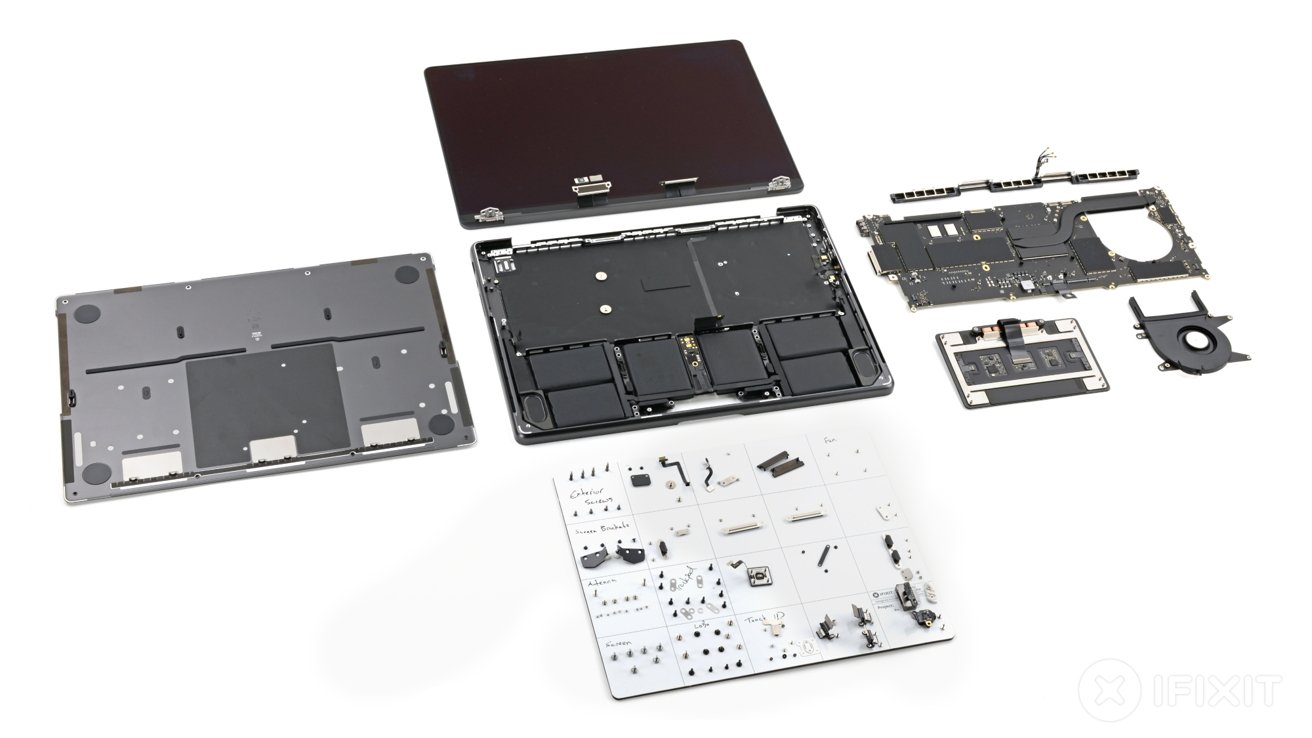
Disassembly and comparison revealed that the internal cable and bracket layout of the new model is slightly different compared to the M4. The speaker casing is still bonded but can be removed cleanly with the help of alcohol. The way the touchpad is fixed has not changed, but be careful not to lose the small spacer when installing it. Internal shielding and cable design are simplified, improving assembly efficiency. The hinges now have tighter tolerances, which may improve durability. Overall, many improvements, although not easily noticeable by users, show Apple's continued exploration of modularity in product manufacturing and repair.
iFixit finally gave the M5 MacBook Pro a repairability score of 4 out of 10, reflecting Apple engineers’ trade-off between ease of repair and high integration. Documentation for battery replacement and repair has improved, but key components such as connectors, fans and motherboards are still difficult to remove.
This disassembly shows that Apple is gradually optimizing internal design. Although comprehensive modularity and high repairability have not yet been achieved, each generation of products is constantly evolving in the direction of being easier to manufacture and repair. The new MacBook Pro has limited exterior changes, but is constantly evolving internally.