Gree's "Iron Lady" sends out another "big red envelope". On October 30, Gree Electric’s third quarter report for 2025 was released. The financial report shows that in the first three quarters, the company achieved operating income of 137.18 billion yuan, a year-on-year decrease of 6.5%; net profit attributable to the parent company was 21.461 billion yuan, a year-on-year decrease of 2.27%.
Produced by Radar Finance Written by Peng Cheng Edited by Meng Shuai
If we focus on a single quarter, Gree Electric's performance decline is even more obvious. In the third quarter, the company achieved operating income of 39.855 billion yuan, a year-on-year decrease of 15.09%; net profit attributable to the parent company was 7.049 billion yuan, a year-on-year decrease of 9.92%.
It is worth mentioning that compared with Midea and Haier, both home appliance giants, Gree Electric’s performance in the first three quarters was “sometimes both losing and winning.” Among them, Gree Electric's total operating income ranks third, its net profit attributable to the parent ranks second, and its gross profit margin ranks first.
Although the performance of the third quarter report is not satisfactory, Gree Electric is still very "generous" in terms of shareholder returns.According to the 2025 mid-term profit distribution plan simultaneously released by the company, the company plans to distribute a cash dividend of 10 yuan (tax included) to all shareholders for every 10 shares, totaling 5.585 billion yuan in cash dividends.
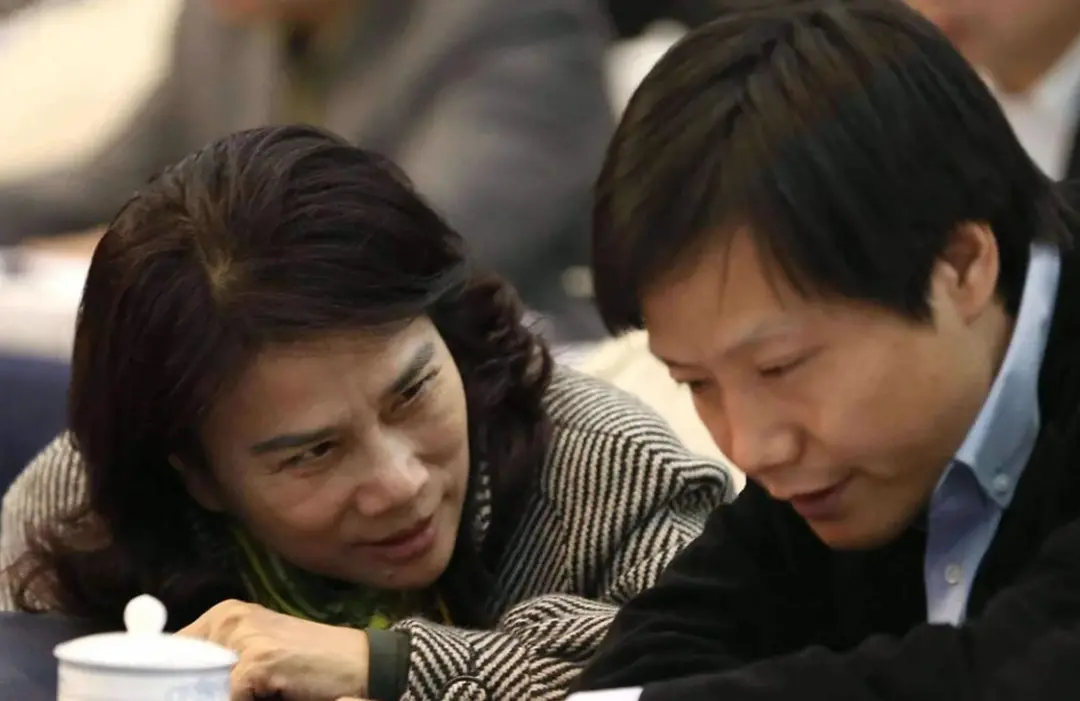
In contrast to Gree, Xiaomi Group, run by Lei Jun, Dong Mingzhu’s “old enemy” for many years, has never paid dividends since its listing. This situation was combined with Dong Mingzhu's previous public comparisons of Gree's and Xiaomi's dividends. For a time, Lei Jun and Xiaomi were once again pushed to the forefront of public opinion and became a hot topic.
The main business is under pressure, and both revenue and net profit fall
According to Gree Electric’s latest financial report disclosed on October 30, in the first three quarters of this year, the company achieved operating income of 137.18 billion yuan, a year-on-year decrease of 6.5%; net profit attributable to the parent company was 21.461 billion yuan, a year-on-year decrease of 2.27%.
Although both revenue and profit indicators declined, the company's cash flow performance became a highlight of the financial report.In the first three quarters, the company's net cash flow from operating activities reached 45.728 billion yuan, a year-on-year surge of 259.71%.
At the same time, Gree Electric’s asset and liability structure continues to be optimized. As of the end of the third quarter, the company's total assets reached 399.222 billion yuan, an increase of 8.47% from the end of the previous year; the asset-liability ratio was 62.8%, a decrease of 2.25 percentage points from 65.05% in the same period last year.
From the perspective of business structure, the consumer appliances segment is still Gree Electric’s main source of income. According to the company's earlier semi-annual report, in the first half of the year, the consumer appliance business contributed 76.279 billion yuan in revenue to the company, accounting for 78.38% of the total revenue.
During the same period, the industrial products and green energy sectors achieved revenue of 9.591 billion yuan, accounting for 9.85% of the revenue. As for smart equipment, other main businesses, and other businesses, the revenue proportions in the first half of the year were 0.32%, 1.35%, and 10.1% respectively.
Regarding the semi-annual report, Huachuang Securities Research Report pointed out that Gree Electric’s revenue performance was weak and its main air-conditioning business was under pressure. On the one hand, due to fierce competition in the air-conditioning industry in the second quarter, Gree did not adjust its price strategy, resulting in a decline in share (according to industry online data, Gree's internal sales share in 25Q2 was -1.0pcts year-on-year). On the other hand, the company further deepened channel changes (the establishment of Gree Digital), resulting in a short-term period of pain.
Some analysts believe that when the overall growth of the air-conditioning industry is sluggish, Gree Electric Appliances insists on a strategy of not cutting prices. Although it helps maintain brand positioning and product premiums, it also affects the growth of market share and sales to a certain extent.
At the same time, the consumer appliances segment represented by air-conditioning products is Gree's main source of income. This structure that is highly dependent on the air-conditioning business makes it highly sensitive to cyclical changes in the air-conditioning industry.
As a home appliance company closely related to the real estate industry, Gree Electric's air-conditioning sales rely heavily on new home sales and decoration demand. The current continued downturn in the real estate market has also directly affected the market demand for major appliances such as air conditioners.
Entering the third quarter, Gree Electric's performance continues to be under pressure.In the third quarter, the company achieved operating income of 39.855 billion yuan, a year-on-year decrease of 15.09%; net profit attributable to the parent company was 7.049 billion yuan, a year-on-year decrease of 9.92%.
Regarding the third quarter report, CICC's research report believes that Gree's performance is lower than expected, mainly because the air-conditioning sector is under great pressure, and the air-conditioning sector is still in the adjustment period: the state subsidy began to decline in 3Q25, and the domestic retail sales and shipment growth of air-conditioning were both weaker than in 2Q25. Although online competition in the air-conditioning industry has slowed down in 3Q25, Gree's online retail sales share increased by 1.4ppt year-on-year (AVC data), improving month-on-month, but it is estimated that channel reforms will still drag down the company's domestic sales and shipments.
CICC also pointed out that from June to August this year, Gree established about 60 Hengxin subsidiaries across the country, and the channels are still undergoing deep changes. In addition, it estimates that domestic sales of central shorts and exports of home shorts will also be under pressure in 3Q25, which will lower the company's revenue.
Despite poor performance, he still paid out nearly 5.6 billion in dividends. Lei Jun was also "shot" while lying down?
Although the third quarter report failed to deliver an eye-catching answer, this does not affect Gree Electric’s once again generous dividend distribution.
On the same day that the third quarterly report was disclosed, Gree Electric simultaneously released its 2025 mid-term profit distribution plan: The company plans to distribute a cash dividend of 10 yuan (including tax) to all shareholders for every 10 shares based on the total number of shares with profit distribution rights (5.585 billion shares). No bonus shares will be given, and no reserve funds will be converted into share capital. A total of 5.585 billion yuan will be distributed in cash dividends, accounting for 26.02% of the net profit attributable to the parent in the first three quarters.
The announcement shows that the 2025 mid-term profit distribution plan has been reviewed and approved at the fourth meeting of the company’s 13th Board of Directors and the 4th meeting of the 13th Board of Supervisors, and still needs to be submitted to the shareholders’ meeting for review.
Regarding the rationality of this cash dividend plan, Gree Electric stated that in the first three quarters, the company achieved a net profit attributable to the parent company of 21.461 billion yuan, with a stable and rising net profit margin, stable profitability, and abundant cash flow, laying a solid foundation for the implementation of mid-term dividends.
Gree Electric believes that the 2025 mid-term profit distribution plan will help enhance investor returns, maintain the stability and sustainability of the company's dividend policy, meet the company's normal operations and long-term development needs, and also comply with the relevant provisions of relevant documents on profit distribution, and is legal, compliant and reasonable.
Tianyancha shows that Gree Electric was listed on the Shenzhen Stock Exchange in 1996. Judging from historical dividend data, Gree Electric has long adhered to a high dividend policy since its listing. According to statistics from Flush iFinD, as of now, the company’s cumulative dividend amount has reached 147.639 billion yuan.
With Gree's move to give out "big red envelopes" to shareholders, Lei Jun, who "loves and kills" Dong Mingzhu, and the Xiaomi Group he helms, are once again thrust into the spotlight.
Going back to December last year, Dong Mingzhu once again responded to the "1 billion bet" with Lei Jun in the "Zhen Zhi Ju Jian" program launched by Sina Finance. She said that Lei Jun lost in the first five years, but no one bet with him in the second five years. Success or failure has its own logic.
At that time, Dong Mingzhu also said, "I have the goal of maximizing the interests of shareholders. How about you Lei Jun comparing with me, how much money have you distributed to shareholders? After taking so much money from shareholders, when it is used up, where does the money go? What is the return to shareholders?"
In March this year, during the live broadcast of the opening ceremony of the first Beijing store of "Dong Mingzhu Health Home" under Gree Electric Appliances, Dong Mingzhu was suspected of "connoting" Xiaomi and Lei Jun again, saying, "Some people have become the richest man, but look at how much money they have distributed to shareholders, just by inflating the stock price."
On the evening of March 13, Wang Hua, general manager of Xiaomi's public relations department, posted on Weibo, "When the times abandon you, you won't even say goodbye!" Some netizens speculated that this may be a response to Dong Mingzhu's remarks.
Flush iFind data shows that since its listing in 2018, as of October this year, Xiaomi Group has not implemented any cash dividends, and the cumulative dividend amount is "0".
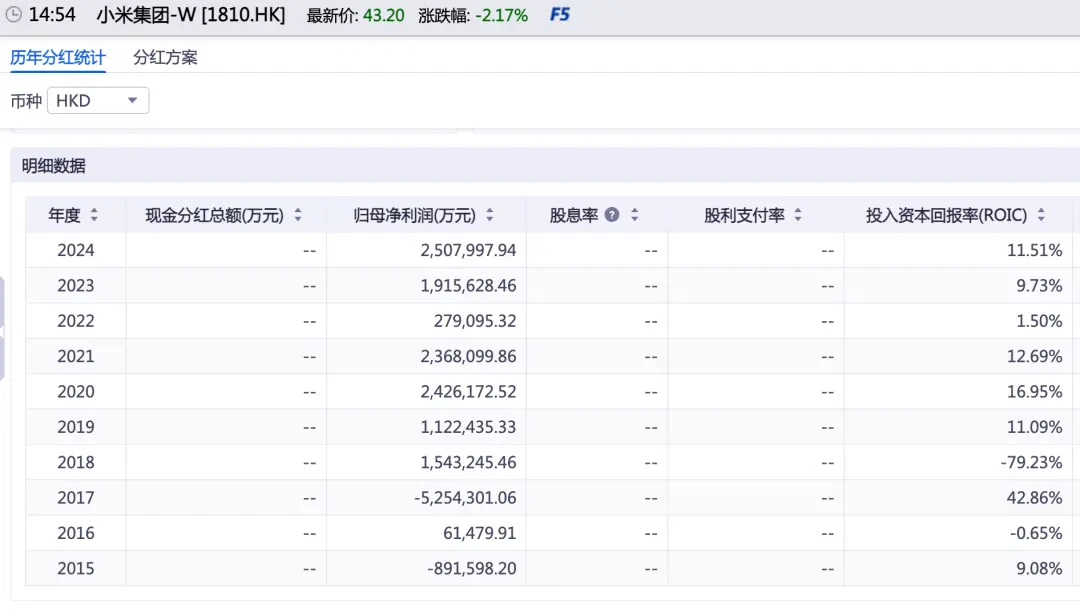
The sharp contrast in the dividend policies of the two companies has aroused widespread attention and heated discussion from the outside world. Some netizens supported Gree, saying that "dividends are worthy of shareholders who hold firm and attract long-term investment" and "a conscientious enterprise insists on paying dividends."
Some users on Xueqiu also said that Xiaomi’s accumulated dividend amount is zero, “Although stock trading does not rely on that dividend, the company does not have the proper attitude towards shareholders.”
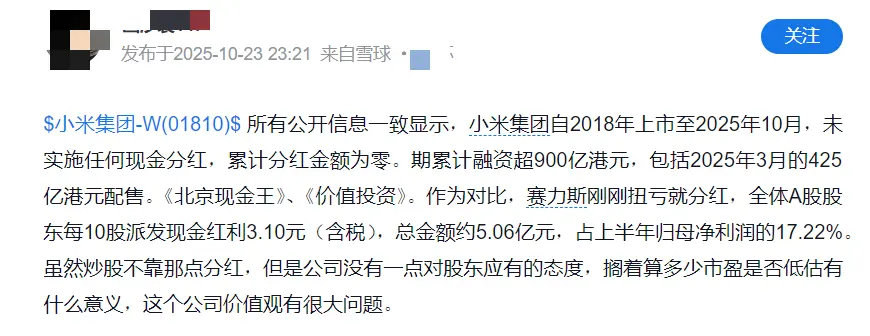
However, some netizens held different views and left a sharp message, "Really good stocks do not rely on dividends, but on the rise of the stock and the increase in value." "If I hold shares, I would rather increase the stock price than pay dividends." "The income from rising stocks is no better than dividends."
Some netizens commented, "Everyone who understands investment and business management knows that rising companies will not pay more dividends because profits must be used to continue expansion. Only stable or even declining companies must pay dividends to attract shareholders and investors who will not withdraw their capital, causing the stock price to decline."
The three giants of home appliances "showdown", Gree "wins and loses"
As an important participant in the home appliance industry, Gree Electric Appliances is in a market dominated by giants. It is often compared with the two giants in the home appliance industry, Midea and Haier.
In terms of revenue, in the first three quarters of this year, Gree Electric's total operating revenue ranked third in the industry, following Midea Group and Haier Smart Home.
However, in terms of net profit attributable to the parent company, Gree Electric ranks second in the industry. Although it is slightly inferior to Midea Group, it is ahead of Haier Smart Home.
In terms of the key indicator of gross profit margin, in the first three quarters, Gree Electric's gross profit margin was 28.44%. Although it has declined from 30.21% in the same period last year, it is ahead of Midea Group's 25.87% and Haier Smart Home's 27.21%, maintaining a prominent advantage in the industry.
It is worth mentioning that in the field of technological innovation, Gree Electric Appliances has demonstrated strong R&D capabilities in the first three quarters of this year, and has achieved major breakthroughs in a number of core technologies.
For example, two key compressor technologies independently developed by the company - "new high-efficiency rotary cylinder volumetric refrigerant pump and computer room air conditioner" and "multi-adaptive wide-band high-efficiency rotor compressor and air conditioner", both obtained "international leading" technical appraisal certification.
Among them, the cylinder volume refrigerant pump has overcome the world's problem of gas-liquid two-phase operation, solving the problems of low efficiency and poor adaptability to working conditions of traditional refrigerant pumps, and can meet the cooling needs of data centers in different regions.
In the field of consumer electronics, Gree Electric continues to enrich its product lines and has launched a variety of innovative products including photovoltaic home air conditioners, "AI Cool King" smart air conditioners, Ruyue heat pump washing and drying all-in-one machines, new generation dual-system flush-mounted refrigerators, hood coolers, and pet-specific purifiers to fully meet the diverse needs of consumers.
In terms of internationalization strategy, Gree Electric has accelerated its layout in the global market this year and promoted diversified business development and global market expansion through a series of strategic initiatives.
On September 10, the company successfully held the Southeast Asia 2025 new product launch conference in Bangkok, Thailand, which attracted more than 1,200 core dealers and partners from Singapore, Thailand, Indonesia and other countries to participate. It showcased a variety of innovative products customized for the market needs of different countries in Southeast Asia.
According to data quoted by the Shanghai Securities News, Gree Electric's proportion of self-owned brand exports in the Southeast Asian market has increased significantly from 30% to 80%. Its operating performance continues to improve and its profitability continues to increase.
In terms of channel construction, since the opening of the "Dong Mingzhu Health Home" Beijing Capital Store, Gree Electric has accelerated the pace of store layout across the country. At present, stores have been opened in Hong Kong, Zhengzhou, Changsha, Shijiazhuang, Chengdu and other cities. The total number of stores nationwide has exceeded 1,000, and the channel network coverage has become more complete.
Zhu Lei, marketing director of Gree Electric Appliances, said that the launch of "Dong Mingzhu Healthy Home" is accelerating the reversal of the public's perception of "Gree = air conditioner", allowing consumers to immerse themselves in the experience and understand Gree's whole-house smart and healthy appliances, and truly experience the healthy and ideal life brought by Gree products, such as "breathing is refreshing, drinking water is nectar, and meals are full of vitality".