Ring, the smart doorbell brand owned by Amazon, has recently been involved in a privacy lawsuit again in the United States. The reason is that its facial recognition function "Familiar Faces" is accused of collecting and processing facial biometric information without the consent of the person concerned. Charles Sigwalt, a Virginia resident, has filed a lawsuit in federal court in Seattle, targeting the feature as an alleged privacy violation.
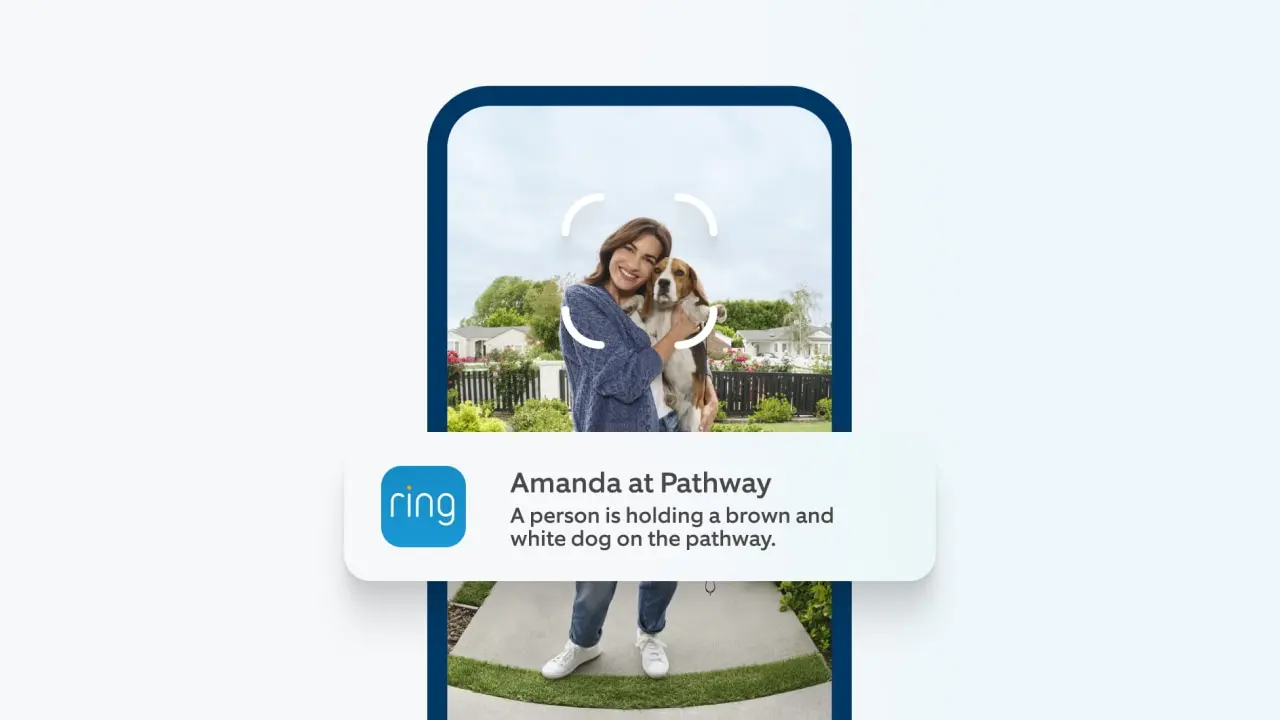
According to reports, "Familiar Faces" is a face recognition function implemented by Ring through artificial intelligence technology. After the system captures a face, users can create a profile and tag the face in the Ring app, so that when the doorbell or camera recognizes a specific visitor, it will push a more personalized notification instead of a simple "there is someone at the door" prompt. This function works best with a 2K or 4K high-resolution camera and a recognition distance of about 2.7 to 4 meters. However, factors such as insufficient lighting, wearing a mask, or poor device installation angles will affect the recognition accuracy.
Sigwalt claimed in the complaint that in addition to homeowners and their relatives and friends, millions of ordinary people - including couriers, neighbors, postmen and passers-by - had their faces "scanned" by Ring devices and entered into the system without their knowledge, and their facial recognition information was collected and processed without any form of authorization, suspected of violating biometric privacy rights.
Regarding privacy issues that are of concern to the outside world, Ring on the one hand emphasizes that the relevant facial data is encrypted during the storage process; on the other hand, it states that unknown faces recognized by the system but not "named" by the user will be automatically deleted if they are not recognized again within 30 days; and familiar face files that have been marked by users will also be cleared by the system if they do not reappear within 180 days. In addition, the "Familiar Faces" feature is currently disabled in areas with stricter biometric privacy regulations, such as Illinois, Texas, Portland, and Quebec.
It’s worth noting that the controversy surrounding Ring isn’t limited to tracking people. The report pointed out that the Ring camera can also capture animal "biological characteristics". During the 60th Super Bowl in 2026, Ring aired an ad to promote its artificial intelligence feature called "Search Party" with the slogan "Be a hero in your community": When a user reports a lost pet within the app, the system will scan the surrounding camera network to help track the movements of the specific dog. The ad sparked considerable public criticism at the time, with concerns that AI's ability to scan network surveillance videos could further amplify privacy risks.
In fact, Ring has a long history of troubles with privacy and security. Back in 2019, the company faced a class-action lawsuit over multiple hacking incidents. At that time, criminals successfully broke into the Ring camera system and used its two-way voice function to harass users' family members, including insults, racial slurs, and even direct conversations with children at home. In some cases, they were accompanied by malicious behaviors such as demanding Bitcoin ransoms, causing widespread panic.
About four years later, the U.S. Federal Trade Commission (FTC) took Ring to court, accusing it of failing to effectively restrict internal employees and contractors' access to user image data, allowing relevant personnel to browse users' private video footage without legitimate reasons or adequate supervision. It was even revealed that some people used this to peek into highly private spaces such as women's bedrooms and bathrooms. The case further intensifies questions about Ring’s data governance and internal compliance mechanisms.