Yang Likun, known as one of the "fathers of modern artificial intelligence" and one of the first AI visionaries to join the company then called Facebook, is leaving Meta. Yang Likun posted on LinkedIn on Wednesday that he plans to launch a startup company focused on developing artificial intelligence technology that researchers call "world models" - this type of technology analyzes information beyond network data to more accurately simulate the physical world and its properties.
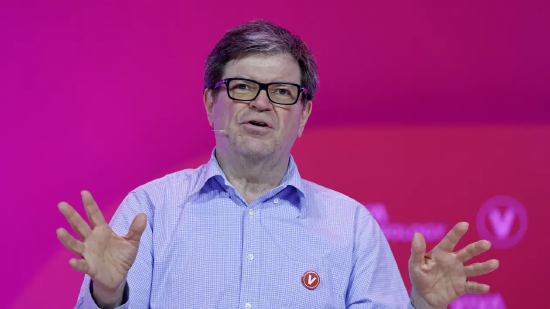
"I will launch a startup to continue advancing the 'AMI' research project. Over the past few years, I have been working with colleagues at Meta Artificial Intelligence Research Laboratory (FAIR), New York University, and other institutions to advance this research." Yang Likun wrote in the post, "The goal of this startup is to trigger the next major revolution in the field of artificial intelligence: to create systems that can understand the physical world, have persistent memory, can reason, and plan complex sequences of actions."
Meta will form a partnership with Likun Yang’s startup.
The departures come at a time when Meta's AI division is in turmoil: The company has undergone a major shakeup this year after launching a fourth version of its open-source large-scale language model Llama but receiving poor feedback from developers. This situation has prompted CEO Mark Zuckerberg to spend billions of dollars to recruit top artificial intelligence talent. For example, in June this year, Meta invested $14.5 billion in Scale AI to attract the startup’s 28-year-old CEO Alexander Wang, who is now Meta’s new chief artificial intelligence officer.
Likun Yang, 65, joined Facebook in 2013 as head of FAIR's artificial intelligence research department while retaining an adjunct professorship at New York University. “Creating FAIR is my proudest non-technical achievement,” he said in a LinkedIn post.
"I am very grateful to Mark Zuckerberg, Andrew Bosworth, Chris Cox and Mike Schroepfer for their support of FAIR and their support of the AMI project over the past few years." Yang Likun said, "Because of their continued attention and support, Meta will become a partner of this new company."
Back then, both Facebook and Google were actively recruiting high-level scholars like Yang Likun to promote cutting-edge computer science research—research that was expected to help their core businesses and products.
Yang Likun, together with Joshua Bengio, Jeffrey Hinton and other leaders in the field of artificial intelligence, has focused academic research on the artificial intelligence technology of "deep learning". Deep learning requires training huge software systems called "neural networks" so that they can discover patterns in massive amounts of data. These researchers have popularized deep learning methods and jointly received the prestigious Turing Award from the Association for Computing Machinery in 2019.
Since then, Yang Likun’s ideas on the development direction of artificial intelligence have gradually diverged from Meta and other companies in Silicon Valley.
Meta and other technology companies such as OpenAI have spent billions of dollars developing so-called "foundational models", especially large language models (LLM), to promote the development of cutting-edge computing technology. However, Yang Likun and other deep learning experts believe that these current artificial intelligence models, although powerful, have limited ability to understand the world. To develop software that reaches or exceeds human levels on certain tasks (the concept of “artificial general intelligence,” or AGI), researchers will also need to build entirely new computing architectures.
"In my opinion, the AMI project will have broad applications in multiple areas of the economy, some of which overlap with Meta's business interests, but many of which are not related." Yang Likun said in the post, "Promoting the AMI project in an independent entity is a way to maximize its broad influence."
In addition to Alexander Wang, Zuckerberg has recently recruited a number of well-known figures to reorganize Meta's artificial intelligence department, including former GitHub CEO Nat Friedman, who is currently in charge of the department's product team, and ChatGPT co-founder Zhao Shengjia, who serves as the team's chief scientist.
In October this year, Meta laid off 600 people from its "Superintelligence Labs" department, including some employees who had participated in the FAIR department that Yang Likun helped found. Those layoffs, along with other cuts at FAIR over the years, coupled with the arrival of a new artificial intelligence leadership team, were the main reasons for Yang's decision to leave, according to people familiar with the matter who asked not to be identified because they were not authorized to speak publicly.
In addition, people familiar with the matter also said that Yang Likun had little interaction with Alexander Wang and "TBD Labs" - a group of high-profile talents that Zuckerberg recruited this summer. The lab oversees the development of Meta Llama artificial intelligence models, which were originally developed within FAIR.
People familiar with the matter said that Yang Likun has always advocated sharing artificial intelligence research and related technologies to the open source community; but under the fierce competition from competitors such as OpenAI and Google, Alexander Wang and his team prefer to adopt a relatively closed model.