Based on Chang'e-6 lunar soil samples, the team of researcher Qi Shengwen from the Institute of Geology and Geophysics of the Chinese Academy of Sciences systematically revealed the physical mechanism of the higher viscosity of the lunar soil on the far side of the moon.From the perspective of particle mechanics, the scientific mystery of "why the Chang'e-6 lunar soil is so sticky" is fully explained.Relevant research results were published today in the international academic journal Nature Astronomy.
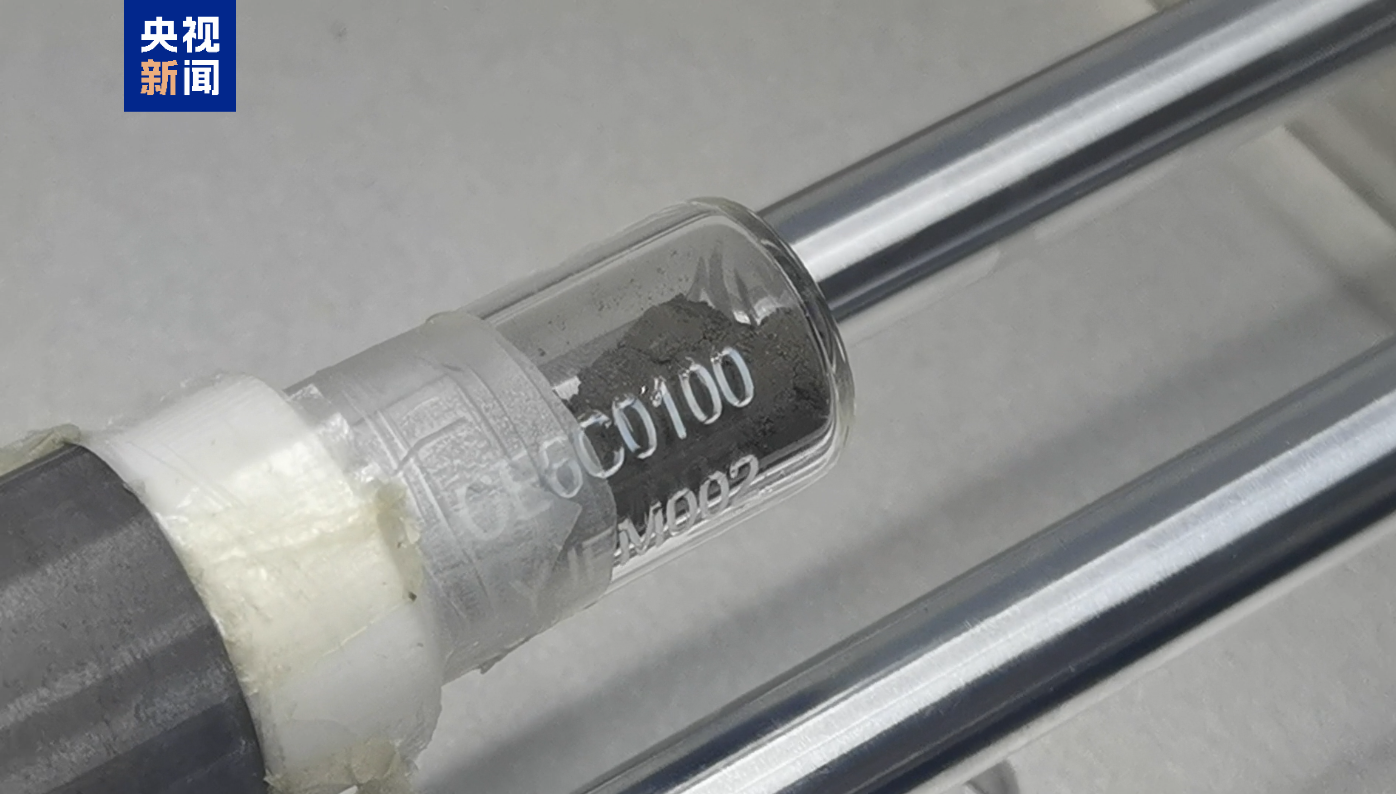
This research originated from the unexpected discovery of the Chang'e-6 mission in June 2024 - mission chief designer Hu Hao mentioned at the press conference of the State Council Information Office,When sampling the landing area on the far side of the moon, the lunar soil showed characteristics of being "slightly sticky and a little lumpy", which was significantly different from the physical properties of the lunar soil brought back by Chang'e-5 on the far side of the moon.
This phenomenon quickly attracted the attention of the scientific research team. After more than a year of systematic research, the mechanism behind it was finally clarified.
Through a series of tests such as the fixed funnel experiment and the roller experiment, the research team accurately measured the angle of repose of the Chang'e-6 lunar soil (a core indicator for measuring the fluidity of granular materials).
The results show that its angle of repose is significantly larger than the lunar soil samples brought back by Chang'e 5 and the Apollo missions, and its flow characteristics are closer to the viscous soil on Earth, directly confirming the intuitive feeling that "lunar soil is more viscous."
During the composition analysis, the researchers found that the lunar soil contains only a very small amount of magnetic minerals and no clay minerals at all, thus ruling out the influence of magnetic adsorption and cementation on the viscosity.
Further research shows that the high viscosity of lunar soil is controlled by three interparticle forces: friction, van der Waals' force, and electrostatic force. Friction force is positively related to particle surface roughness. Van der Waals' force and electrostatic force are significantly enhanced as the particle size decreases. And when the particle D60 value (the particle size when the weight of particles smaller than this particle size accounts for 60% of the total weight) is lower than 100 microns, the effects of the latter two forces will be greatly highlighted, making non-viscous mineral particles exhibit sticky characteristics.
To verify this conclusion, the team conducted a 1-micron high spatial resolution CT scan of Chang'e-6 lunar soil samples, and accurately analyzed the size and shape of more than 290,000 particles.
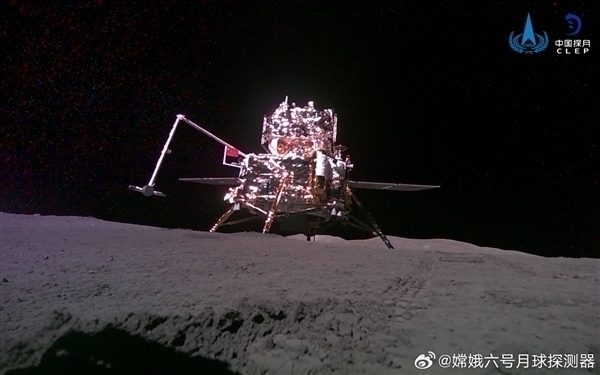
Comparison found that the D60 value of Chang'e-6 lunar soil is only 48.4 microns, which is the smallest among the three types of lunar soil, and the particle shape is more complex and the sphericity is significantly lower.——This abnormal feature of "thin but not round" is closely related to the fact that the lunar soil is rich in easily broken feldspar minerals (accounting for 32.6%) and the far side of the moon has experienced stronger space weathering.
The fine particles and complex and rough surface morphology further amplify the synergistic effect of the three intergranular forces, ultimately causing the lunar soil to exhibit high viscosity.
This study is the first to systematically explain the cohesion behavior of lunar soil from the perspective of particle mechanics. It not only answers the riddle of the characteristics of Chang'e-6 lunar soil, but also provides important scientific basis for future lunar exploration mission design, lunar base construction, and development and utilization of lunar surface resources, and will help my country continue to make breakthroughs in the field of lunar scientific research.